
Reining In Robotaxis: How AI and Regulation Are Shaping Future Mobility
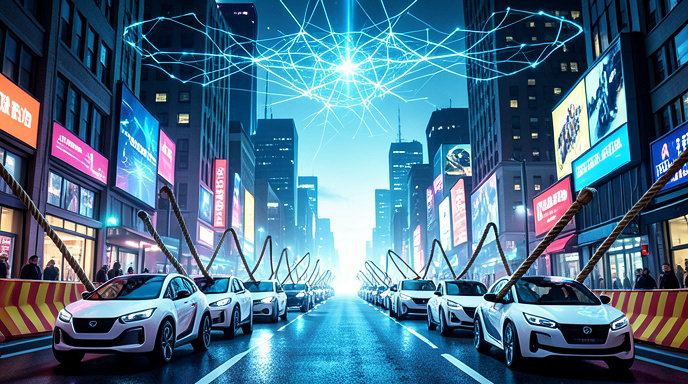
TL;DR
- Robotaxi fleets from Waymo, Tesla, and Zoox are scaling fast across U.S. cities, logging millions of driverless miles and forcing regulators to catch up.
- A growing coalition of city officials, safety advocates, labor unions, and residents is pushing back with new permits, data-sharing mandates, and street-level protests over safety and accountability.
- The future of mobility now hinges on whether AI-driven autonomy can earn public trust through transparency, federal standards, and proven safety records.
The Expansion Era: From Pilot to City Streets
Welcome back to TechCrunch Mobility. If 2023 was about promise and 2024 was about comebacks, 2026 is the year robotaxis went mainstream - and met mainstream resistance.
Waymo is now providing well over half a million paid rides per week across Phoenix, San Francisco, Los Angeles, Austin, Atlanta, Miami, and new launches in San Diego, Las Vegas, and Washington, D.C. Its fleet of Jaguar I-PACE vehicles, Zeekr-built vans, and Hyundai Ioniq 5s, many hailed via Uber, has become a familiar sight. Tesla launched its Robotaxi network in Austin in June 2025 and has since expanded supervised operations in the Bay Area, Phoenix, and Florida, betting on a camera-only, end-to-end AI approach. Amazon-owned Zoox has moved from testing to commercial operations with its purpose-built, steering-wheel-free toaster-shaped vehicles in Las Vegas and San Francisco. Add in May Mobility, Avride, and Chinese players like WeRide and Pony.ai eyeing U.S. and Middle East expansion, and autonomous fleets are no longer an experiment. They are urban infrastructure.
That scale is powered by a leap in AI. Today's stacks combine transformer-based perception, generative simulation for edge-case training, and large-scale fleet learning where one car's encounter with a construction zone, e-bike, or emergency vehicle updates the whole network overnight. Operators say this makes each city launch faster and safer than the last.
Why Cities Are Pushing Back
With growth has come friction - literally and politically.
In San Francisco, Los Angeles, and Austin, viral videos of robotaxis blocking intersections, stopping in front of fire trucks, circling blocks, or getting confused by parade tape and flooded streets have fueled a narrative that the tech is scaling before it's ready. Fire departments in San Francisco and Phoenix have reported dozens of interference incidents over the past two years, prompting new reporting protocols.
Community response has evolved from cone-placing pranks to organized action. Neighborhood groups like Safe Street Rebel, disability rights advocates concerned about accessibility and curb pickup, and labor coalitions led by the Teamsters argue robotaxis threaten jobs, clog streets, and lack accountability when something goes wrong. City councils in Los Angeles, New York, and Austin have passed resolutions demanding local veto power over deployments, more crash data, and fees to cover emergency response and curb use.
The message is consistent: residents did not consent to be beta testers.
Regulation Scramble: Patchwork vs. Federal Framework
Regulation is now the central battleground.
In California, the DMV and California Public Utilities Commission remain the key gatekeepers, but lawmakers have introduced a wave of bills in 2025 and 2026 to require incident reporting within 24 hours, share more autonomous disengagement and collision data, mandate wheelchair-accessible equivalents, and give cities more say in expansion. New York and Illinois are debating similar pre-authorization laws as Waymo eyes Manhattan and Chicago.
At the federal level, the National Highway Traffic Safety Administration has multiple active investigations into Waymo, Tesla, and Zoox involving unexpected braking, dooring cyclists, school bus interactions, and emergency vehicle yielding. At the same time, the U.S. Department of Transportation unveiled a new Automated Vehicle framework aimed at streamlining exemptions for vehicles without steering wheels and creating a national incident database - a move industry cheered as ending the state-by-state patchwork, but safety groups criticized as too industry-friendly.
The result is a two-speed system: federal agencies pushing to accelerate deployment for competitiveness with China, while cities and states slam the brakes to demand transparency.
AI at the Wheel: Safer Than Human, But Can It Prove It?
The core technical debate is deceptively simple: are robotaxis safer than humans?
Waymo points to peer-reviewed data covering tens of millions of driverless miles showing dramatic reductions in injury-causing crashes, pedestrian strikes, and intersection collisions compared to human benchmarks. Zoox and Tesla cite similar internal metrics, arguing that AI never gets drunk, distracted, or drowsy.
Critics counter that aggregate stats hide serious failure modes. Academic researchers and former NTSB officials note that averages don't capture performance in rain, glare, construction chaos, or interactions with first responders. They also flag a transparency gap: companies decide what counts as a reportable crash, restrict access to video and sensor logs, and fight public records requests citing trade secrets.
Trust, surveys show, is split. National polls in 2026 find a majority of Americans are still afraid to ride in a driverless car, even as riders in Phoenix and San Francisco who use robotaxis weekly report high satisfaction and say they feel safer than with a human Uber driver. Familiarity breeds trust - but only where deployment has been smooth.
What’s Next: The Road to Accountable Autonomy
The next 12 months will define the compromise.
Expect three flashpoints: First, California’s 2026 legislative session and court battles over local control could become a national template. Second, NHTSA’s push for standardized safety cases and mandatory crash reporting could force Tesla’s vision-only system and Waymo’s lidar-based system to be judged by the same yardstick. Third, economics: with Uber, Lyft, and DoorDash integrating autonomy, and Tesla promising a Cybercab at scale, pressure to cut safety-driver costs and expand nighttime and airport service will collide directly with demands to slow down.
The industry’s best path forward, even insiders admit, is less secrecy and more partnership - open-sourcing safety methodologies, sharing near-miss data with cities, designing for wheelchair users from day one, and training AI models on emergency responder interactions.
Robotaxis are no longer asking if AI can drive. They are asking if cities will let it. Reining them in doesn’t have to mean stopping them - it could mean finally building the rules, data standards, and public trust needed for autonomy to last.

Get All The Latest Updates Delivered Straight To Your Inbox For Free!