
Spotify Family Plan QR Code Verification Explained What Routine Improvement Means for Users
TL;DR
- Spotify has started asking Family Plan members to verify they live at the same address by scanning a QR code tied to the plan owner's account.
- The company calls it a routine improvement to household checks and says it is not a new crackdown, telling investors enforcement remains light-touch.
- For now, shared accounts outside the household won't be automatically banned, but the test signals stricter verification could expand in the future.
What Actually Happened
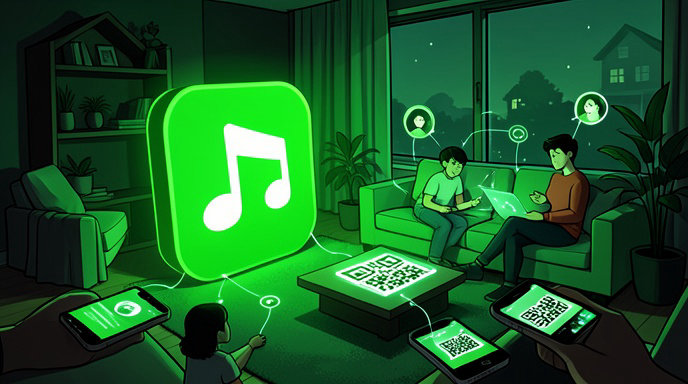
Spotify Family Plan users in several markets began seeing a new prompt this month asking them to confirm their household. The message asks invited members to scan a QR code generated by the plan manager to verify they live at the same address.
Screenshots shared online sparked immediate speculation that Spotify was launching a Netflix-style password-sharing crackdown. Spotify pushed back on that framing, saying the QR code flow is just a routine improvement to an existing verification process, not a new enforcement campaign.
The confusion is understandable. Any change to how family plans are verified touches a sensitive topic: millions of users share Premium benefits with partners, roommates, kids at college, and in some cases, friends who don't live together.
How the Same-Household Check Works
Spotify's Premium Family plan, which costs $19.99 per month in the U.S., allows up to six members living at the same address to share one bill while keeping separate accounts, playlists, and recommendations.
To enforce the same-household rule, Spotify has long used a mix of address matching and occasional re-verification:
- Plan managers set a home address when they sign up
- Invited members must confirm that same address when they join
- Spotify periodically asks members to re-verify, historically via email with a location check or GPS confirmation
The new QR code system streamlines that last step. Instead of clicking an email link and sharing location data, an invited member simply scans a time-sensitive QR code from the plan owner's Spotify app while on the same Wi-Fi network or in proximity. If the code validates, household status is confirmed. If it expires or can't be completed, Spotify may ask the user to try again or confirm their address manually.
Spotify has not said whether QR verification will fully replace email and GPS checks, but early reports suggest it is being A/B tested in select regions.
What Spotify Told Investors
The timing fueled Wall Street interest, with analysts asking whether stricter Family Plan enforcement could become a revenue driver similar to Netflix's paid-sharing push in 2023-2024.
On its recent earnings call, Spotify executives downplayed that idea. Leadership described the QR test as part of ongoing product hygiene to improve plan integrity and reduce accidental misuse, not as a growth lever.
The company reiterated that it is not aggressively hunting down shared accounts and has no current plan to introduce a paid add-on member fee like Netflix's extra-member charge. Executives said the focus remains on converting free users to paid and upselling Duo and Family users to higher tiers, rather than monetizing out-of-household sharing.
That message reassured investors worried about subscriber backlash, but left the door open. Spotify said it will continue to test verification tools and evaluate options if misuse scales.
What It Means for Shared Accounts
If you legitimately live with your Family Plan members, very little changes. You may see an occasional pop-up asking for a quick QR scan, a process that takes under a minute if you're with the plan manager or on home Wi-Fi.
If you share a Family Plan with someone who doesn't live with you, here's the current reality:
- No instant bans: Spotify says accounts will not be automatically suspended or downgraded for failing one QR check.
- Expect more nudges: You may see repeat prompts to verify your address or re-join from the correct household.
- College students and traveling members should be fine: Spotify typically allows exceptions for members who travel or live away temporarily, as long as the primary address matches.
However, users on Reddit and support forums report inconsistent experiences, with some out-of-household members losing Premium Family access until they verified or switched to their own plan. Spotify's support pages still state it may terminate or suspend access if terms are violated.
Routine Improvement or Slow-Burn Crackdown
Spotify insists this is not a crackdown, and technically it is right. Same-household verification has been in its Terms since the Family Plan launched in 2014.
But product experts note that crackdowns rarely start with bans. They start exactly like this: with easier, lower-friction verification tools that normalize frequent checks. Netflix also began with gentle email verifications before rolling out paid sharing globally.
The QR code approach makes enforcement cheaper, faster, and more mobile-friendly. It removes reliance on GPS permissions, which many users deny, and puts the burden on a simple in-person or same-network scan that is harder to fake from another city.
For now, Spotify appears to be choosing education over punishment. Whether that holds depends on results. If the test shows significant out-of-household use without hurting churn, expect broader rollout and potentially tougher rules in 2027.
What to Do Next
If you manage a Family Plan, make sure your home address is up to date under Account > Family. Tell members to expect a verification prompt and complete it while at home.
If you don't live in the same household, consider switching to Spotify Duo if you live with a partner, or an Individual plan at $11.99 per month. Students can get Premium Student for $5.99. Waiting until access is interrupted could mean losing downloads and playlists temporarily.
Bottom line: QR verification is small on its own, but it's a clear signal Spotify is modernizing how it defines household. It's routine for now, but shared-account users should pay attention.

Get All The Latest Updates Delivered Straight To Your Inbox For Free!