
Tesla Cybercab Expansion: Gold Robotaxis Set to Hit More U.S. Cities in 2026
TL;DR
- Tesla is preparing to expand its gold Cybercab robotaxi service beyond Austin to additional U.S. cities before the end of 2026, with production ramping at Giga Texas.
- The purpose-built two-seater, steering-wheel-free Cybercab is now completing fully driverless paid rides in Austin, but Tesla still refuses to disclose ride volumes or revenue figures.
- Expansion faces regulatory hurdles, safety scrutiny, and competition from Waymo and Zoox as Tesla bets its valuation on unsupervised autonomy and a scaled robotaxi network.
A Golden Fleet Takes Shape in Texas
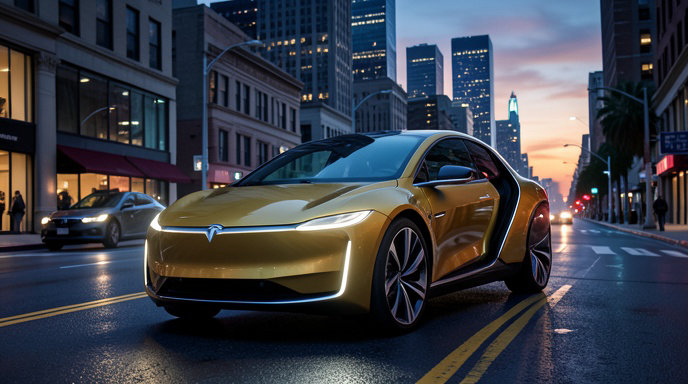
Tesla's robotaxi ambitions are shifting from pilot to rollout. After launching limited driverless operations in Austin, Texas this summer with Model Y vehicles, the company has begun deploying its dedicated Cybercab — a gold, two-seat, butterfly-door vehicle with no steering wheel or pedals — on public roads.
The Cybercabs have been spotted operating without safety monitors in Austin's South Congress and downtown zones, picking up invited riders through the Tesla Robotaxi app. Tesla CEO Elon Musk has said the Austin fleet will transition entirely to Cybercabs as production scales, calling it the key to driving cost-per-mile below that of human-driven ride-hail.
Production is now ramping at Giga Texas, where Tesla built a dedicated Cybercab line using its unboxed manufacturing process. Musk told investors the goal is to produce hundreds of thousands of units in 2026, with mass production targeted for late this year into early next year.
Where Next? New Cities on Deck for 2026
Tesla has confirmed it plans to bring robotaxi service to additional U.S. cities this year, with the Bay Area, Phoenix, Miami, and Dallas frequently cited by company executives as next in line.
In California, Tesla is operating a supervised ride-hailing service in the Bay Area while it awaits a full driverless permit from the CPUC and DMV. In Arizona and Florida, where regulations are more permissive, Tesla has applied for ride-hail and autonomous testing authorizations that would allow a faster Austin-style launch.
The expansion strategy follows a familiar playbook: start geofenced and invite-only, operate with safety monitors, then remove the monitor and expand the service area and hours. In Austin, Tesla has already expanded its service zone twice and extended operating hours to cover late-night rides, signaling confidence ahead of the multi-city push.
Why Tesla Won't Talk Paid Ride Numbers
Despite the hype around gold Cybercabs cruising Austin, one key metric remains missing: how many paid rides Tesla is actually completing.
Unlike Waymo, which regularly reports more than 500,000 paid trips per week across its markets, Tesla has declined to disclose ride counts, revenue, take-rate, or utilization for its Robotaxi network. During recent earnings calls, executives deflected questions about numbers, saying only that feedback has been excellent and service is growing exponentially.
Analysts say the silence is strategic. Tesla's current fleet in Austin remains tiny — estimated in the dozens of vehicles — and early rides have been limited to invited users and influencers. Disclosing low volumes could invite unfavorable comparisons to Waymo, while also drawing more scrutiny from regulators investigating Tesla's Full Self-Driving (Unsupervised) system.
The company argues it is still in the validation phase, focused on safety data rather than commercial scale. Musk has promised that meaningful revenue from robotaxis will start in late 2026 and ramp steeply in 2027.
The Stakes: Cost, Safety, and Competition
The Cybercab is central to Tesla's pitch that autonomy will slash transportation costs. With no driver controls, wireless inductive charging, and a minimalist two-seat design, Tesla claims operating costs could fall to $0.30 to $0.40 per mile, undercutting Uber, Lyft, and Waymo.
But challenges remain. Federal regulators at NHTSA are still reviewing incidents involving Tesla's Full Self-Driving software, and Austin officials have asked for more transparency on crash reporting and remote supervision. Tesla uses remote teleoperators who can assist stuck vehicles, a common industry practice that has raised questions about how driverless the system truly is.
Competition is intensifying. Waymo now operates in five major metros with its Jaguar I-PACE and Zeekr fleet, while Amazon's Zoox has launched its own purpose-built robotaxi in Las Vegas and San Francisco. Uber and Lyft are partnering with multiple AV providers, putting pressure on Tesla to prove it can scale safely without lidar and without a diversified fleet.
What to Watch Next
All eyes are now on Tesla's next announcements: formal permit approvals in Arizona, California and Florida, the official start of Cybercab volume production, and the opening of the Robotaxi app to the general public.
If Tesla hits its timeline, riders in several U.S. cities could be hailing a gold, driverless two-seater before New Year's Eve. If delays or regulatory pushback intervene, the Cybercab rollout could stretch into 2027 — a delay Tesla, now valued largely on its autonomy promise, can ill afford.

Get All The Latest Updates Delivered Straight To Your Inbox For Free!