
AI Face Licensing in Hollywood: The Rise of Digital Actors and Microdramas
TL;DR
- An actor’s reported licensing of an AI-generated version of his face to a microdrama startup signals a new market for authorized digital performers.
- AI likenesses could reduce production costs and expand short-form storytelling, but raise difficult questions about consent, compensation, control and audience disclosure.
- Hollywood’s next fight may concern not whether digital doubles exist, but who owns, governs and profits from them.
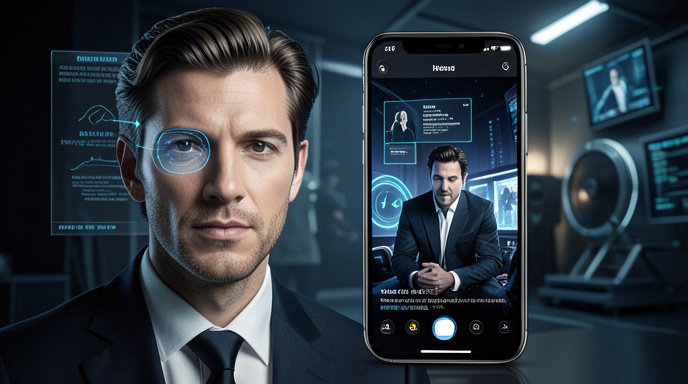
A new chapter in the debate over artificial intelligence and entertainment is taking shape around a deceptively simple commercial transaction: an actor licenses an AI-generated version of his face to a startup producing microdramas.
The deal reflects a broader shift in the entertainment business. Instead of treating an actor’s digital likeness solely as a tool for visual effects or postproduction, companies are beginning to view it as a reusable media asset—one that can appear in multiple stories, languages and formats without requiring the performer to be physically present for every shoot.
That model is already attracting attention in China, where mobile-first microdramas have become a major entertainment category. The United States, meanwhile, is still negotiating the legal and labor rules that will determine whether digital performers become a legitimate new form of creative work or an avenue for replacing human talent.
The commercial appeal is clear. The cultural and ethical consequences are much less settled.
A New Kind of Performance Contract
Traditional acting agreements compensate performers for their time, image, voice and on-camera work. AI likeness licensing adds another layer: the right to generate new performances based on an actor’s facial identity.
Depending on the contract, a digital likeness could be used as a realistic avatar, a younger or older version of the performer, a multilingual character, or a recurring virtual star. The actor might approve each individual use, authorize a defined category of productions in advance, or grant the company broad rights for a specified term.
The distinction is important. A conventional publicity-rights agreement may allow a company to use an actor’s photograph in marketing. An AI license can potentially enable the creation of entirely new footage that the actor never performed.
That makes the likeness more than an image. It becomes a programmable performance platform.
For actors, the arrangement may offer revenue beyond conventional filming and residuals. A performer could earn from appearances in short episodes, advertisements, localized versions and derivative productions. For startups, the license can provide access to a recognizable face without the costs and scheduling constraints associated with repeated live-action shoots.
The challenge is ensuring that “licensing” does not become a vague label for permanently surrendering control.
Why Microdramas Are a Natural Testing Ground
Microdramas are short, highly serialized programs designed primarily for smartphones. Episodes often run for only a few minutes and are built around rapid plot developments, cliffhangers and frequent releases.
The format has grown rapidly in China through mobile platforms that combine vertical video, fast production cycles and monetization models such as paid episode unlocks. Its success has encouraged companies in other markets to explore similar formats, including English-language adaptations and cross-border distribution.
AI-generated faces could fit the model for several reasons.
First, microdramas depend on speed. A digital performer could appear in new episodes without coordinating a traditional production schedule. Second, the format often favors recognizable character types and repeatable storytelling structures, making a licensed face useful across a series. Third, AI tools could help producers create localized versions with altered facial expressions, lip movements or performances tailored to different markets.
A startup could also use a single licensed likeness in several fictional roles, provided the contract allows it. That might create a recognizable “digital star” whose identity becomes a marketing asset independent of any single show.
However, the technology does not eliminate the need for human creative work. Writers, directors, editors, cinematographers, voice performers, animators and producers would still shape the final product. In many cases, the AI face would be one element in a hybrid production rather than a complete replacement for an actor.
The Business Case for Digital Actors
The strongest argument for AI likeness licensing is efficiency.
A digital actor can, in theory, appear in multiple productions at once. The character can be aged up or down, placed in virtual environments, and adapted for different languages without a full reshoot. Producers may be able to create promotional clips, alternate endings or regional versions at lower cost.
For established actors, licensing could create a new form of intellectual property. A performer’s face might generate income during periods when the actor is not working or after conventional on-screen roles have slowed. Actors with strong fan bases could also use digital likenesses to participate in interactive entertainment, games, virtual events and personalized media.
For emerging actors, the opportunity is more complicated. A well-structured agreement could provide a new source of income and exposure. A poorly negotiated one could allow a company to exploit an actor’s appearance indefinitely, including in projects that conflict with the performer’s values or career plans.
The value of a digital likeness will likely depend on several factors:
- The actor’s fame and recognizability
- The exclusivity and duration of the license
- The number and type of permitted productions
- Whether the likeness can be altered or combined with other digital assets
- Whether the actor receives approval rights
- Whether compensation includes royalties or only an upfront fee
- How the company handles future training and reuse of the model
The most consequential contracts may not be the headline-making celebrity deals, but agreements offered to working actors who have less bargaining power.
Consent Is More Than a Signature
Consent is central to the digital-likeness debate, but a signature alone may not provide meaningful protection.
An actor may agree to license a face for a romantic comedy, only to discover that the same digital model has been used in political advertising, violent content or a project that damages the performer’s reputation. A contract that authorizes “entertainment uses” without precise limits may leave too much room for interpretation.
Effective consent should address at least four stages of the process:
- The creation of the digital model
- The training data used to generate performances
- The specific projects in which the likeness can appear
- The retention, transfer and deletion of the model after the agreement ends
Actors may also need protections against unauthorized modifications. A digital likeness could be made to appear to speak words the performer never approved, display emotions they never intended, or interact with synthetic characters in ways that alter the meaning of a scene.
The issue becomes even more sensitive after an actor’s death. Estates may attempt to commercialize a likeness, while families, studios and fans may disagree over what uses are appropriate. A digital performance created years after an actor’s death could generate revenue, but it could also reshape the performer’s public legacy without any possibility of personal approval.
Compensation and the Residuals Question
Hollywood’s labor disputes have already established that AI compensation will be a major negotiating issue.
Actors are likely to seek payment not only for the initial creation of a digital replica, but also for each use of that replica. A one-time fee may be inadequate if a digital actor appears in hundreds of episodes, advertisements or localized releases.
Possible compensation models include:
- An upfront licensing fee
- Per-episode payments
- Usage-based royalties
- Revenue sharing
- Minimum annual guarantees
- Separate fees for advertising, games and interactive experiences
- Additional compensation for new training or expanded uses
Transparency will be essential. Performers may not be able to verify whether a likeness appeared in a production unless companies provide detailed usage records. Contracts may therefore require audit rights, reporting obligations and technical logs documenting when and where a digital asset was used.
The same issue applies to performers whose faces or bodies are scanned for a production but whose likenesses are later reused. A background actor may not have the negotiating leverage of a star, yet their digital replica could become valuable over time.
What Hollywood’s Labor Agreements Say
The Screen Actors Guild-American Federation of Television and Radio Artists has pushed for protections covering digital replicas in film, television and streaming work. The union’s broader position is that performers should provide informed consent and receive compensation when their likenesses are created or reused through synthetic media.
The exact application of those protections depends on the production, the agreement in force and the nature of the digital performance. A face-only license for a microdrama startup may not fit neatly into rules developed for a major studio production.
That uncertainty creates room for new business models, but it also creates legal risk. Companies may attempt to classify a digital character as a separate intellectual property asset rather than a performance by a human actor. Unions and regulators are likely to challenge that distinction when a recognizable performer’s identity is the foundation of the character.
The next phase of negotiations will probably focus on definitions. What counts as a digital replica? Is a stylized avatar covered? What if the face is fictional but clearly modeled on a real actor? Does a performer’s approval apply to every script, or only to the general category of use?
These questions will affect not only film and television, but also advertising, gaming, social media and virtual reality.
The China Connection
China’s microdrama industry provides an important preview of how AI-generated performers could be deployed at scale.
The country’s short-form drama ecosystem is optimized for rapid production, high-volume distribution and mobile consumption. Some producers have experimented with synthetic media, virtual presenters and AI-assisted storytelling as they seek to reduce costs and create content for increasingly segmented audiences.
That does not mean China has solved the legal or ethical questions. Regulators and platforms have introduced rules requiring greater oversight of synthetic content, including measures addressing labeling, identity misuse and the spread of misleading material.
The Chinese market does demonstrate how quickly a new entertainment format can develop when production technology, distribution platforms and consumer demand align. If AI likeness licensing becomes integrated into that system, digital actors could be used not merely as visual effects but as recurring commercial brands.
Hollywood companies are watching because microdramas could become an important international format. They are relatively inexpensive to produce, easy to adapt for mobile platforms and capable of generating revenue through subscriptions, advertising and in-app purchases.
The Creative Possibilities
The most interesting applications may not involve replacing actors in conventional productions.
A licensed digital likeness could allow a performer to play characters outside their physical age range. It could support stories in which the same actor appears simultaneously in several locations or timelines. It could help create multilingual performances while preserving a familiar face. It might also enable interactive stories in which audiences influence a character’s decisions.
Digital doubles could be useful for hazardous scenes, historical settings and heavily stylized worlds. A performer might provide the emotional foundation for a role while an AI system handles certain physical or visual transformations.
There is also potential for actors to build their own digital franchises. A performer could license an avatar for officially approved comedy sketches, educational videos, games or fan experiences. In that model, AI becomes an extension of the performer’s brand rather than a tool controlled entirely by a studio.
But creative flexibility should not be confused with artistic authenticity. Audiences may accept synthetic performances when they are clearly presented as such, while rejecting projects that conceal how much of the performance was generated or reconstructed.
Disclosure and Audience Trust
Consumers may want to know when they are watching a real performance, a digital replica, or a combination of the two.
Clear labeling could become a competitive advantage, particularly as audiences grow more skeptical of synthetic media. A disclosure might identify the licensed performer, explain the extent of AI generation and distinguish the actor’s original contribution from later digital manipulation.
Without disclosure, companies risk misleading viewers and damaging the reputation of the actor whose likeness is being used. A synthetic performance that receives public criticism may be attributed to the real performer even if they had no role in the writing, acting or approval process.
Disclosure rules could eventually become mandatory. Platforms may require metadata or visible notices for AI-generated faces, while distributors could demand contractual assurances that all digital performers have been authorized.
The challenge is creating labels that are understandable without overwhelming viewers. “AI-generated” can describe everything from a minor facial correction to a completely synthetic performance. More precise categories may be needed.
The Legal Gaps
Digital likeness rights are governed by a patchwork of publicity, privacy, copyright, contract and consumer-protection laws. These rules vary by jurisdiction and do not always provide clear answers for generative AI.
A person may have rights over the commercial use of their name, image or likeness, but the scope of those rights differs from state to state and country to country. Copyright law may protect particular recordings or images without granting ownership over a person’s identity itself.
There are also questions about the AI model. Who owns the model trained to reproduce an actor’s face? Can the company transfer it to another producer? What happens if the startup is acquired or goes bankrupt? Can the actor revoke permission after a contract ends? Must the company delete backups and training data?
International distribution makes the problem harder. A likeness approved for one territory may appear in another market with different privacy and publicity rules. Companies will need agreements that anticipate cross-border use, data storage and enforcement.
The Industry’s Likely Next Steps
The early licensing deals will probably lead to more standardized terms. Actors and unions are likely to demand clear definitions, approval procedures, usage limits, compensation formulas and post-contract deletion requirements.
Studios and startups will seek flexibility. They will argue that extensive approval rights can undermine the speed and cost advantages that make digital production attractive. The compromise may involve preapproved categories, content restrictions and escalation procedures for disputed uses.
Independent certification could also emerge. A platform or trade group might verify that a digital performer is authorized, that compensation terms are in place and that synthetic content has been disclosed to audiences.
Technical safeguards will matter as much as legal language. Watermarking, access controls, model monitoring and tamper-resistant records could help prevent an authorized digital likeness from being copied and used without permission.
The most responsible companies will treat a likeness license as an ongoing relationship rather than a one-time asset purchase.
A New Category of Hollywood Talent
The rise of digital actors does not necessarily mean the end of human performers. It may instead create a new category of talent management in which actors license controlled versions of their identities for specific uses.
Some performers will reject the model entirely. Others may embrace it as a way to reach audiences, extend careers and participate in productions that would otherwise be impractical. The difference will depend on who controls the technology and whether the economic benefits are shared fairly.
Microdramas could become the proving ground. Their short production cycles and mobile distribution make them well suited to experimentation, but their commercial pressure could also encourage aggressive use of synthetic performers.
The central question is not whether an AI-generated face can look convincing. Increasingly, it can. The question is whether the entertainment industry can build a system in which digital likenesses are used with genuine consent, fair compensation, clear disclosure and meaningful creative control.
If it can, AI faces may become a legitimate new tool for performers and producers. If it cannot, the technology risks turning human identity into an endlessly reusable asset—valuable to everyone except the person whose face made it valuable in the first place.

Get All The Latest Updates Delivered Straight To Your Inbox For Free!