
Meta Expands Instagram AI Age-Guessing Technology Worldwide
TL;DR
- Meta is expanding Instagram’s AI-based age-estimation system to identify likely teenagers who claim to be adults.
- The system analyzes signals such as account activity, social connections and content interactions, and can place suspected minors into Teen Account protections.
- Privacy, accuracy, transparency and the risk of mistaken restrictions remain central concerns as automated age checks spread worldwide.
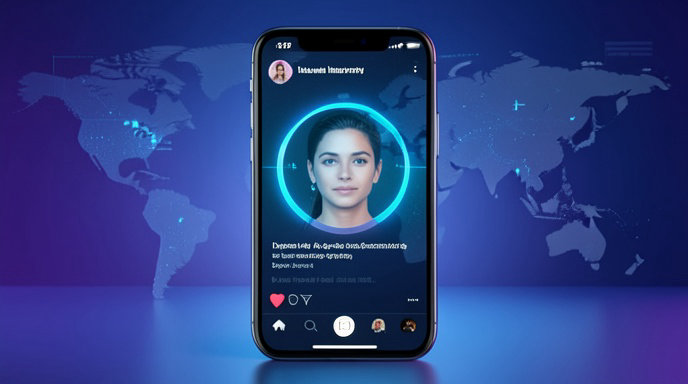
Meta is taking its effort to identify underage Instagram users global, expanding an artificial-intelligence system that attempts to estimate a person’s age even when the user enters an adult birth date.
The technology is part of Meta’s broader push to place younger users into Instagram Teen Accounts automatically. Those accounts include stricter privacy and messaging settings, limits on sensitive content, nighttime protections and additional parental-control features.
The company says the system is designed to close a gap in its existing approach: age checks that depend primarily on a user’s self-reported birthday can be easily bypassed.
How Instagram’s age estimation works
Meta’s system does not rely on a single facial scan or one isolated signal. Instead, it evaluates patterns associated with age across an account and its activity.
Potential indicators can include the accounts a person follows, the accounts that follow them, the kinds of content they view, their interactions with other users and information connected to their social network. Meta has also described using technical and behavioral signals to identify accounts that may belong to teenagers.
When the system determines that an account claiming to belong to an adult is likely operated by someone under 18, Instagram can place the user into Teen Account protections. The user may be asked to verify their age through additional methods, such as uploading identification, recording a video selfie or using an external age-verification service, depending on the country and the circumstances.
Meta has emphasized that the system is intended to estimate age rather than establish a person’s exact date of birth. That distinction matters because age estimation is inherently probabilistic: the system can conclude that someone is probably a teenager without being certain of their precise age.
Why Meta is expanding the system
The expansion comes as governments, regulators and parents demand stronger safeguards for minors on social platforms.
Instagram’s Teen Account framework was introduced to limit young users’ exposure to potentially harmful content and unwanted interactions. Teen accounts generally default to more private settings, restrict who can send messages, limit sensitive-content recommendations and include reminders to leave the app at night.
Those protections are less effective if a teenager simply enters an adult birth date during registration. Meta’s age-estimation technology is intended to detect that mismatch without requiring every user to complete a formal identity check.
The company also faces growing legal and political pressure. Policymakers in several countries are considering or implementing rules that require platforms to take reasonable steps to keep children away from age-inappropriate services and content. Automated age estimation offers Meta a way to scale those checks across millions of accounts without manually reviewing each user.
Meta has presented the approach as a balance between safety and convenience. Rather than demanding government identification from every person, the company can apply stronger checks only when its systems detect signs that an account may belong to a minor.
Teen protections can be applied automatically
One of the most significant features of the system is that Meta can apply Teen Account settings even when the user does not acknowledge being under 18.
A suspected teen may receive a notification explaining that Instagram has updated the account’s protections. Depending on the user’s age and location, the account could be made private, limit direct messages from unknown adults, reduce recommendations involving sensitive material and restrict notifications during overnight hours.
Users who believe the system made a mistake can appeal. Meta may ask them to confirm their age with a video selfie, an identity document or another verification method. In some markets, the video-selfie process is handled with help from a third-party provider that estimates age from facial characteristics and is intended to delete the image after the check.
The appeal process is designed to reduce the impact of false positives, but it also introduces another layer of data collection. A person who objects to an automated decision may have to provide more sensitive information than users who were never flagged.
Privacy questions remain unresolved
Age estimation raises difficult privacy questions because the signals involved can reveal information about a user’s identity, behavior and relationships.
Behavioral analysis may involve examining activity that users do not expect to be used for age classification. Even if Meta does not retain a permanent age profile, the system must process personal data to make its prediction. Users may also have limited visibility into which signals triggered a decision or how long those signals are stored.
Facial age estimation presents additional concerns. Although an age-estimation video selfie is not necessarily the same as biometric identification, it still involves analyzing a person’s face. Privacy advocates have questioned whether users should have to submit a facial image to regain access to features or correct an automated mistake.
The involvement of third-party verification companies adds another question: who processes the data, where it is stored and how quickly it is deleted? Requirements can vary by country, and users may not always understand the difference between Meta’s own systems and external providers used during verification.
Accuracy is a major challenge
No age-estimation system is perfectly reliable. People of the same age can look very different, while makeup, facial hair, lighting, camera quality and image quality can all affect a prediction.
Behavioral signals can also be misleading. An adult may follow accounts popular with teenagers, communicate in a youthful style or share a device with a younger family member. A teenager may have an account with limited activity or interact with content that appears more typical of an adult.
Accuracy can vary across demographic groups as well. If training data does not adequately represent different skin tones, facial features, cultures or patterns of online behavior, the system may produce uneven results.
Meta has not eliminated these risks by combining multiple signals. A broader set of inputs may improve overall performance, but it can also make decisions harder to explain. Users may know that they were flagged without knowing whether the decision was based on their face, their followers, their messages, their content preferences or a combination of factors.
The risk of overreach
Supporters argue that stronger age checks are necessary because self-declared birthdays are easy to falsify. Critics counter that automated systems can normalize surveillance and impose restrictions on adults who have done nothing wrong.
There is also concern that platforms could gradually expand the use of age inference beyond teen safety. A system introduced to protect minors might later be used to control access to particular content, personalize advertising, enforce regional laws or make judgments about a user’s identity.
That possibility makes transparency important. Meta will need to explain when age inference is used, what data is considered, how long information is retained and how users can challenge decisions. Independent audits could also help determine whether the system performs consistently across regions and demographic groups.
The system’s role in child safety
Meta argues that automated age estimation is one component of a broader safety program, not a complete solution.
Teen Accounts can reduce exposure to unwanted messages and sensitive recommendations, but they cannot eliminate every risk. Young people can still encounter harmful material, move conversations to other platforms or create multiple accounts. Parents may also struggle to understand which settings are active and how much control they actually have.
The system may nevertheless make it harder for teenagers to bypass safeguards casually. Instead of relying solely on the birthday entered at sign-up, Instagram can use account-level evidence to reassess whether its settings are appropriate.
That approach reflects a broader change in the technology industry. Platforms are increasingly treating age as something to be inferred continuously rather than declared once during registration.
A global test for Meta
Expanding age estimation worldwide will expose Meta’s system to different languages, cultures, privacy laws and patterns of internet use. A model developed primarily from data in a limited number of markets may perform differently elsewhere.
Regulatory requirements will also vary. Some countries may demand stronger consent standards, clearer explanations or local data handling. Others may restrict the use of facial analysis or require platforms to offer non-biometric alternatives.
Meta will therefore have to manage two competing expectations: governments want stronger proof that platforms are protecting children, while privacy advocates want companies to collect as little sensitive information as possible.
The company’s success will depend not only on whether the system can identify teenagers, but also on whether it can do so accurately, transparently and with meaningful safeguards for people who are incorrectly classified.
What users should expect
Instagram users may increasingly encounter age-related prompts, account-setting changes or requests to verify their age. Adults who are mistakenly identified as teenagers will generally be able to appeal, although the available options may differ by market.
Users should review Instagram’s privacy and account settings, pay attention to notices explaining age-related changes and consider the implications before submitting identification or a video selfie. Parents should also examine Teen Account controls rather than assuming that automated protections cover every aspect of a child’s experience.
Meta’s worldwide rollout marks a significant shift in how social platforms approach age assurance. The technology may help close an obvious loophole, but it also places important decisions about identity, privacy and access in the hands of opaque automated systems.
As age-estimation tools become more common, the central question will not simply be whether platforms can guess someone’s age. It will be whether they can make that guess responsibly—and provide a fair, private and understandable remedy when they get it wrong.

Get All The Latest Updates Delivered Straight To Your Inbox For Free!