
Meta Integrates Muse AI Assistant Directly Into Instagram DMs
TL;DR
- Meta has not publicly confirmed an Instagram DM integration for an AI assistant called Muse.
- Instagram already offers Meta AI features in some markets, including AI-powered chats, recommendations and creative tools.
- The reported Muse integration may reflect confusion with Meta AI, a separate experimental project or an unverified announcement.
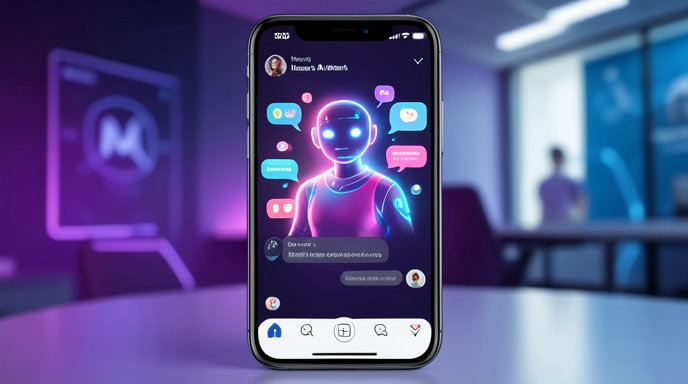
The idea of opening Instagram and chatting directly with an AI assistant inside a familiar conversation thread is increasingly becoming reality. However, there is currently no reliable public confirmation that Meta has launched—or officially announced—a product called Muse as an AI assistant integrated into Instagram direct messages.
Meta’s established assistant is Meta AI, which has been gradually incorporated into Instagram, WhatsApp, Messenger and Facebook. Any report describing “Muse” as a new Instagram-based assistant should therefore be treated cautiously until Meta publishes more details.
The broader direction is clear: Meta wants artificial intelligence to operate inside the messaging services that billions of people already use, eliminating the need to download a separate chatbot app or move between services.
Meta’s Existing AI Strategy on Instagram
Meta has been expanding Meta AI across its family of apps. Depending on location and account eligibility, Instagram users may be able to invoke the assistant in chats, ask questions, request recommendations, generate or edit images, and receive help with everyday tasks.
The assistant can also appear through search and messaging interfaces, allowing users to interact with AI without leaving Instagram. This approach mirrors Meta’s wider strategy of making AI a built-in layer across its social platforms rather than presenting it as a standalone destination.
That distinction matters because Meta AI and Muse are not interchangeable names. Meta has used “Muse” publicly in connection with artificial-intelligence research, including work related to image generation and world modeling. Those research efforts do not, by themselves, establish that Muse is a consumer chatbot available inside Instagram DMs.
A More Seamless Chat Experience
If an assistant such as Muse were integrated directly into Instagram’s messaging system, the most significant change would be convenience. Users could ask questions, brainstorm captions, plan trips or generate ideas from the same interface they use to communicate with friends.
The assistant could potentially be added to a group conversation, allowing several people to ask for suggestions together. A group planning a dinner, for example, might ask the AI to compare restaurants, summarize options or create a shared itinerary without opening another application.
In one-to-one chats, an integrated assistant could also help users draft replies, translate messages, explain unfamiliar subjects or generate creative content. The usefulness of those features would depend heavily on how much control Instagram gives people over when the AI can participate.
Why Native Integration Matters
Standalone AI applications require users to establish a separate account, learn another interface and repeatedly switch between apps. Embedding an assistant in Instagram removes much of that friction.
The integration also gives Meta access to an environment where users already exchange text, images, videos and links. That context could make an assistant more useful, particularly for tasks involving shared media or conversations. At the same time, it raises important questions about whether messages are used to improve AI systems, how group conversations are handled and what data the assistant can access.
Meta has generally emphasized that users should be able to choose when to interact with its AI tools. Clear indicators, opt-in controls and easy ways to remove an assistant from a conversation will be important if AI becomes a routine part of Instagram messaging.
Potential Features and Limitations
A deeply integrated Instagram assistant could support several functions:
- Answering questions within a DM thread
- Summarizing long conversations
- Translating messages
- Recommending products, restaurants or destinations
- Helping write captions and replies
- Generating or editing images
- Searching for information through conversational prompts
- Assisting with group planning and decision-making
However, the quality of these features will depend on the underlying model, regional availability and Meta’s safety systems. AI assistants can produce inaccurate answers, misunderstand requests or provide outdated information. They may also struggle with slang, sarcasm and conversations involving sensitive personal details.
Instagram’s visual and social nature introduces additional challenges. An assistant must understand images and videos without making users feel that private content is being analyzed unexpectedly. It must also avoid generating harmful, deceptive or copyrighted material.
The Name “Muse” Remains Unclear
The central uncertainty is whether Muse is an official consumer product at all. Meta has used the name in research-related contexts, but public information does not establish a confirmed Muse assistant inside Instagram DMs.
It is possible that the name refers to an internal codename, a limited test, a third-party service or a mix-up with Meta AI. It is also possible that a future product could adopt the Muse name, but that would require an official announcement and clear product documentation.
Until then, claims about Muse should not be presented as confirmed launch details. The verifiable development is Meta’s continued expansion of Meta AI within Instagram and its other messaging platforms.
How AI Could Reshape Instagram Messaging
Regardless of the branding, AI is likely to change what users expect from social messaging. DMs may evolve from simple exchanges between people into spaces where users can summon tools, search services, create media and organize activities.
That could make Instagram more useful, but it could also make conversations feel less personal. Users may not want automated suggestions in every interaction, and excessive AI prompts could add clutter to an interface built around direct human communication.
Meta will therefore need to balance visibility with restraint. An assistant that is easy to summon but easy to dismiss is more likely to become useful than one that constantly inserts itself into conversations.
What to Watch Next
The most important signals will be an official Meta announcement, documentation identifying Muse as a consumer assistant, screenshots from a verified test, and details about availability, privacy controls and model capabilities.
Until those details emerge, Meta AI remains the confirmed name associated with Meta’s assistant features on Instagram. The larger trend, however, is unmistakable: Meta is moving AI closer to the center of its messaging ecosystem.
A native assistant could make Instagram DMs more convenient by combining conversation, search and creation in one place. But whether that assistant is called Muse—or remains part of the Meta AI brand—will depend on product decisions that Meta has not yet publicly confirmed.

Get All The Latest Updates Delivered Straight To Your Inbox For Free!