
Oil and Shipping Tankers Targeted in Suspected Iran-Linked Cyberattacks
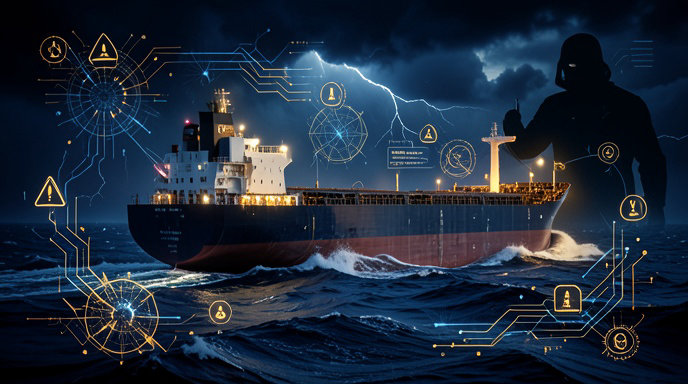
TL;DR
- A new report describes dozens of cyber incidents targeting oil companies, chemical firms and shipping tankers in recent weeks, with activity suspected of having links to Iran.
- The campaign appears designed to gather intelligence, disrupt operations or create leverage around strategically important maritime energy routes.
- The attacks highlight how exposed ship operators and industrial facilities remain as they connect operational technology to corporate networks, cloud systems and third-party vendors.
A Broadening Threat to Maritime Energy
A new report has drawn attention to a wave of cyberattacks aimed at organizations across the oil, chemical and maritime shipping industries. The incidents reportedly affected companies involved in transporting or processing energy products, including operators connected to tanker traffic and other critical maritime infrastructure.
Investigators have linked the activity tentatively to Iran, based on the apparent selection of victims, attack methods, infrastructure overlaps and tactics associated with previous Iran-aligned operations. The evidence does not amount to definitive public attribution, however. Cybersecurity researchers routinely warn that attackers can copy another group’s tools, route activity through compromised infrastructure or deliberately plant misleading clues.
The reported campaign comes as shipping companies face mounting pressure from geopolitical tensions, regional conflicts and increasingly digitized operations. Tankers now depend on connected navigation systems, cargo-management platforms, satellite communications, remote monitoring tools and port information networks. Each connection can create another potential path into the systems that support the movement of energy around the world.
Why Tankers and Energy Firms Are Attractive Targets
Oil, chemical and shipping companies are valuable targets because even a limited intrusion can produce significant strategic or financial effects.
Attackers may seek commercial intelligence, including information about cargoes, routes, charter agreements, inventories and delivery schedules. Access to that data could support sanctions evasion, influence energy markets or provide leverage in negotiations.
Operational disruption is another possible motive. Interfering with scheduling systems, loading operations, maintenance platforms or communications could delay a vessel or interrupt activity at a terminal. In the maritime sector, a relatively small technical problem can quickly become an expensive logistical failure when it affects a ship, port slot, crew change or hazardous-materials operation.
The campaign could also be intended to demonstrate capability. State-linked groups have previously used cyber operations to signal political strength, retaliate against adversaries or impose costs without crossing the threshold of a conventional military attack.
A Pattern Consistent With Iran-Linked Operations
Iran-linked cyber groups have historically targeted governments, technology companies, financial institutions, industrial organizations and critical infrastructure. Their activity has included credential theft, password spraying, exploitation of internet-facing systems, destructive malware and ransomware-style extortion.
The reported attacks on maritime and energy organizations fit several recurring characteristics associated with such campaigns: a focus on strategically important sectors, persistent attempts to obtain valid credentials and a willingness to exploit suppliers or smaller organizations that may have weaker security controls.
Attribution remains complicated. A suspected connection may be based on reused malware, command-and-control infrastructure, phishing themes, victimology or similarities in the way attackers move through a network. None of those indicators alone proves who was responsible.
Security researchers and government agencies typically distinguish between technical attribution and political attribution. Technical evidence can indicate that an operation resembles the work of a known group. Political attribution requires a much higher level of confidence about who directed, supported or benefited from the activity.
The Risks of Connected Shipping
Modern vessels are no longer isolated systems. They may connect to corporate networks, cloud services, satellite links, port platforms, cargo systems and third-party maintenance providers. These connections improve efficiency but also create opportunities for attackers to move between information technology and operational technology.
A compromise of an office account could provide a foothold for attacks against systems used to plan voyages or manage cargo. A supplier’s network could expose credentials or remote-access tools. A poorly secured industrial device could become an entry point into a terminal or processing facility.
The consequences do not always involve taking control of a ship. Disrupting data can be enough. If operators cannot trust cargo manifests, voyage plans, maintenance records or scheduling information, they may have to suspend operations while systems are checked and restored.
Chemical and petroleum facilities face additional safety concerns. Their industrial environments often include systems responsible for monitoring pressure, temperature, flow and other physical processes. Although many safety systems are segmented from business networks, weak access controls or misconfigured remote connections can increase the risk of escalation.
Potential Motives Behind the Campaign
The reported incidents may reflect several overlapping objectives rather than a single coordinated mission.
Intelligence gathering is one likely possibility. Information about tanker movements, energy shipments, refinery operations and chemical production could help an attacker understand supply chains and identify future targets.
Disruption is another. Even temporary interference could create delays, increase insurance and operating costs or force companies to switch to manual procedures. A disruptive operation could also be timed to coincide with a political crisis or military event.
Financial gain cannot be ruled out. Criminal groups and state-linked actors sometimes use similar tools, and an intrusion initially conducted for espionage can later be converted into ransomware or extortion.
Finally, the attacks may be intended as preparation. Persistent access to a network does not necessarily produce immediate damage. It can give an operator the ability to act later, particularly during a period of heightened tension.
The Third-Party Problem
Shipping and energy companies depend on extensive networks of contractors, brokers, software providers, port operators, equipment manufacturers and maritime-service firms. These partners can have privileged access to corporate or operational environments without maintaining the same level of security.
Attackers often target the weakest organization in a supply chain. A smaller logistics company may have fewer security staff, limited monitoring and outdated systems. Compromising that company can provide a more discreet route into a larger operator.
Remote maintenance is a particular concern. Vendors may require persistent access to shipboard or industrial systems, while shared accounts and inadequate multifactor authentication can make it difficult to determine who connected and what they did.
Organizations are increasingly being urged to inventory third-party access, eliminate unnecessary remote connections, require strong authentication and monitor vendor activity as closely as internal staff activity.
What Operators Can Do Now
Maritime and energy companies should treat the reported activity as a warning to review both cyber defenses and operational resilience.
Priority measures include:
- Enforcing multifactor authentication for email, virtual private networks, remote desktop services and administrative accounts.
- Disabling obsolete accounts and removing direct internet exposure from systems that do not require it.
- Separating corporate information technology from shipboard and industrial operational technology.
- Monitoring for password spraying, unusual login locations, newly created administrator accounts and unexpected remote-management tools.
- Maintaining offline or otherwise protected backups and testing recovery procedures.
- Restricting vendor access by time, system and function rather than granting broad permanent privileges.
- Reviewing incident-response plans with ship crews, terminal staff, port authorities and external suppliers.
- Preserving logs and forensic data so that suspicious activity can be investigated quickly.
- Practicing manual operating procedures for essential navigation, cargo and terminal functions.
Cybersecurity teams should also coordinate with national computer emergency response organizations, maritime authorities and industry information-sharing groups. Early reporting can help identify common infrastructure and prevent one company’s compromise from becoming another operator’s breach.
Attribution Will Take Time
The suspected Iran-linked connection is likely to remain under review as researchers compare technical indicators from the incidents. Public assessments may change as investigators gain access to compromised systems, identify malware samples or connect infrastructure used in the attacks to earlier campaigns.
That uncertainty should not be mistaken for a lack of risk. Companies do not need definitive attribution before taking defensive action. The immediate priority is to determine whether attackers have obtained valid credentials, established persistence or reached systems that affect physical operations.
The broader lesson is that cyberattacks against maritime energy infrastructure do not need to disable an entire fleet to have an impact. Delays, uncertainty and loss of trust in operational data can be enough to create economic and strategic consequences.
A Growing Security Challenge for Global Trade
The latest incidents underscore the vulnerability of an industry that sits at the intersection of global commerce, energy security and geopolitics. Oil and chemical tankers carry goods essential to economies around the world, yet many of the digital systems supporting those journeys were introduced gradually, through a mix of legacy equipment, modern cloud services and third-party technology.
That complexity makes a complete defensive perimeter difficult to maintain. It also means that a cyber incident aboard one vessel, at one terminal or inside one supplier could have effects far beyond the original victim.
As tensions involving Iran and other regional powers continue to shape threat activity, maritime operators are likely to face more attempts at espionage, disruption and coercion. The industry’s ability to segment systems, detect intrusions and continue operating safely after a compromise will be as important as preventing the initial breach.

Get All The Latest Updates Delivered Straight To Your Inbox For Free!