
AI vs Spyware: How AI-Powered Vulnerability Discovery Could End Government Hacking Tools
TL;DR
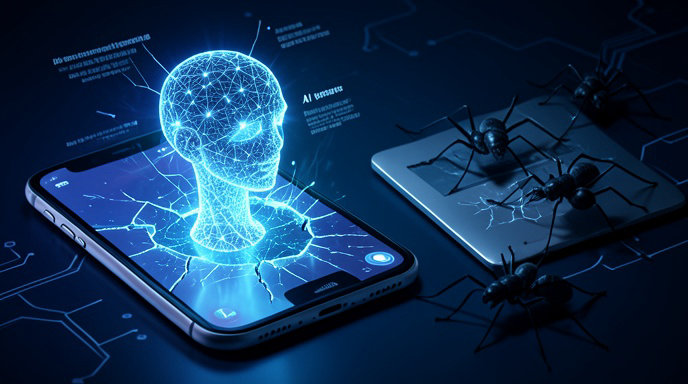
- AI models are now finding software vulnerabilities in hours instead of months, causing bugs to be discovered and patched before governments can stockpile them as secret hacking tools.
- This rapid discovery cycle is threatening the business model of spyware makers and state-sponsored hacking programs that rely on rare, long-lasting zero-day exploits.
- As traditional hacking tools become less reliable, intelligence and law enforcement agencies are expected to push harder for mandated backdoors in encrypted devices, reigniting a major privacy battle.
The End of the Secret Stockpile
For more than a decade, government hacking has operated on a simple economic model: find a hidden flaw in iOS, Android, Windows, or Chrome, keep it secret, and turn it into a weapon. These so-called zero-day vulnerabilities are the foundation of the modern spyware industry. Companies like NSO Group and Intellexa, and the intelligence agencies that buy from them, maintain stockpiles of undiscovered bugs that allow them to break into phones and computers with a single invisible message.
That model only works if vulnerabilities remain rare and undiscovered for a long time. AI is destroying that assumption. In the last year, AI systems built specifically for vulnerability research have gone from experimental demos to practical tools that are outperforming human experts.
In 2024 and 2025, Google's Project Zero and DeepMind revealed projects like Big Sleep, an AI agent that autonomously discovered a real-world, previously unknown vulnerability in SQLite, a database engine used by billions of devices. Since then, similar AI agents from OpenAI, Anthropic, and independent security research labs have been shown finding dozens of zero-days in open-source software in a matter of days during testing. What once required a team of elite hackers spending months reverse-engineering code can now be done by an AI scanning millions of lines of code overnight.
The Shrinking Window
The result is a dramatic compression of the vulnerability lifecycle. Security researchers describe it as the "shrinking window" - the time between when a bug is introduced into software and when it is found and fixed is collapsing.
Previously, a valuable zero-day exploit for an iPhone might remain usable for a year or more before Apple found and patched it. That long window made it worth investing millions of dollars to develop and weaponize. If AI-driven scanners, both defensive and offensive, are now finding those same bugs within weeks or days of their creation, the return on investment plummets.
For defenders, this is a major win. Companies like Google, Microsoft, and Apple are already integrating AI vulnerability discovery directly into their development pipelines, catching bugs before software even ships. For attackers who need secrecy, it's a crisis. A stockpiled exploit could become worthless overnight because another AI - run by a rival government or a tech company - found the same flaw and patched it first.
Why Spyware Is Getting Harder to Build and Use
This shift hits the commercial spyware industry hardest. Tools like Pegasus and Predator depend on a chain of two or three zero-days to silently compromise a fully updated phone. If any one link in that chain is discovered and patched quickly, the entire attack fails.
As AI makes individual bugs easier to find, it also makes them easier to fix, which forces spyware vendors to find more bugs, more quickly, just to maintain the same capability. The cost of developing a reliable, persistent hacking tool is skyrocketing while its shelf life is plummeting. Some security experts now argue we are approaching a future where true zero-days are still possible, but they are too fleeting to be used as a stable, long-term surveillance platform.
For state-sponsored hackers in countries like Russia, China, and the US, the same logic applies. Large-scale campaigns that rely on reusing the same secret exploits against thousands of targets become far riskier and less effective if those exploits are likely to be burned and patched within weeks.
The New Push for Backdoors
If governments can no longer reliably hack devices through secret flaws, how will they conduct lawful surveillance? This is where the debate over encryption is about to reignite.
For years, law enforcement agencies including the FBI, and governments in the UK and EU, have argued that end-to-end encryption on apps like WhatsApp, Signal, and iMessage creates a "going dark" problem. They have demanded that tech companies create backdoors - a special key or access method that would allow police with a warrant to bypass encryption.
Tech companies and privacy advocates have always countered that a backdoor for the good guys is a backdoor for everyone, and that governments should use hacking tools and zero-days for targeted access instead of weakening encryption for all users.
AI is undermining that compromise. If hacking is no longer a reliable alternative, intelligence and law enforcement agencies will have a much stronger political argument to say: "We have no other way in." Expect renewed legislative pushes in 2025 and 2026, including revived efforts around the UK's Online Safety Act, the EU's proposed child protection scanning rules, and new US lawful access bills, all framed as necessary because AI has closed the hacking loophole.
Privacy advocates warn this would be a dangerous trade-off. A world where AI finds and fixes flaws quickly is, in theory, a more secure world for everyone. Mandating backdoors would intentionally reintroduce the very vulnerabilities AI is helping to eliminate, creating a single point of failure that any attacker - criminal or state-sponsored - could eventually exploit, potentially with the help of AI itself.
A More Secure, More Contested Future
AI will not end hacking entirely. It will also be used by attackers to find bugs faster. But it is fundamentally changing the economics of secrecy. The era when a government could find a bug, keep it quiet for years, and use it at will is coming to an end.
What replaces it is a faster, more automated cat-and-mouse game where defense has a growing advantage, and where the political fight over access to data will no longer be fought in the shadows with secret exploits, but in the open, in courts and parliaments, over the future of encryption itself.

Get All The Latest Updates Delivered Straight To Your Inbox For Free!