
Long Live Mechanical Keyboards: How Keychron K2 and Wood Designs Took Over
TL;DR
- Born on Kickstarter in 2017, Keychron grew from a Mac-friendly wireless niche into the dominant name in affordable mechanical keyboards by 2026.
- The $75-$95 Keychron K2 remains its breakout hit, blending 75% layout, Mac/Windows support, hot-swap, Bluetooth and QMK/VIA customization.
- New wood-edition models and Hall Effect upgrades show why typists still choose tactile mechanical boards over thin laptop keyboards.
From Kickstarter Underdog to Keyboard King
It is hard to remember now, but in 2017 mechanical keyboards were still a hobbyist maze of cables, dongles and Windows-only layouts. Then a small Hong Kong team launched the Keychron K1 and K2 on Kickstarter with a simple pitch: slim, wireless, affordable, and fully compatible with both Mac and Windows.
The campaign exploded. Creators and remote workers tired of mushy butterfly keyboards and $150+ gaming boards finally had a $69-$79 option that looked good on a desk, paired with three devices over Bluetooth, and offered real Gateron mechanical switches.
Nine years later, Keychron is no longer an underdog. From Amazon bestseller lists to office desks and TikTok setup tours, it is now the default starter recommendation alongside Logitech and Royal Kludge. The company has scaled that original formula across dozens of lines - the budget V and C series, the premium CNC-aluminum Q and Q Max series, the low-profile K Max series, and its Lemokey gaming sub-brand - all while keeping QMK/VIA remapping, PBT keycaps and hot-swappable sockets as standard.
Why the K2 Became the Everyman Mechanical
If you have typed on a Keychron, it was probably a K2. The 75% 84-key layout keeps arrow keys and function row while saving desk space, a balance that proved perfect for writers, coders and students.
The current K2 Version 2 and new K2 HE Hall Effect edition explain its staying power. For around $79-$94, you get a gasket-mounted board with south-facing RGB, double-shot PBT keycaps, 4000mAh battery rated for up to 240 hours without backlight, Bluetooth 5.1 plus wired USB-C, and a Mac/Windows toggle with extra keycaps in the box.
Crucially, Keychron listened to enthusiasts. Early K2s were tray-mounted and non-customizable. Today's models offer hot-swap sockets for Gateron G Pro Brown, Red or Blue switches, QMK/VIA support for macros and key remapping, and foam and silicone dampening for a deeper, less rattly sound. The K2 HE goes further with adjustable magnetic switches for rapid trigger gaming and analog input - a feature once reserved for $200+ Wooting boards.
That value equation is why reviews in 2024, 2025 and 2026 still call the K2 the best mechanical keyboard for most people.
Wood Is Back: The All-Timber Showstopper
Keychron's most talked-about pivot has been material, not circuitry. While most rivals chase aluminum and transparent plastic, Keychron leaned into craft with its all-wood editions.
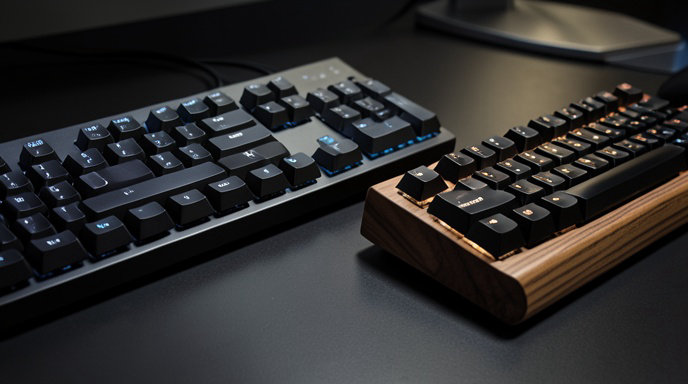
Built with solid walnut and elm wood frames rather than just a wooden palm rest, models like the K2 Wooden Edition and Q-series wooden variants turn a tech tool into furniture. Each chassis has unique grain, a warm sound signature that softens high-pitched clack, and hand-oiled finishes that age over time.
It is part of a broader 2025-2026 trend: gasket-mounted wooden keyboards, retro typewriter keycaps, and cozy desk setups. Keychron paired the timber with modern internals - 2.4GHz wireless with 1000Hz polling, QMK customization, and linear, tactile or clicky switches - proving heritage looks do not mean outdated performance. Limited drops have repeatedly sold out, pushing wood from novelty to core lineup.
Why Typists Still Swear By Clicky Keys in 2026
In an era of touchscreen tablets, AI dictation and wafer-thin laptop keyboards, why are mechanical boards booming?
Ask typists and the answer is feel and ownership. A well-lubed tactile switch reduces finger fatigue, delivers precise feedback for long writing sessions, and can be tuned with different switches, keycaps and foam layers. For programmers and journalists filing thousands of words a day, that matters more than thinness.
Keychron nailed the second part: ownership. Hot-swap means a broken switch no longer kills a $80 board. VIA means a copywriter on Mac can remap keys without software bloat. Bluetooth multipoint plus wired mode means one board jumps from iPad to Windows desktop to MacBook.
Add durability - PBT caps that do not shine, batteries that last months on standby - and repairability, and the mechanical revival makes sense. It is not nostalgia. It is control.
What Comes Next
Keychron shows no signs of slowing for late 2026. Expect more Hall Effect magnetic models, 8K polling gaming boards under Lemokey, and expanded Q Max southpaw and split ergonomic layouts. Sustainability is also in focus, with longer firmware support and replaceable parts.
From a 2017 Kickstarter to a wooden desk centerpiece, Keychron's arc mirrors the mechanical keyboard itself: once niche, now mainstream because it lets people type their way. Long live the clack.

Get All The Latest Updates Delivered Straight To Your Inbox For Free!