
Anthro Energy’s Louisville Factory Breakthrough: The Road to Solid-State Batteries
TL;DR
- Anthro Energy has officially broken ground on a new Louisville, Kentucky factory dedicated to producing advanced electrolytes for both current lithium-ion and next-generation solid-state batteries.
- The facility is designed to bridge the gap between today's battery chemistry and tomorrow's high-energy-density cells, aiming to solve key manufacturing bottlenecks in solid-state adoption.
- This investment positions Kentucky as a strategic hub for battery materials, with potential ripple effects for EV range, charging speeds, and consumer electronics safety.
The Groundbreaking: A New Chapter for Battery Chemistry
On a plot of land in Louisville, Kentucky, the future of energy storage just got a little more tangible. Anthro Energy has officially broken ground on a factory that will produce advanced electrolytes—the liquid or semi-solid medium that allows ions to flow between a battery's anode and cathode. While electrolytes rarely make headlines compared to flashy new anode materials or silicon innovations, they are the unsung workhorses of every rechargeable battery.
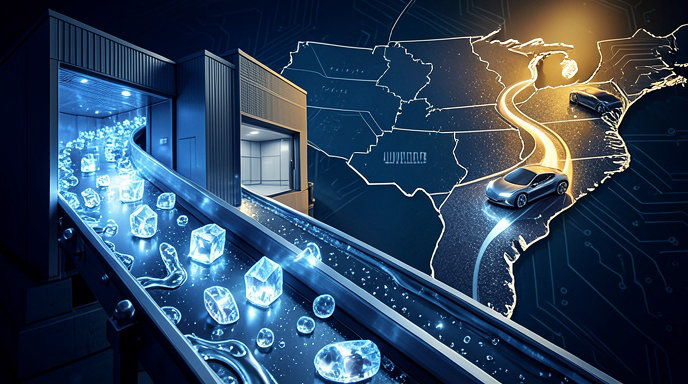
What makes this specific project noteworthy is its dual-purpose design. The factory won't just serve the existing lithium-ion market; it is also being built with the explicit goal of supporting the emerging solid-state battery sector. That means Anthro is betting on a future where the same production lines can pivot between conventional liquid electrolytes and the more complex, safer formulations required for solid-state cells.
According to company representatives, the Louisville site was chosen for its central logistics position, access to a skilled manufacturing workforce, and proximity to a growing cluster of battery and automotive R&D facilities in the Midwest and Southeast. The groundbreaking marks the start of a multi-phase construction plan, with initial production capacity expected to come online within the next 18 to 24 months.
Why Electrolytes Are the Silent Gatekeepers of Battery Performance
Most discussions about battery breakthroughs focus on energy density—how many watt-hours you can pack into a kilogram of material. But the electrolyte is the gatekeeper. It determines how fast ions travel, how much heat is generated, and how quickly the battery degrades over time.
In conventional lithium-ion batteries, the electrolyte is typically a liquid mixture of lithium salts and organic solvents. It works, but it has limits. At high voltages, these liquids can decompose. At high temperatures, they can become flammable. And at extremely fast charging rates, they can create lithium metal plating that shortens battery life.
Anthro Energy's strategy is to develop what the industry calls "intermediate" or "hybrid" electrolytes—formulations that retain the manufacturing ease of liquids but mimic the stability of solid materials. These advanced electrolytes can be dropped into existing lithium-ion production lines with minimal retrofitting, offering an immediate performance boost. More importantly, they serve as a stepping stone to true solid-state systems, where the electrolyte is a rigid ceramic or polymer that eliminates flammability risks entirely.
Bridging the Gap: From Liquid to Solid Without Disrupting the Supply Chain
One of the biggest hurdles to solid-state battery commercialization is not just chemistry—it's manufacturing. Solid-state electrolytes are notoriously difficult to produce at scale because they require high-pressure sintering, precise temperature control, and handling of brittle ceramic materials. Most pilot lines produce small batches at high cost.
Anthro's Louisville factory is designed to sidestep this problem by using a modular production approach. The same facility will be able to produce liquid electrolytes for today's EVs and then, with a change in feedstock and mixing protocols, produce the gel-like or semi-solid precursors that can be converted into solid-state membranes. This flexibility is critical because it de-risks the investment: if solid-state adoption is slower than expected, the factory still has a viable revenue stream from conventional batteries.
Industry analysts point out that this strategy mirrors what successful battery material companies have done in the past—start with a product that works today, then evolve the process as the market matures. By doing so, Anthro is positioning itself not as a speculative startup but as a reliable supplier to both legacy automakers and next-generation battery startups.
The Louisville Factor: Why Kentucky Is Becoming a Battery Materials Hub
Louisville might not be the first name that comes to mind when you think of high-tech manufacturing, but that is changing rapidly. The region has seen a wave of investment in recent years, driven by federal incentives for domestic battery production and a push to reduce reliance on Asian supply chains.
Kentucky already hosts several large-scale battery plants for major automakers, and the state has aggressively courted suppliers like Anthro with tax abatements and workforce development programs. The new factory is expected to create hundreds of skilled jobs, ranging from chemical engineers to process technicians. Local universities, including the University of Louisville, have also ramped up research programs in electrochemistry, ensuring a pipeline of talent.
From a logistics perspective, Louisville is a natural fit. It sits within a day's drive of most major EV assembly plants in the Midwest and Southeast, and its position as a major UPS air hub allows for rapid shipment of high-value, time-sensitive materials. For a company like Anthro, which needs to maintain strict quality control over its electrolyte formulations, having a central distribution point is a competitive advantage.
Implications for EVs and Consumer Electronics: Faster Charging, Safer Cells
The practical benefits of Anthro's electrolyte innovations are tangible. For electric vehicles, advanced electrolytes could enable faster charging without the risk of lithium plating. That means a 10-to-80% charge in under 15 minutes becomes a realistic target for mainstream vehicles, not just flagship models. Additionally, better thermal stability reduces the need for heavy cooling systems, which in turn improves vehicle range.
For consumer electronics, the impact is equally significant. Smartphones and laptops have long suffered from heat-related battery degradation. A more stable electrolyte could extend battery lifespan by hundreds of cycles, meaning your phone holds a useful charge for an extra year or two. And in the realm of wearables and medical devices, the safety improvements of solid-state-style electrolytes are a game-changer—no more risk of thermal runaway in a device strapped to your wrist or implanted in your body.
The Road Ahead: What This Means for Solid-State Commercialization
Anthro Energy's groundbreaking is not just a local news story; it is a signal to the industry that the path to solid-state batteries runs through incremental manufacturing innovation, not just lab-scale breakthroughs. By building a factory that can serve both current and future technologies, the company is effectively building a bridge over the "valley of death" that has stalled many promising battery chemistries.
Industry observers expect that if the Louisville plant hits its production targets, it will validate the hybrid electrolyte approach and encourage other material suppliers to follow suit. That could accelerate the timeline for solid-state batteries in commercial EVs from the late 2030s to the early 2030s—a significant shift that would ripple across the entire automotive and electronics ecosystem.
There are still challenges ahead. Scaling up production of semi-solid electrolytes requires precise control over particle size and uniformity, and any contamination can lead to cell failure. But with the ground now broken in Louisville, Anthro Energy has committed itself to solving those problems in a real-world factory, not just in a research paper. For anyone watching the battery industry, this is a project worth following closely.

Get All The Latest Updates Delivered Straight To Your Inbox For Free!