
Warp Factories: The Out-of-the-Box Software Factory for AI Development
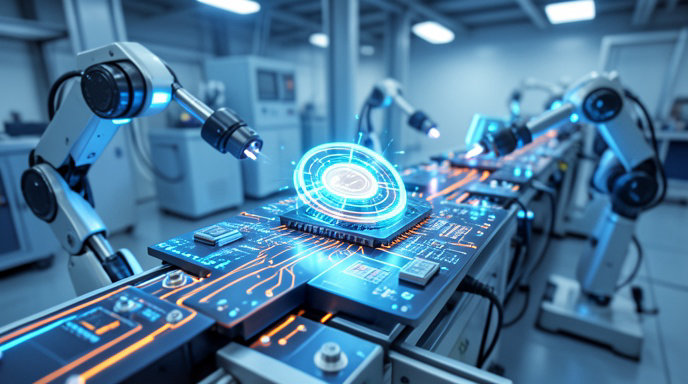
TL;DR
- Warp Factories is a new turnkey infrastructure platform designed to remove the heavy lifting of building AI development pipelines, offering pre-configured environments for teams that want to skip the DevOps grind.
- The system targets both established enterprises and fast-moving startups by bundling GPU management, data orchestration, and CI/CD for machine learning into a single, unified interface.
- Industry analysts see this as a strategic move by Warp to differentiate itself from hyperscaler clouds and point-solution MLOps vendors, potentially reshaping how companies budget for AI infrastructure.
The AI Infrastructure Bottleneck Is Real
Ask any machine learning engineer what slows them down, and you will rarely hear "the model." You will hear about the environment. The dependency clashes. The GPU that is either idle or oversubscribed. The pipeline that works on a laptop but breaks in production.
While the AI world has been obsessed with new model architectures and benchmark scores, the unglamorous truth is that most enterprise AI initiatives stall in the messy middle: between a proof-of-concept and a scalable product. This is the exact pain point that Warp aims to eliminate with its newly unveiled Warp Factories system.
Announced amid a flurry of AI infrastructure news, Warp Factories is not another GPU rental service or a simple notebook environment. It is a comprehensive, opinionated framework that essentially acts as a "software factory" for AI teams. The premise is simple: instead of spending weeks wiring together Kubernetes clusters, vector databases, and model registries, you get a pre-assembled, production-ready platform out of the box.
What Is a "Software Factory" in the AI Context?
The term "software factory" is a deliberate callback to the manufacturing era, but applied to code. In traditional software engineering, a factory standardizes the way code is built, tested, and deployed. Warp is applying this logic to the entire AI lifecycle.
Warp Factories functions as a control plane that sits atop your existing cloud or on-premises infrastructure. It abstracts away the fragility of the underlying stack. When you spin up a "Factory," you are not just getting a virtual machine; you are getting a fully integrated environment that includes:
- Orchestrated GPU pools that automatically scale based on job queues.
- Feature stores and data versioning pre-wired to your training pipelines.
- Automated CI/CD for models, including A/B testing frameworks and rollback mechanisms.
- Policy-as-code for security and compliance, ensuring that every experiment adheres to enterprise governance.
The key differentiator is the "turnkey" nature. Warp claims that a team can go from zero to a running training pipeline in under an hour, a process that traditionally takes weeks of engineering time.
Who Is This Actually For?
Warp is clearly not targeting the solo developer experimenting with a Jupyter notebook. The pricing and complexity point toward two distinct user profiles.
First, there are the Enterprise ML Platform Teams. These are the groups inside large banks, healthcare providers, and retailers tasked with building internal AI capabilities. They often have the talent but lack the time to build a robust platform from scratch. For them, Warp Factories offers a way to centralize best practices without hiring a dedicated infrastructure team of ten people.
Second, there are AI-Native Startups that are burning through venture capital on compute costs. For these companies, time-to-market is everything. Warp Factories allows their data scientists to focus on model accuracy rather than debugging a broken Docker container at 2 AM. By handling the undifferentiated heavy lifting, Warp effectively becomes the "platform team" for companies that are too small to have one.
Key Features That Set It Apart
While other MLOps tools exist, Warp’s approach has a few notable technical hooks that deserve attention.
- The "Blue-Green" Compute Model: Warp Factories introduces a unique way to handle idle GPU capacity. It allows teams to run non-critical batch workloads on "green" instances that can be preempted at a moment's notice for high-priority "blue" training runs. This maximizes utilization and significantly reduces the cost per experiment.
- Integrated Data Lineage: Instead of bolting on a separate data governance tool, Warp Factories tracks every dataset, every hyperparameter, and every code commit automatically. This creates a complete audit trail, which is critical for industries subject to regulatory scrutiny like finance and healthcare.
- GitOps-Native Workflows: The entire factory configuration is defined in code and stored in Git. This means that infrastructure changes undergo the same peer-review process as application code, eliminating the "works on my machine" problem across the entire organization.
The Competitive Landscape and Warp’s Positioning
The AI infrastructure market is crowded. You have hyperscalers like AWS and Azure offering raw compute, and specialized vendors like Weights & Biases and Dataiku focusing on experiment tracking and orchestration. Where does Warp fit?
Warp is positioning itself as the "operating system" for the AI factory floor. They are not trying to beat AWS on price for raw GPUs; they are trying to beat the complexity of using AWS directly. By offering a layer that abstracts the underlying cloud, they are essentially selling productivity and speed.
Industry analysts suggest this is a double-edged sword. On one hand, it offers a massive value proposition for enterprises that are paralyzed by choice. On the other hand, it creates a dependency on Warp’s proprietary layer. If Warp goes down, so does your AI production line.
Potential Impact on Enterprise AI Workflows
If Warp Factories gains traction, the impact on enterprise AI workflows could be profound. We are likely to see a shift from bespoke, hand-rolled infrastructure to standardized "factory" patterns. This will have several downstream effects:
- Lowering the Barrier to Entry: Mid-sized companies that previously considered AI too expensive or complex will find it easier to adopt. If the infrastructure is "just there," the only remaining question is whether you have the data and the talent to use it.
- Accelerating the Feedback Loop: With faster iteration cycles, the gap between a business request and a deployed model will shrink dramatically. This could lead to more agile, data-driven decision-making across the enterprise.
- The Rise of the "AI Platform Engineer": As platforms like Warp Factories become more common, the role of the traditional DevOps engineer will evolve. The focus will shift from managing servers to defining policies and optimizing factory configurations.
The Road Ahead
Warp Factories is a bold bet that enterprises are done with the "do-it-yourself" era of AI infrastructure. The initial reviews from early access partners are positive, particularly regarding the developer experience and the speed of onboarding.
However, the proof will be in the long-term reliability and the cost savings delivered at scale. The AI market is notoriously fickle, and enterprises are wary of vendor lock-in. Warp’s challenge will be to prove that its factory is not just shiny out of the box, but that it remains robust and cost-effective as workloads grow exponentially.
For now, the announcement signals a clear maturation of the AI industry. We are moving from the era of "building the tools" to the era of "using the tools." If Warp Factories delivers on its promise, it could very well become the default assembly line for the next generation of artificial intelligence.

Get All The Latest Updates Delivered Straight To Your Inbox For Free!