
Einride Expands Fleet with 500 Tesla Semis for Amazon and Other Clients
TL;DR
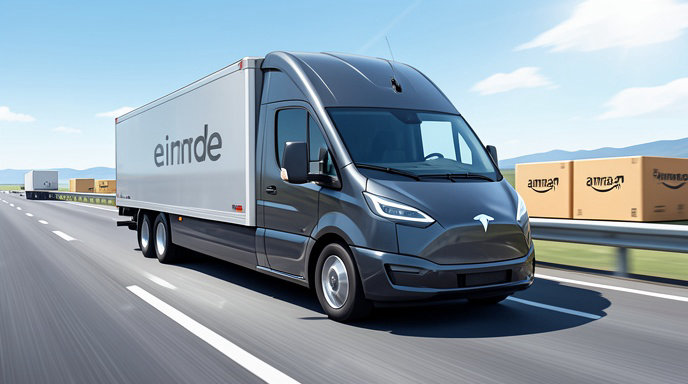
- Einride has signed a landmark agreement to acquire 500 Tesla Semi electric trucks, one of the largest single orders for the Class 8 EV to date, with deliveries slated to begin in 2026.
- The fleet will primarily serve Amazon's freight network, alongside other major logistics customers, marking a significant shift toward zero-emission long-haul trucking in the U.S. and Europe.
- The order provides a major boost to Tesla's production ramp, signaling strong commercial confidence in the Semi's range, charging infrastructure, and total cost of ownership.
The Deal at a Glance: A 500-Truck Bet on Electric Freight
Swedish electric freight technology company Einride has placed a massive order for 500 Tesla Semi trucks, a move that vaults it into the ranks of the largest zero-emission fleet operators in the world. The agreement, confirmed by both companies, is not just a purchase order—it is a strategic partnership designed to accelerate the decarbonization of heavy-duty logistics.
The trucks will be deployed across Einride's operating network, with a primary allocation dedicated to serving Amazon's high-volume, time-sensitive freight corridors. This is not Einride's first collaboration with the e-commerce giant; the two have worked together on pilot programs in Europe, but this order scales that relationship to an industrial level. Beyond Amazon, the remaining trucks will be assigned to a roster of retail, manufacturing, and consumer goods clients who have signed long-term freight capacity agreements with Einride.
Why This Order Matters for Tesla's Production Ramp
For Tesla, this 500-unit order is a critical validation of the Semi's commercial viability. Since the Semi's launch in late 2022, Tesla has struggled to scale production beyond a trickle, with the company prioritizing battery cell supply for its passenger vehicles. The Einride deal changes the calculus.
Tesla's Semi production line in Nevada is currently being expanded, and the company has indicated that it expects to produce several thousand units per year by 2027. The Einride order alone represents a substantial portion of that near-term output. Crucially, the order is not a reservation—it is a firm purchase commitment with staggered delivery dates, giving Tesla a clear revenue pipeline to justify additional capital expenditure on its commercial vehicle line.
Moreover, the deal forces Tesla to accelerate its Megacharger network rollout. A fleet of 500 Semis operating on dedicated routes requires high-power charging infrastructure at distribution hubs. Tesla has committed to installing Megachargers at Einride's key terminals in California, Texas, and the Northeast corridor, with a target of 1,200 kW charging speeds to minimize downtime.
Einride's Role: More Than Just Buying Trucks
Einride is not a traditional trucking company. Founded in 2016, it positions itself as a digital freight platform that combines electric vehicles, autonomous driving technology, and software-driven route optimization. The company operates a "Fleet as a Service" model, where it owns the vehicles and charges shippers per mile or per shipment, handling maintenance, charging, and telematics.
This order is a natural extension of that model. By acquiring Tesla Semis, Einride is moving away from its earlier reliance on smaller electric trucks (like the Einride Pod) and embracing heavy-duty Class 8 vehicles that can handle long-haul routes of 250 to 500 miles on a single charge. The company's proprietary operating system, Einride Saga, will be integrated with Tesla's vehicle telematics to optimize battery usage, predict maintenance needs, and schedule charging during off-peak energy pricing windows.
The Amazon contract is particularly telling. Amazon has pledged to reach net-zero carbon emissions by 2040 and has a stated goal of deploying 100,000 electric delivery vehicles by 2030. While most of those are smaller Rivian vans, the Einride deal allows Amazon to electrify its heavier, regional trucking lanes without owning the assets directly. This outsourcing model reduces Amazon's capital risk while giving it verifiable emissions reductions.
The Charging and Range Reality Check
One of the biggest hurdles to electric truck adoption has been range anxiety and charging downtime. The Tesla Semi, in its highest-spec configuration, offers a 500-mile range with a full load (82,000 lbs gross vehicle weight). In real-world conditions, that translates to roughly 300-350 miles on a typical highway route with elevation changes and HVAC usage.
Einride's deployment plan accounts for this by designing "hub-and-spoke" routes. Trucks will operate on dedicated lanes between major distribution centers, returning to a central hub for Megacharging. The company has calculated that with 30-minute charging sessions (to 80% state of charge), it can maintain a utilization rate comparable to diesel trucks, provided the charging infrastructure is reliable.
However, industry analysts note that grid capacity remains a concern. Charging 500 trucks simultaneously would require roughly 375 megawatts of power—equivalent to a small city. Einride has already begun working with utility companies in key states to secure grid upgrades and is exploring on-site battery storage at its hubs to buffer peak demand.
What This Means for Sustainable Shipping Adoption
The ripple effect of this deal extends far beyond Tesla and Einride. For the freight industry, it signals that large-scale electrification is no longer a pilot project. The total cost of ownership for electric trucks is now competitive with diesel, especially when factoring in lower fuel costs, reduced maintenance (no oil changes, fewer brake replacements due to regenerative braking), and government incentives like the EPA's Clean Heavy-Duty Vehicle Program.
Competitors are also taking notice. Traditional OEMs like Daimler Trucks (with the eCascadia) and Volvo Trucks (with the VNR Electric) have been selling electric trucks in smaller volumes. The Einride-Tesla deal puts pressure on these incumbents to secure similar large-scale commitments or risk losing market share in the premium long-haul segment.
For shippers, the deal provides a template for decarbonizing supply chains without disrupting operations. Amazon's willingness to commit to a 500-truck fleet—even indirectly—sends a strong signal to other Fortune 500 companies that electric freight is operationally dependable. It also creates a secondary market for used electric truck batteries, which can be repurposed for stationary energy storage after their vehicle life ends.
The Road Ahead: Delivery Timeline and Challenges
Deliveries are expected to begin in the third quarter of 2026, with the full fleet deployed by the end of 2027. Einride will initially concentrate the trucks in California and Texas, where charging infrastructure is most developed, before expanding to the Midwest and East Coast.
There are still hurdles. Tesla has a history of missing production deadlines, and the Semi is no exception. The company has already delayed the vehicle multiple times since its original 2019 announcement. Additionally, the price of the Semi is not publicly disclosed, but industry estimates place it between $150,000 and $180,000 per unit. At that price, the Einride order represents a capital commitment of roughly $75-90 million, a significant but manageable figure for a company that recently raised $500 million in a funding round.
Another challenge is driver availability. Electric trucks require specialized training for regenerative braking and range management. Einride is partnering with community colleges in Texas and California to develop a certified electric truck driver training program, aiming to create a pipeline of 1,000 qualified drivers over the next two years.
A Watershed Moment for Freight Electrification
This deal is more than a commercial transaction; it is a proof point that the transition to zero-emission freight is accelerating at a pace few predicted just a few years ago. Einride's bet on Tesla's technology, combined with Amazon's demand for sustainable logistics, creates a powerful ecosystem that could force broader infrastructure investment across the industry.
If the trucks perform as advertised, and charging networks hold up under real-world stress, this order will likely be followed by even larger fleet conversions. If they don't, it could set the electrification movement back by years. For now, the industry is watching closely, and the stakes have never been higher.

Get All The Latest Updates Delivered Straight To Your Inbox For Free!