
Letara Secures $16M to Expand Hybrid Rocket Tech From Satellite Thrusters to Space and Defense
TL;DR
- Japanese space startup Letara has raised ¥2.6 billion ($16M) to scale its hybrid rocket propulsion system from small satellite thrusters into larger launch vehicles and defense applications.
- The Hokkaido University spin-off's technology, which combines solid fuel and liquid oxidizer, offers a safer, throttleable, and lower-cost alternative to traditional solid and liquid propulsion.
- The expansion signals growing investor and government confidence in Japan's commercial space sector as the country pushes to build a more autonomous and dual-use space and security capability.
A New Fuel for Japan's Space Ambitions
Japanese space tech startup Letara is making a major leap. The Sapporo-based company has secured ¥2.6 billion, or approximately $16 million, in a new funding round designed to take its proprietary hybrid rocket propulsion technology well beyond its original use case of small satellite thrusters.
The round marks one of the larger recent investments in Japan's early-stage space hardware ecosystem and positions Letara to compete not just in the crowded small satellite market, but in the broader and far more lucrative space, defense, and national security sectors.
The Investors Betting on Hybrid
The funding round was led by prominent domestic venture capital firms including Incubate Fund and UTokyo Innovation Platform, with participation from Hokkaido University-linked funds and other strategic investors focused on deep tech and aerospace. The raise brings Letara's total funding to date to over ¥4 billion since its founding in 2022 as a spin-off from Hokkaido University's renowned aerospace engineering lab.
For investors, the appeal is clear: a propulsion system that could solve some of the most persistent trade-offs in rocketry. Letara says the fresh capital will be used to accelerate research and development, expand its testing facilities in Hokkaido, and significantly grow its engineering and business development teams over the next 12 months.
From Lab Bench to Orbit: Why Hybrid Matters
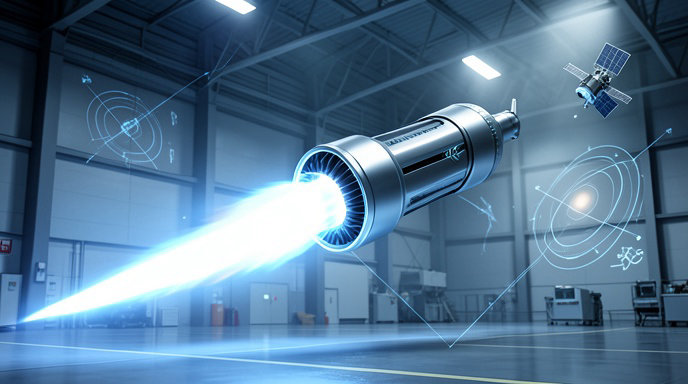
Letara's core innovation is its hybrid rocket propulsion system, which uses a solid fuel and a liquid oxidizer. This approach is fundamentally different from the all-solid or all-liquid systems that dominate the industry today.
Traditional solid rockets are powerful and simple but cannot be throttled or restarted once ignited. Liquid engines are controllable and efficient but are complex, expensive, and involve handling highly volatile propellants. Hybrid systems aim to offer the best of both worlds: they are mechanically simpler and cheaper than liquid engines, while remaining throttleable, restartable, and significantly safer to manufacture, transport, and operate than solid motors.
Initially, Letara focused on applying this technology to thrusters for small satellites, a market where precise, on-demand maneuverability for orbit correction, collision avoidance, and de-orbiting is increasingly critical. The company has already conducted successful ground combustion tests and is targeting an in-orbit demonstration of its satellite propulsion unit by late 2026.
Beyond Small Sats: A Dual-Use Play
The new funding will allow Letara to scale that same core technology for much larger applications. The company has outlined an ambitious roadmap to develop larger-thrust hybrid engines for suborbital launch vehicles, upper-stage kick motors, and responsive launch systems.
Crucially, this expansion is explicitly dual-use. Letara is positioning its technology for Japan's rapidly growing defense and security needs. With Japan increasing its defense budget and placing a new emphasis on space as a domain for national security, there is strong government demand for sovereign, responsive, and low-cost launch and propulsion capabilities.
Hybrid propulsion is particularly attractive for defense applications due to its storability and on-demand readiness. Unlike cryogenic liquid fuels that require complex fueling just before launch, Letara's hybrid propellants can be stored safely for long periods and launched quickly, a key requirement for responsive space missions.
What This Means for Japan's Commercial Space Ecosystem
Letara's raise is more than just a win for one startup; it is a bellwether for Japan's broader commercial space strategy. The Japanese government has set a goal to double the size of its space industry to ¥8 trillion by the early 2030s, and has been actively encouraging private-sector innovation through JAXA and the Ministry of Economy, Trade and Industry.
Startups like Letara, Interstellar Technologies, and Space One are central to that vision, aiming to create a domestic supply chain that reduces reliance on foreign launch providers. By proving that a university-born technology can attract significant private capital and find both commercial and government customers, Letara is helping to validate the model for deep-tech commercialization in Japan.
The company now faces the challenge of execution. Scaling a hybrid engine from a satellite thruster producing tens of newtons of thrust to an engine capable of powering a launch vehicle requires major advances in combustion stability, fuel grain design, and thermal management. Letara plans to conduct a series of scaled-up engine firing tests throughout 2027, with an eye toward a suborbital flight test as early as 2028.
If it succeeds, Letara won't just be powering satellites. It could be powering Japan's next generation of independent access to space.

Get All The Latest Updates Delivered Straight To Your Inbox For Free!