
Meta's New 2-Hour Teen Limit: Inside the Historic Settlement to Restrict Kids on Instagram and Facebook
TL;DR
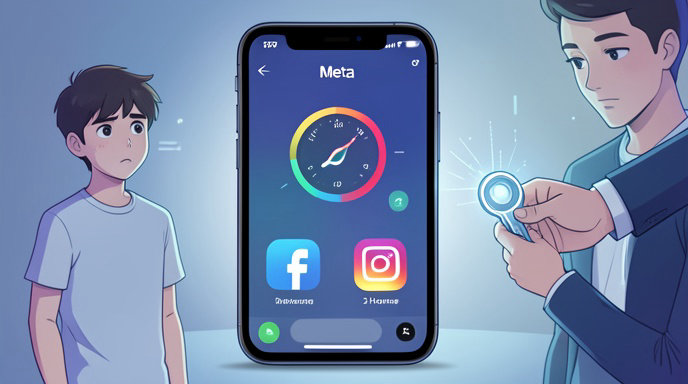
- Meta has reached a historic settlement with a coalition of more than 40 states that will impose a default 2-hour daily time limit for teen accounts on Instagram and Facebook, which can only be removed or extended with verified parental permission.
- The agreement, which also includes stricter age verification, disabled algorithmic recommendations for minors, and new nighttime restrictions, will roll out across the U.S. starting this fall and is the most significant court-ordered restriction on teen social media use to date.
- While parents and regulators are hailing the move as a breakthrough for youth safety, questions remain about enforcement, teen workarounds, and whether the settlement will become a national blueprint for regulating social media.
A Line in the Sand for Teen Social Media Use
For years, state attorneys general have accused Meta of fueling a teen mental health crisis by design. Now, that long-running legal battle has ended with a sweeping set of concessions that will fundamentally change how millions of teenagers experience Instagram and Facebook.
Announced this week, the settlement resolves a massive lawsuit first filed in late 2023 by 33 states and later joined by more than a dozen others. The coalition, led by California, New York, Colorado, and Tennessee, alleged that Meta knowingly designed its platforms to be addictive to young users and misled the public about the risks. Meta did not admit wrongdoing as part of the agreement, but agreed to both financial penalties and far-reaching product overhauls that go well beyond anything the company has voluntarily implemented before.
The centerpiece is a mandatory daily screen time cap that will be impossible for teens to ignore.
How the 2-Hour Limit Actually Works
Under the new rules, any user identified as under 18 will be placed into a restricted Teen Account experience by default on both Instagram and Facebook. That experience now includes a hard 2-hour daily time limit.
Once a teen hits 120 minutes of combined scrolling, posting, and messaging time in a 24-hour period, the apps will enter a locked, read-only state. Feeds will stop refreshing, Reels and Stories will pause, and a full-screen notification will explain that the daily limit has been reached.
The only way to extend time for that day or disable the limit entirely is through Meta's Family Center with explicit parental approval. Parents or guardians must have a verified, linked account and approve the request through their own app. Teens cannot self-verify as adults to bypass the system, as the settlement also requires stronger age assurance measures.
The limit resets at midnight, and parents will have the option to set even stricter custom limits — such as 30 or 60 minutes — if they choose. Meta says parents will also receive a weekly summary of their teen's time spent and attempts to request more time.
Beyond the Clock: Other Major Changes
The two-hour cap is the headline, but the settlement mandates a broader package of youth safety reforms. Together, they represent the most restrictive teen experience Meta has ever built.
First, a mandatory "sleep mode" will activate between 10 p.m. and 7 a.m. for teen accounts. During those hours, notifications will be muted by default, auto-play on videos will be disabled, and any incoming messages will receive an auto-reply stating the user is offline. Teens can still open the app, but they will be shown a wind-down reminder encouraging them to log off.
Second, Meta must turn off its most engagement-driven features for minors by default. Teens will no longer be automatically served personalized algorithmic feeds based on their activity. Instead, they will see a chronological feed from accounts they follow, and features like infinite scroll and autoplay will be disabled unless a parent opts in.
Third, the company has agreed to implement enhanced age verification. New users who claim to be under 18 will face additional checks, and existing accounts flagged as potentially underage will be prompted to verify through methods that could include ID upload or video selfie verification handled by a third-party provider. Stricter default privacy settings, limits on who can message or tag teens, and restrictions on appearance-altering filters for users under 16 are also part of the deal.
What This Means for Parents and Teens
For parents, the settlement shifts the burden. Instead of having to hunt for buried screen time controls, the protections will be on by default and require action to remove. Child safety advocates say this opt-in versus opt-out distinction is critical, as most families never changed the previous voluntary settings.
Parents who want to maintain the new limits will need to set up Supervision in Family Center, verify their age as an adult, and link to their teen's account. Once linked, they will have a centralized dashboard to approve time extensions, view privacy settings, and manage sleep hours. Meta says it will launch an updated onboarding flow in the coming weeks to guide families through the process.
For teens, the reaction has been predictably mixed. Many have taken to TikTok and other platforms to complain about the restrictions, argue they use Instagram for school, creativity, and friendships, and share potential workarounds like using browser versions or secondary devices. Mental health experts, however, say even a small reduction in open-ended scrolling could have meaningful benefits for sleep, focus, and anxiety, especially late at night.
The Enforcement Challenge
The biggest question now is whether Meta can actually enforce it.
The company says the limits will be enforced at the account level using its internal time-tracking systems, which measure active app use rather than just time the app is open in the background. The restrictions will apply across Instagram and Facebook, meaning two hours is the total combined time, not two hours per app.
But enforcement will rely heavily on accurate age identification — a problem that has plagued every social platform. Critics note that determined teens have long evaded age gates by entering a false birthdate, using a parent's account, or creating new accounts after being restricted. The settlement attempts to close those loopholes by requiring Meta to proactively detect and re-verify suspected underage accounts using AI signals and behavior patterns, and to make it harder to create a new account after a teen account is limited.
State regulators will have oversight power for the next several years. Under the terms, an independent auditor will review Meta's compliance annually, and states can seek court intervention if the company fails to implement the changes correctly. Non-compliance could trigger significant additional penalties.
A Blueprint for the Future of Regulation?
This settlement does not create a new federal law, but its impact will likely be national. Because Meta must build these systems for the settling states, it has confirmed it will apply the Teen Account limits and related protections to all U.S. users under 18, not just those in the states that sued.
That makes the agreement a de facto national standard and a powerful precedent. Lawmakers in Washington have been debating the Kids Online Safety Act and other federal bills for years without passing them. Now, regulators have achieved through litigation what legislation has not yet delivered.
Other platforms are watching closely. Snap, TikTok, and YouTube face similar lawsuits from states and school districts, and attorneys general have already signaled they intend to use the Meta framework as a template in future negotiations. For the tech industry, the era of self-regulation for teen safety appears to be ending, replaced by court-enforced product design.
The new teen limits are expected to begin rolling out in the next 60 to 90 days, with full implementation across Instagram and Facebook by early next year. For parents, teens, and an industry under intense scrutiny, the countdown has begun.

Get All The Latest Updates Delivered Straight To Your Inbox For Free!