
OpenAI Launches Safer ChatGPT for Teens: Parental Controls, Anti-Cheat Tools, and Age-Appropriate Guardrails
TL;DR
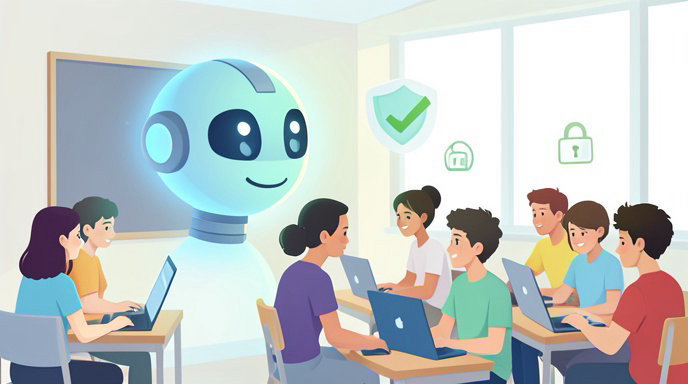
- OpenAI has officially launched a dedicated ChatGPT experience for teenagers, introducing stricter safety filters, expanded parental oversight dashboards, and new educational guardrails aimed at curbing misuse like academic cheating.
- The rollout arrives years after teens first flocked to the general-purpose chatbot, highlighting a significant gap between official policy and real-world adoption that schools and families have been navigating on their own.
- The update includes age-appropriate content blocks, a "study mode" that discourages direct answer-giving, and tools for parents to monitor usage without reading private conversations.
The Long-Awaited Teen Mode
For years, the story of teens and ChatGPT has been a tale of quiet rebellion. While OpenAI's terms of service technically required users to be at least 13 years old (with 18+ for the unrestricted version), enforcement was lax, and millions of high schoolers were already using the tool daily — often with no guardrails, no supervision, and no clear guidance from adults who were just as confused as they were.
Now, OpenAI has finally responded with a purpose-built product. The new ChatGPT for Teens is not just a cosmetic reskin; it's a fundamentally different experience engineered to address the two biggest fears parents and educators have voiced since the tool exploded onto the scene: exposure to harmful content and academic dishonesty.
But the elephant in the room remains: Is this a proactive safety move, or a reactive attempt to catch up with a reality that has already been living in our classrooms for over two years?
What's Actually Different Under the Hood
The most visible change is a new, stricter content filter system. OpenAI has trained a separate classifier specifically for teen accounts, which aggressively blocks topics related to self-harm, violence, hate speech, and sexually explicit material — even if those topics are discussed in a "neutral" or "educational" context that an adult version might allow.
For example, a teen asking "How do I write a persuasive essay on the ethics of war?" will get a thoughtful response. But a teen asking "What are the most effective ways to hurt someone?" will be met with a hard block and a redirect to mental health resources. The system also refuses to generate content that could be used for bullying, harassment, or creating deepfake-style images.
Crucially, OpenAI claims the new filters are not just keyword-based but context-aware. That means a question like "What is the history of the Holocaust?" won't be blocked, but a prompt like "Write a story where the villain is Jewish" will be. This nuance is a significant step up from the blunt filters of the past, which often frustrated legitimate learners.
Parental Oversight: Visibility Without Intrusion
The new parental dashboard is the centerpiece of the rollout. For the first time, parents of teen users (aged 13–17) can link their accounts to their child's and access a weekly activity summary. This summary includes:
- Number of conversations started
- Topics covered (categorized, not verbatim)
- Time spent on the platform per day
- Any instances where the safety system blocked a request
Crucially, OpenAI has deliberately avoided giving parents the ability to read the full chat logs. The company's stated reasoning is that teens need a private space to explore ideas, and that full transparency would erode trust and push kids toward unmonitored alternatives. Instead, the dashboard is designed to flag patterns — like a sudden spike in late-night usage or repeated attempts to ask about dangerous topics — rather than expose every thought.
This is a delicate balance. Privacy advocates have praised the design as respectful of adolescent autonomy, while some parent groups argue it's still too opaque. OpenAI has responded by allowing parents to set "quiet hours" — blocking access between 10 PM and 6 AM by default — and to require a PIN for any changes to safety settings.
The Anti-Cheat Playbook: Socratic Nudges and "Study Mode"
Perhaps the most anticipated feature is the new "Study Mode," a toggle that teens can turn on (or that parents can force on) when working on homework. When activated, ChatGPT refuses to provide direct answers to questions that look like assignments. Instead, it acts as a Socratic tutor: asking the student probing questions, breaking down the problem into steps, and offering hints rather than solutions.
For example, if a student pastes a calculus problem, Study Mode won't output the answer. It will say: "Let's start by identifying what the derivative of this function represents. What do you think the first step should be?" If the student then asks for the final answer again, the model will double down with: "I'm here to help you learn, not to do the work for you. Let's try solving for the slope first."
OpenAI has also integrated a "citation helper" that automatically generates source lists in MLA or APA format, but only after the student has written their own draft. The goal is to make ChatGPT a collaborative learning partner, not a ghostwriter. Early beta tests with a small group of US high schools showed a 40% reduction in "copy-paste" behavior when Study Mode was enabled.
Still, critics note that the mode is easy to bypass — a student can simply open a separate browser window and use the adult version. OpenAI acknowledges this but argues that the point is to make the *default* experience safer, not to create an unbreakable lock.
The Irony of the Rollout: Playing Catch-Up
The most uncomfortable truth about this launch is its timing. ChatGPT was released in November 2022. Within months, surveys showed that over 60% of US teens had used it, many without parental knowledge. Schools spent 2023 in panic mode, banning the tool outright, only to realize that bans were unenforceable on personal devices.
By 2025, the conversation had shifted. Forward-thinking districts began teaching AI literacy, but they were doing so with a tool not designed for children. The new teen offering feels, in many ways, like OpenAI finally admitting that the genie was never going back in the bottle.
The company has framed this as a "responsible evolution," pointing to months of research with adolescent psychologists, teachers, and safety experts. But the subtext is clear: OpenAI saw that teens were already a massive user base, and that offering them a safer, supervised version is better than letting them use the unregulated one. It's a pragmatic surrender to reality, dressed up as innovation.
What This Means for Schools and Parents
For schools, the launch provides a legitimate, policy-friendly tool. Districts that previously banned ChatGPT can now point to a version that aligns with academic integrity rules. Several large school systems, including Los Angeles Unified and Miami-Dade, have already announced pilot programs to integrate the teen version into their digital learning platforms.
For parents, the dashboard is a quiet revolution. It shifts the conversation from "Are you using AI?" to "How are you using AI?" — enabling a more productive dialogue about critical thinking, source verification, and the ethics of automation. The quiet hours feature also addresses the growing concern about sleep deprivation linked to late-night screen use.
However, experts warn against complacency. The safety filters are not foolproof. Adversarial prompts can still slip through, and the model's understanding of context, while improved, is far from perfect. Moreover, the tool does nothing to address the deeper issue of teens outsourcing their curiosity to a machine. The best guardrail, they argue, is still an engaged adult.
The Road Ahead: AI-Assisted Learning Gets a Training Wheel
OpenAI's teen rollout is a significant milestone, but it's also a test case. If the parental controls and anti-cheat features are well-received, we can expect similar "age-gated" versions of other AI tools (like Claude or Gemini) to follow suit. If they fail — if teens find workarounds or if the filters prove too restrictive — it will set back the cause of safe AI adoption for years.
The bigger question is philosophical: Are we building AI to replace thinking, or to augment it? The new ChatGPT for Teens is a clear bet on augmentation. It's a tool that tries to make you better, not faster. Whether that's enough to overcome the entrenched habits of a generation that has never known a world without generative AI remains to be seen.
One thing is certain: The era of unregulated AI use by minors is officially over. What comes next is a messy, imperfect, but necessary experiment in guided digital adolescence.

Get All The Latest Updates Delivered Straight To Your Inbox For Free!