
WindBorne’s $37M Bet: Can AI-Powered Balloons Make Weather Forecasting Profitable?
TL;DR
- WindBorne Systems raised $37 million in Series B funding to scale its fleet of AI-guided, high-altitude weather balloons, which aim to fill critical data gaps in global forecasting.
- The company’s core bet is that combining its low-cost, persistent atmospheric sensing with proprietary AI models can beat incumbent forecasters on accuracy—especially for extreme weather events.
- The key business challenge remains monetization: WindBorne is pivoting from pure data sales to “weather intelligence as a service,” targeting energy, agriculture, logistics, and insurance sectors that pay for hyper-local, actionable forecasts.
The weather industry has a dirty secret: despite billions spent on satellites and supercomputers, most forecasts are still surprisingly blind. The atmosphere’s lower layers—where weather actually happens—are woefully under-sampled. Traditional radiosondes (weather balloons) are launched only twice a day from a few hundred sites worldwide, leaving vast oceans, deserts, and polar regions as giant blank spots.
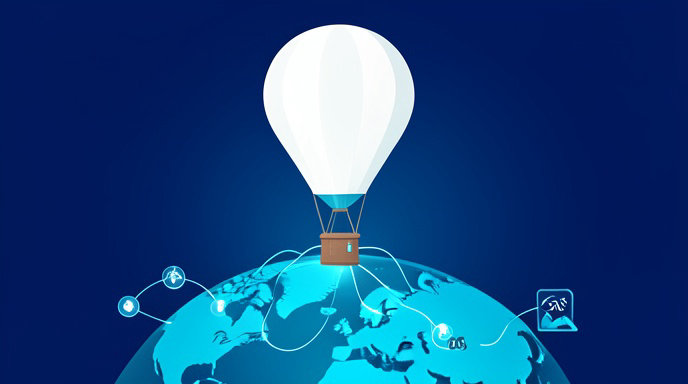
WindBorne Systems, a startup born at Stanford, thinks it has the fix: a swarm of AI-piloted balloons that can loiter in the jet stream for weeks, steer themselves to where data is most needed, and beam back real-time pressure, temperature, humidity, and wind readings. On the back of that vision, the company just closed a $37 million Series B round, led by a mix of climate-tech and deep-tech investors. The funding isn’t just a bet on hardware—it’s a bet on a controversial thesis: that the future of forecasting isn’t bigger satellites, but smarter, cheaper, and more disposable balloons.
The Tech: Balloons That Think, Not Just Float
Most weather balloons are dumb. They go up, pop, and fall. WindBorne’s balloons are different. They use an AI-based control system that reads wind currents in real time and adjusts altitude to ride different air streams, effectively “surfing” the jet stream to reach target zones. A single balloon can stay aloft for up to 30 days, traversing thousands of miles, and then be commanded to descend and land in a remote area for recovery.
The payload is lightweight, but the data is heavy in value. Each balloon collects vertical profiles of the atmosphere that current models simply don’t have. And because the balloons are steerable, they can be repositioned to chase developing storms, cold fronts, or heat domes—something a fixed satellite or a scheduled radiosonde launch can’t do.
The company claims its AI models, trained on this dense, targeted data, have already shown skill in predicting hurricane intensity and winter storm tracks better than the European Centre for Medium-Range Weather Forecasts (ECMWF) in some test cases. That’s a bold claim, but it’s the kind of audacity that gets venture capitalists to open their checkbooks.
The $37M Question: How Do You Make Weather Pay?
Here’s the uncomfortable truth about weather tech: accurate forecasts are priceless, but hardly anyone wants to pay for them. Governments give them away for free via the National Weather Service and ECMWF. So how does WindBorne turn better data into revenue?
The answer is a strategic pivot from “data provider” to “decision intelligence.” Instead of selling raw balloon soundings to weather agencies (a thin-margin, commodity business), WindBorne is building tailored products for industries where a 10% improvement in forecast accuracy translates directly into millions of dollars.
For example:
Energy traders need to know exactly when wind will blow or clouds will cover solar farms to price electricity on the spot market.
Utilities need 72-hour hyper-local forecasts to manage grid load during heatwaves or cold snaps, avoiding blackouts and penalty fees.
Agriculture needs to schedule irrigation, pesticide spraying, and harvests around precise rainfall windows.
Logistics and aviation need to reroute cargo planes around turbulence or icing zones to save fuel and reduce liability.
WindBorne’s pitch: “We don’t sell weather. We sell risk reduction.” The Series B will fund the expansion of its balloon fleet to around 100 active units, plus the development of a proprietary forecasting engine that ingests both its own balloon data and public satellite data to produce bespoke, probabilistic forecasts for paying clients.
The Competitive Landscape: Not Just Against the ECMWF
WindBorne isn’t alone in chasing this prize. The weather tech sector has seen a funding surge, driven by the realization that climate volatility is making weather a financial risk, not just a conversational topic.
Tomorrow.io has raised hundreds of millions to build a constellation of radar-equipped satellites, offering similar “weather intelligence” to enterprises.
Salient Predictions focuses on AI-driven seasonal forecasts for agriculture and water management.
Cerebras and NVIDIA are pushing AI weather models that run on massive GPUs, but they rely on the same sparse public data—WindBorne’s edge is that it owns the data source.
WindBorne’s differentiation is its unit economics. A balloon costs a fraction of a satellite, can be deployed in days, and can be steered to regions where data scarcity is most acute (e.g., the Pacific Ocean, the Arctic, the Sahel). This makes it a more flexible, lower-CAPEX alternative to space-based systems. However, the company must prove it can scale its fleet without balloon loss rates eating into margins, and that its AI models can consistently outperform free government forecasts in the specific variables that clients care about.
The Investor Signal: Weather Is the New Oil
The $37M round is notable not just for its size, but for who’s writing the checks. The lead investor is a firm known for backing deep-tech hardware with long R&D cycles, signaling that the market believes weather intelligence is a decade-long infrastructure play, not a quick SaaS flip.
This investment also signals a broader shift: venture capital is waking up to the fact that climate change is a data problem. Every degree of warming increases the economic damage from extreme weather, and the only defense is better prediction. Governments are underfunded and slow; private companies are stepping into the breach. WindBorne’s funding is a bet that the most valuable climate data won’t come from a $500 million satellite, but from a $5,000 balloon that can chase a hurricane and tell a utility exactly when to pre-position repair crews.
The Hard Part: Turning Predictions into Profit
The biggest risk to WindBorne’s thesis isn’t technical—it’s commercial. The company has to convince risk-averse enterprises to pay for a service that is, by nature, probabilistic. A forecast is never “right” or “wrong” in a binary sense; it’s a range of probabilities. Selling that nuance to a logistics manager who wants a yes/no answer on whether to delay a shipment is a tough sell.
WindBorne’s strategy is to bundle its forecasts with “actionable playbooks.” For example, instead of saying “50% chance of hail in Dallas at 3 PM,” they say “We predict a high likelihood of hail; here’s the recommended route for your fleet to avoid damage, and here’s the expected cost savings.” This moves the value from data to decision, which is where the real margins are.
Another challenge is data assimilation. Government weather models like the GFS and ECMWF are free and deeply entrenched. WindBorne must prove that its balloon data, when fed into its own AI models, produces forecasts that are consistently better than the free public baseline—not just in cherry-picked storm cases, but across a full year of routine operations. That requires a long, expensive validation period.
What This Means for the Future of Weather Tech
WindBorne’s Series B is a signal that the “weather wars” are moving from space to the stratosphere. The company’s hybrid approach—cheap, disposable hardware combined with cutting-edge AI—represents a new playbook for the industry. If it works, we could see a future where weather forecasting is no longer a government monopoly, but a competitive market where the best predictions are sold to the highest bidder.
That raises thorny questions about equity and access. If only wealthy corporations can afford hyper-accurate forecasts, will public safety be compromised? WindBorne says it will continue to share a baseline of its data with academic and government partners, but the core proprietary insights will be locked behind paywalls.
For now, the $37 million gives WindBorne the runway to prove its model at scale. The company plans to launch its expanded fleet over the next 18 months, targeting the 2027 hurricane season as its first major public test. If its balloons can outperform the ECMWF on a live, high-stakes forecast, the weather industry will be forced to take notice—and so will the bottom lines of energy, agriculture, and logistics giants.
The sky is no longer the limit. It’s the new frontier of a multi-billion-dollar data economy, and WindBorne just bought a very large ticket to ride.

Get All The Latest Updates Delivered Straight To Your Inbox For Free!