
Yulu Raises $93M to Deploy 200,000 E-Bikes as India Quick Commerce Boom Accelerates
TL;DR
- Bengaluru-based Yulu has raised $93 million in fresh funding to expand its electric two-wheeler fleet from around 35,000 to 200,000 bikes within the next two years, driven by explosive demand from quick-commerce and last-mile delivery partners.
- The startup will use the capital to launch a new category of faster, longer-range electric two-wheelers designed for logistics, while continuing to scale its battery-swapping network through its Yuma Energy joint venture.
- The raise positions Yulu to capitalize on India's quick-commerce boom led by Blinkit, Zepto, and Swiggy Instamart, as the company pushes toward profitability and expands into new use cases including dark store replenishment and mid-mile delivery.
A Quick-Commerce Tailwind Turns Into a Fundraise
Yulu, the Bengaluru-based shared electric mobility startup, has secured $93 million in a new funding round to supercharge its growth at a time when India's quick-commerce sector is rewriting the rules of last-mile logistics.
The funding comes as demand for fast, reliable, and low-cost delivery fleets has surged to unprecedented levels. With 10-minute delivery promises becoming the norm in metros like Bengaluru, Mumbai, Delhi, and Hyderabad, delivery platforms are scrambling for efficient electric fleets — and Yulu has emerged as a go-to provider.
The company, which is backed by Bajaj Auto and Magna International among others, said the fresh capital will allow it to rapidly scale operations, upgrade its vehicle platform, and deepen its presence in existing and new cities across India.
Why Quick Commerce Needs Yulu
India's quick-commerce market has exploded over the past 18 months, with players like Blinkit, Zepto, Swiggy Instamart, and BigBasket's BB Now competing aggressively on speed and coverage. That competition has created a massive need for dedicated delivery riders and vehicles that can operate all day with minimal downtime.
Yulu's electric bikes, particularly its DeX models built specifically for delivery use, have become a staple for gig workers powering these platforms. Unlike privately owned petrol scooters, Yulu bikes are offered on a flexible rental model with battery swapping included, lowering upfront costs for riders and ensuring vehicles are always charged and ready.
The startup says its fleet currently completes millions of deliveries each month, and utilization rates have hit record highs as quick-commerce order volumes continue to climb. The asset-light model for riders combined with predictable costs for fleet operators has made Yulu's offering especially attractive as platforms look to formalize and electrify their delivery fleets.
From 35,000 to 200,000 Bikes: The Two-Year Roadmap
The centerpiece of Yulu's plan is a dramatic fleet expansion. The company currently operates around 30,000 to 35,000 electric bikes across major metros and plans to scale to 200,000 bikes in the next 24 months.
The $93 million raise will fund the acquisition of new vehicles, expansion of its on-ground operations and maintenance network, and hiring across technology, product, and operations. Yulu also plans to expand its city footprint, moving beyond its strongholds in Bengaluru, Mumbai, and Delhi into additional Tier 1 and Tier 2 cities where quick-commerce is gaining traction.
This scale-up is expected to significantly boost revenue. Yulu has been reporting strong year-on-year growth and has stated it is on the path to profitability at the operational level, with the larger fleet size expected to drive economies of scale in manufacturing, servicing, and energy operations.
Faster Bikes for Bigger Jobs
Until now, Yulu has been known for its low-speed electric bikes like the Miracle and Wynn, and its low-speed logistics bike, the DeX GR, which do not require a driving license to operate. While that accessibility has been key to adoption, the company is now preparing to introduce faster, high-speed electric two-wheelers.
The new category of vehicles will be capable of higher top speeds and longer range, opening up use cases beyond short-distance food and grocery delivery. Yulu said the faster bikes will target inter-store movements, dark store replenishment, e-commerce returns, and other mid-mile logistics operations where speed and payload capacity matter more.
This move will put Yulu in more direct competition with traditional electric scooter makers, but with a crucial difference: its integrated battery-swapping and fleet management platform.
The Battery-Swapping Advantage
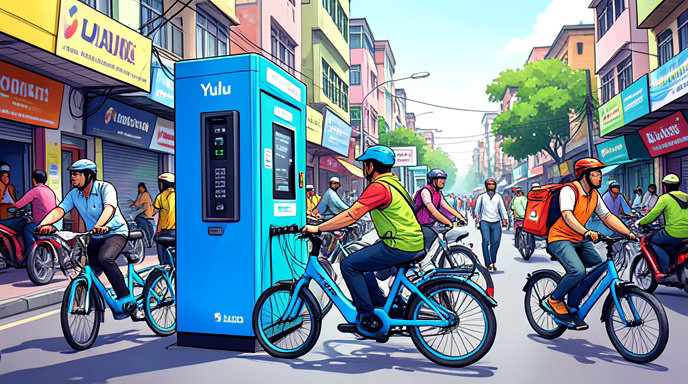
A core pillar of Yulu's strategy is Yuma Energy, its battery-as-a-service joint venture with automotive giant Magna. Yuma operates a dense network of swapping stations where riders can exchange a depleted battery for a fully charged one in under a minute.
As the fleet grows to 200,000 vehicles, Yuma's infrastructure will be critical to keeping uptime high and operating costs low. The company plans to significantly densify its swapping network in existing cities and roll it out in new markets alongside its vehicle deployment. The integration of vehicle, battery, and software gives Yulu full-stack control over the delivery experience, from rider app to fleet dashboard for business partners.
What This Means for India's EV and Logistics Future
Yulu's $93 million raise is more than just a win for one startup — it signals a broader shift in how India moves goods in its densest cities. As quick-commerce pushes delivery times from hours to minutes, the underlying logistics need to be cleaner, cheaper, and more efficient.
By betting on an all-electric, shared, and swappable future, Yulu is positioning itself as the infrastructure layer for that future. If it can successfully execute its plan to deploy 200,000 bikes and prove the viability of its faster vehicle platform, it could set the template for sustainable last-mile logistics not just in India, but in other high-density markets around the world.

Get All The Latest Updates Delivered Straight To Your Inbox For Free!