
InDrive's 2 Billion Impression Play: How the Uber Rival Is Scaling Beyond Ride-Hailing
TL;DR
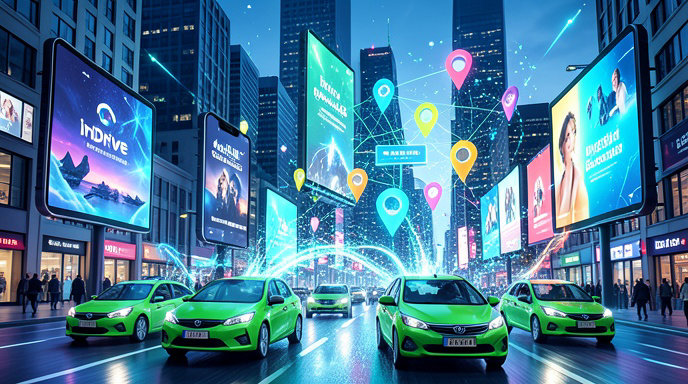
- InDrive piloted its in-app ad business in July 2025 and has already delivered over 2 billion impressions, with more than 2,000 paying advertisers per month.
- The Uber rival is using its ride-hailing scale across 40+ countries to build a high-margin media network spanning in-ride, in-app, and post-trip placements.
- The ad push is central to inDrive's super-app strategy to monetize attention and capture more local consumer spending beyond mobility.
For most of its decade-long history, inDrive has been known for one thing: letting riders and drivers haggle over fares. That peer-to-peer model helped the company grow into Uber's most unconventional rival, operating in more than 700 cities across Latin America, Africa, the Middle East and Asia-Pacific.
Now inDrive wants to sell something else entirely: attention.
Just over a year after first piloting advertising in July 2025, the company says its ad business has served over 2 billion impressions and now attracts more than 2,000 paying advertisers a month. For a company that only recently started talking about media as a business line, the scale is striking — and it signals a much bigger ambition to turn its ride-hailing footprint into a full-fledged commerce and media platform.
From Pilot to 2 Billion Impressions in 14 Months
InDrive's ad rollout was deliberately low-key. The initial July 2025 pilot focused on a handful of high-density markets like Mexico, Brazil, Colombia, Egypt and Kazakhstan, where inDrive commands strong market share and completes millions of trips per month.
The format was simple: full-screen and banner placements during ride search, ride wait, and in-trip screens — moments when user attention is unusually captive. Early tests also included post-trip offers and branded destination pins.
According to the company, engagement rates quickly beat industry benchmarks for mobile display, prompting a rapid expansion to more than 20 markets by early 2026. The 2 billion impression milestone reflects that scale-up, driven largely by ride-hailing but increasingly supplemented by inDrive's intercity rides, courier, freight, and job-services verticals.
Why inDrive's Inventory Is Different
Unlike traditional ride-hail advertising that relies on car-top screens or in-car tablets, inDrive's play is almost entirely software-driven. That keeps costs low and margins high.
Advertisers get access to first-party, location-rich context — pickup intent, destination category, time of day, and trip frequency — without inDrive needing to sell hardware to drivers. Key formats now include in-app video during driver search, interactive polls while waiting, QR-based coupons on arrival, and sponsored listings for local businesses.
For brands, the pitch is dwell time. A typical inDrive user spends several minutes per session actively looking at the app while negotiating a fare and tracking a driver, far longer than a casual scroll. That captive window is what has attracted everything from telecom operators and fintech apps to quick-commerce players, restaurants and local services.
2,000 Advertisers a Month — And Focused on Local SMBs
Perhaps more telling than the impression count is the advertiser count: more than 2,000 paying advertisers a month.
While Uber Advertising has chased large national brands and programmatic demand, inDrive has leaned heavily into small and medium businesses. A taco chain in Mexico City, a mobile money provider in Lagos, or a bank promoting micro-loans in Almaty can launch geo-targeted campaigns tied to specific neighborhoods, routes or venues.
The company has built self-serve tools, low minimum spends, and WhatsApp-based sales support to onboard advertisers that would never buy from Uber or Bolt. That long-tail strategy mirrors inDrive's core ride-hailing ethos of empowering underserved markets — and it creates a diversified, recurring revenue base that is less dependent on a few big spenders.
The Super-App Play: Capturing More Consumer Spending
The ad business does not exist in isolation. It is the monetization layer for inDrive's broader push beyond ride-hailing.
Over the past two years, inDrive has aggressively expanded into intercity travel, package delivery, B2B freight, home services, and financial products like loans for drivers. Each new vertical adds more touchpoints, more data, and more ad inventory.
The logic is familiar from Uber and Grab: mobility is high-frequency but low-margin. Advertising and services are lower-frequency but high-margin. By turning attention into a revenue stream, inDrive can subsidize competitive fares, fund driver incentives, and reduce its reliance on ride commissions — all while keeping its core promise of fair pricing.
Executives have framed it as capturing a larger share of the urban consumer wallet, especially in emerging markets where super-apps have yet to fully consolidate.
What Comes Next
With 2 billion impressions as proof of concept, inDrive is now moving into phase two: programmatic partnerships, richer video and playable formats, and off-app audience extension. Expect tighter integration with measurement partners, more performance-based products like cost-per-install and cost-per-order, and sponsored experiences tied to major events, sports and nightlife corridors.
Challenges remain, including ad fatigue, privacy regulation, and competition from Uber, DiDi and in-market super-apps all selling similar attention. InDrive will need to prove it can maintain user experience while scaling load, and that SMB demand can grow into enterprise budgets.
But the trajectory is clear. Fourteen months ago, advertising was an experiment. Today, with billions of views and thousands of advertisers, it is becoming a pillar of the business. For an Uber rival built on letting people negotiate, inDrive has found a new negotiation: turning rider attention into its next big business.

Get All The Latest Updates Delivered Straight To Your Inbox For Free!