
Vantora Raises $100M to Build Physical AI Startups for Industrial Giants
TL;DR
- Former UP.Labs has rebranded as Vantora alongside a $100M raise to build and scale Physical AI startups for industrial corporations.
- Vantora pairs its venture studio model with deep corporate partnerships in mobility, logistics, and manufacturing to co-create companies from scratch.
- The shift reflects surging enterprise demand for AI that operates in the real world, from factory floors and warehouses to fleets and supply chains.
From UP.Labs to Vantora: A New Identity for an Industrial Bet
Vantora is officially open for business. The Los Angeles-based venture studio formerly known as UP.Labs unveiled its new name this week in conjunction with a $100M financing to supercharge its mission: launching startups purpose-built for the world's largest industrial companies.
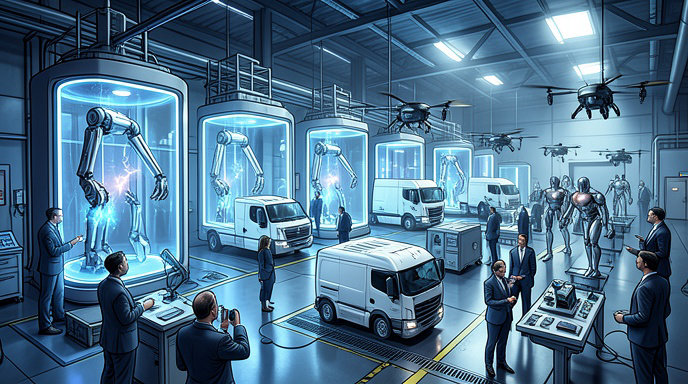
The rebrand marks a clean break from its experimental roots and a sharper focus on what the team calls Physical AI — artificial intelligence embedded in machines, robots, vehicles, and industrial infrastructure. While much of Silicon Valley remains fixated on chatbots and copilots, Vantora is betting the next trillion-dollar wave of AI will happen offline, on factory floors, in warehouses, on highways, and in the skies.
Founded in 2022 by John Kuolt, UP.Labs made a name for itself by flipping the traditional venture studio script. Instead of building startups and hunting for customers later, it started with the customer — signing multi-year partnerships with corporations like Porsche, Alaska Airlines, and J.B. Hunt — then building companies directly inside their operational pain points.
Vantora keeps that DNA, but scales it up for heavy industry.
Inside the $100M Raise
The $100M raise gives Vantora dedicated capital to found, staff, and seed a new generation of companies, with plans to launch multiple startups per year over the next several years. Unlike a traditional VC fund that writes checks to outside founders, the capital is deployed in-house to hire founding teams, build prototypes, and get to early commercial traction before spinning companies out as independent entities.
Vantora retains significant ownership at inception and brings its corporate partners in as early design partners, customers, and often co-investors. The model is designed to solve the cold-start problem that kills most industrial startups: long sales cycles, lack of operational data, and no access to real-world testing environments.
With fresh funding, the studio plans to expand its Los Angeles headquarters, grow its engineering and AI research team, and open deeper technical resources for robotics simulation, digital twins, and autonomy testing.
Why Physical AI, and Why Now
Vantora's all-in pivot to Physical AI is a direct response to where enterprise budgets are moving. Manufacturing, logistics, and mobility executives are under intense pressure to automate amid labor shortages, rising costs, and supply chain volatility. Generative AI helped with back-office work, but it didn't move a pallet, inspect an aircraft, or optimize a freight network.
Advances in foundation models for robotics, vision systems, sensor fusion, and simulation have finally made it possible to bring AI into the physical world at commercial scale. Cheaper sensors, more powerful edge compute, and enterprise willingness to share proprietary operational data have closed the gap between lab demos and deployable products.
Vantora intends to focus on three core arenas: smart manufacturing and predictive maintenance, autonomous logistics and warehouse orchestration, and next-generation mobility including fleets, aviation operations, and automotive software.
How the Venture Studio Model Actually Works
The Vantora playbook starts not with a pitch deck, but with a problem immersion inside a corporate partner. Studio teams embed with airline operations managers, automotive engineers, or logistics dispatchers for months to map workflows and identify high-ROI automation opportunities.
From there, Vantora recruits outside founders and pairs them with its internal product, design, and AI engineering team to build a company around that specific use case. The corporate partner provides data, distribution, and a built-in first customer, while Vantora provides capital, talent, and company-building infrastructure.
Past UP.Labs spinouts like aviation software startup FLYR Labs spin-off processes, Porsche-backed asset management platforms, and logistics optimization companies validated the approach, with several raising follow-on venture rounds and securing enterprise contracts. Vantora says its next cohort will go even deeper into robotics-enabled software and AI agents that control physical systems.
Enterprise Partners Are Fueling the Shift
The rebrand to Vantora also signals a broader ambition beyond its early mobility roots. While Porsche and Alaska Airlines put UP.Labs on the map, the studio is now courting industrial conglomerates, Tier 1 suppliers, freight carriers, and manufacturers that own the physical assets where Physical AI must be deployed.
For those corporations, the appeal is speed and de-risking innovation. Building a startup internally can take years and die in bureaucracy. Investing in a generic AI startup offers no customization. Vantora offers a middle path: a bespoke startup built to their specs, but run by venture-backed founders incentivized to move fast.
For Vantora, the partners offer something money can't buy — proprietary data, regulated operating environments, and immediate scale. In Physical AI, access to real forklifts, aircraft turnarounds, and production lines is the ultimate moat.
What Comes Next
Vantora says it plans to announce new corporate partnerships and its first startups under the new brand in the coming months, with a focus on autonomous supply chain orchestration and industrial robotics inspection.
If the studio gets it right, the rebrand will be remembered as more than a name change. It will mark the moment venture building moved from SaaS for desks to AI for the physical economy — and the moment industrial giants decided the fastest way to innovate was to build companies, not just buy software.

Get All The Latest Updates Delivered Straight To Your Inbox For Free!