
Ben Affleck’s AI Expertise Goes Viral: From Neural Networks to Open-Weight Models
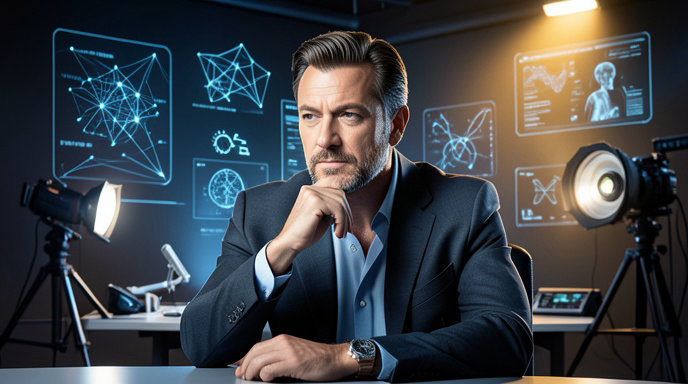
TL;DR
- Ben Affleck’s apparent fluency in neural networks, transformers and open-weight AI models has sparked a viral internet conversation, but much of the discussion is based on clips and commentary rather than a documented technical role.
- Affleck has publicly discussed the impact of generative AI on Hollywood and filmmaking, while his known production company, Artists Equity, is not publicly established as an AI startup.
- The episode highlights how celebrity, technical vocabulary and uncertainty can combine online to create a powerful—and sometimes misleading—technology narrative.
Why Affleck Is Suddenly Being Discussed as an AI Insider
Ben Affleck is best known as an actor, writer, director and producer. Yet online discussion has recently recast him as an unlikely technology authority after clips and posts highlighted his apparent familiarity with artificial-intelligence concepts.
The conversation centers on Affleck’s use—or apparent understanding—of terms such as neural networks, transformer models and open-weight systems. For some viewers, his comments suggested a deeper grasp of AI than they expected from a Hollywood celebrity. For others, the moment became an example of the internet’s tendency to turn a striking interview clip into a much larger persona.
The viral reaction appears to be driven as much by contrast as by technical substance: Affleck’s public image is associated with filmmaking, celebrity and pop culture, while the language surrounding modern AI is usually linked to researchers, engineers and startup founders.
What Neural Networks and Transformers Actually Mean
Neural networks are machine-learning systems modeled loosely on the way biological brains process information. They learn statistical patterns from data by adjusting numerical parameters during training. Modern generative-AI systems use neural networks with billions—or, in some cases, hundreds of billions—of parameters.
Transformers are a particular neural-network architecture that became central to contemporary language and multimodal AI. Introduced in academic research in 2017, transformers use mechanisms commonly known as attention to identify relationships among tokens, words, image elements or other pieces of data. This architecture helped make large language models more capable and scalable.
Knowing these terms does not necessarily make someone an AI engineer. A person may understand the concepts at a high level without designing models, training them or deploying production systems. That distinction has been largely missing from some online reactions to Affleck’s comments.
The Open-Weight Model Debate
Another term circulating in the discussion is “open-weight model.” The phrase generally refers to an AI model whose trained parameters—the numerical values that encode what the system learned—are made available for others to download and run, subject to the model’s license.
Open-weight models can give developers more control over deployment, customization and data privacy. They can also make it easier for researchers and companies to experiment without relying entirely on a closed provider’s application programming interface.
Open weights are not automatically the same as open source. A model may release its parameters while withholding some training data, code, documentation or details of the development process. Licensing restrictions can also limit commercial use, redistribution or fine-tuning.
That nuance matters because fluent discussion of open-weight models can sound highly specialized while still reflecting publicly accessible industry knowledge. It is evidence of familiarity with the subject, not by itself proof of professional technical expertise.
Affleck’s Hollywood and Technology Credentials
Affleck does have a substantial record of engaging with the business and creative side of filmmaking. He has worked as a director and screenwriter, and he has discussed production economics, studio decision-making and the challenges facing creators.
In 2022, Affleck and Matt Damon launched Artists Equity, a production company intended to give filmmakers and creative talent a greater role in projects and, in some cases, a greater share of the financial upside. The company has been associated with film and television production rather than publicly documented development of foundational AI models.
Affleck’s professional experience could give him a meaningful perspective on AI’s effect on entertainment. A director or producer does not need to build a transformer from scratch to understand how generative tools may affect visual development, editing, dubbing, performance capture, marketing and the economics of production.
However, public evidence should be separated from online speculation. Claims that Affleck has founded or is operating a dedicated AI filmmaking startup require documentation such as corporate filings, an official company announcement, named executives, a product demonstration or credible reporting. Without that evidence, the claim remains unconfirmed.
What an AI Filmmaking Venture Would Need to Prove
An AI-focused filmmaking company could take several forms. It might develop tools for previsualization, storyboarding, script analysis, virtual production or postproduction. It could also build systems for organizing rights-cleared training data, managing digital performers or helping independent filmmakers produce content at lower cost.
Each area carries significant technical and legal challenges. Generative video remains expensive to train and operate, and maintaining consistent characters, locations, lighting and motion across shots is difficult. Production tools must also fit existing workflows rather than merely produce impressive demonstrations.
Rights and consent are equally important. Any system trained on performances, scripts, images or footage must contend with copyright, licensing, privacy and labor concerns. The use of an actor’s likeness or voice can require explicit contractual protection, while unions and studios continue to negotiate how AI should be used and compensated.
A credible AI filmmaking startup would therefore need more than celebrity association. It would need a clearly defined product, technical personnel, licensing strategy and evidence that creators—not only investors or platforms—benefit from the technology.
Why the Internet Turned the Moment Into a Meme
The Affleck discussion reflects a familiar pattern in online culture. A celebrity displays unexpected knowledge, viewers clip the most striking passage, and social media fills in the gaps with speculation, jokes and exaggerated interpretations.
Some reactions portray Affleck as a secret AI founder or unusually advanced technical thinker. Others treat the episode skeptically, suggesting that the terminology may have been supplied by advisers, interview preparation or a scripted context. Both interpretations can go beyond what the original material establishes.
The phenomenon also illustrates how technical vocabulary functions socially. Words such as “transformer,” “neural network” and “open weights” signal expertise to a general audience. When a famous actor uses them confidently, the novelty of the setting can make ordinary industry awareness appear revolutionary.
That does not mean Affleck’s comments are insignificant. It means the strongest conclusion is limited: he appears interested in and informed about AI’s implications for Hollywood. The available public discussion does not, by itself, establish that he is a machine-learning researcher, model developer or founder of a confirmed AI company.
The Bigger Hollywood Question
The more important issue is not whether Affleck deserves the label of AI expert. It is how quickly the entertainment industry is being forced to respond to generative systems.
AI tools are already influencing concept development, localization, visual effects, marketing and production planning. Their spread is creating opportunities for smaller teams while raising concerns about job displacement, creative ownership and the dilution of human performance.
Filmmakers are likely to play a central role in determining acceptable uses. Their decisions will help define whether AI is treated as an assistive tool, a replacement for creative labor or a new production infrastructure controlled by a small number of technology companies.
Affleck’s public profile gives the debate additional visibility, but celebrity attention should not replace scrutiny. The relevant questions are practical: What system is being built? What data trained it? Who owns the output? Whose work was used? How are performers and writers compensated? And does the tool expand creative opportunity or concentrate power?
Separating Signal From Hype
The viral narrative around Ben Affleck and AI is best understood as a collision between genuine industry change and internet amplification. His apparent familiarity with important AI concepts may reflect serious engagement with the future of filmmaking. It does not, without additional evidence, verify claims of a secret startup or establish a technical research career.
For now, the clearest story is that AI has become impossible for Hollywood’s leading creators to ignore. Whether Affleck ultimately becomes an investor, producer, tool builder or simply an outspoken observer, the attention surrounding him shows how eagerly audiences are looking for recognizable figures to explain the next phase of entertainment technology.

Get All The Latest Updates Delivered Straight To Your Inbox For Free!