
Google Playground Explained How Google Labs AI Turns Text Prompts Into Browser Games
TL;DR
- Google Labs' Playground is an experimental AI platform that turns simple text prompts into fully playable browser games with no coding required.
- Built on Google's Gemini and Genie world-model tech, it handles game logic, art, sound, and rules automatically, with remix and sharing built in.
- Now in limited testing via Google Labs, Playground signals Google's bigger push to make generative AI gaming mainstream for creators and casual players.
What Is Google Playground?
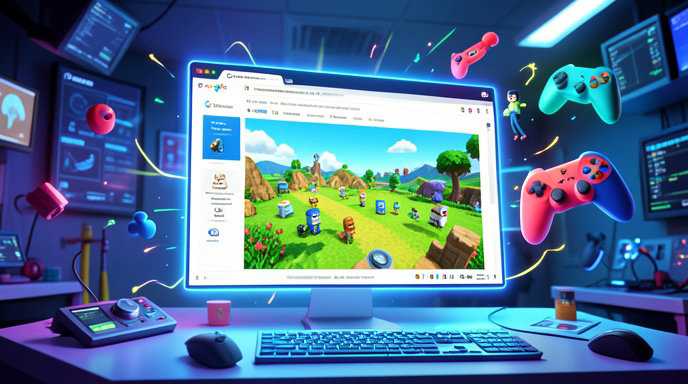
Google Labs is quietly building what could be its most playful AI experiment yet. Dubbed Playground, the platform lets anyone type an idea like "a cozy farming sim with space aliens" or "a neon endless runner through Tokyo" and get back a playable game in the browser in seconds.
No game engine. No code. No downloads. Just describe it, play it, tweak it, and share a link with friends.
Playground is not positioned as a rival to Unity or Unreal. Instead, Google is pitching it as a creativity toy for everyone — part TikTok for games, part prompt laboratory — where casual gamers become creators and ideas can be tested faster than ever before.
How It Works: From Prompt to Playable
At its core, Playground combines large language models from the Gemini family with Google DeepMind's generative game models, including technology related to Genie and GameNGen.
Here's the flow Google describes: You enter a text prompt describing the genre, vibe, characters, and goal. Playground's AI then generates a complete game loop — level layout, mechanics, pixel or 3D-style art, background music, sound effects, and win/lose rules.
You can then keep chatting to iterate. Try "make it harder," "add a double-jump," "change it to night mode," or "make the enemies cuter," and the game updates live in your browser tab. Advanced users can open a logic view to adjust rules, swap assets, and remix other people's public games.
Everything runs on the web, optimized for Chrome and mobile browsers, with instant hosting and shareable links. No installs, no app stores.
Why It Matters for Creators
For indie developers, hobbyists, educators, and content creators, Playground dramatically lowers the barrier to entry.
Instead of spending weeks prototyping a platformer or puzzle game, a creator can generate ten playable concepts in an afternoon, test which one is fun, and then export the idea for further development. Teachers can build educational games for a classroom on the fly. YouTubers and streamers can spin up custom mini-games with their communities in real time.
Google is also emphasizing remixing as a core feature. Every public game in the Playground feed can be forked, modified, and republished, creating a fast-moving loop similar to what TikTok Duets and YouTube Shorts remixes did for video.
What It Means for Casual Gamers
For players, Playground could mean an endless arcade of personalized micro-games. Bored of the same mobile games? Generate a 2-minute dungeon crawler set in your neighborhood, or a word game starring your dog.
Google Labs is leaning into discovery, with a browsable gallery of trending AI-made games, one-click play, and no sign-up required to try featured titles. Early testers describe it as a mix between Roblox, the Chrome Dino game, and an AI chatbot — lightweight, weird, surprisingly addictive, and highly shareable.
As with other Labs experiments, moderation, safety filters, and playability checks run in the background to block inappropriate or broken content before games go public.
How Playground Fits Google's Generative AI Gaming Push
Playground doesn't exist in a vacuum. It's the latest piece of Google's aggressive push into generative AI gaming over the past two years.
That push includes DeepMind's Genie 2 and Genie 3 world models that can generate interactive 3D environments from a single image or text description, the GameNGen research that showed classic games like DOOM could be fully simulated by neural networks in real time, and YouTube Playables' library of lightweight browser games.
Playground appears to be Google Labs' attempt to productize that research — taking the power of world models and Gemini's reasoning and packaging it into a simple consumer tool. Internally, it's seen as a testbed for AI-generated assets, AI NPCs, dynamic storytelling, and eventually deeper integration with YouTube, Google Play, and Android.
Industry watchers see it as Google's answer to similar moves from Microsoft, Roblox, and startups like Rosebud AI and Luma, all racing to let users "prompt a game" the way they now prompt an image or video.
Availability and What's Next
As of early October 2026, Playground remains an early experiment available through labs.google.com in the U.S. and select regions, with a waitlist for creators. Google has not announced pricing, though Labs experiments typically start free with usage limits.
Expect rapid iteration. Google says upcoming features include multiplayer generation from a single prompt, collaborative building with friends, better character persistence across games, and the ability to import assets from other Google AI tools like Whisk and Flow.
Like all Labs projects, there's no guarantee Playground will become a full Google product. But if Google gets prompt-to-game right — making creation as easy as searching — it could change who gets to make games, and how fast a wild idea can become something you can actually play.

Get All The Latest Updates Delivered Straight To Your Inbox For Free!