
Hark Launches Privacy-First AI Personal Assistant to Take on Muse, Dots and Instinct
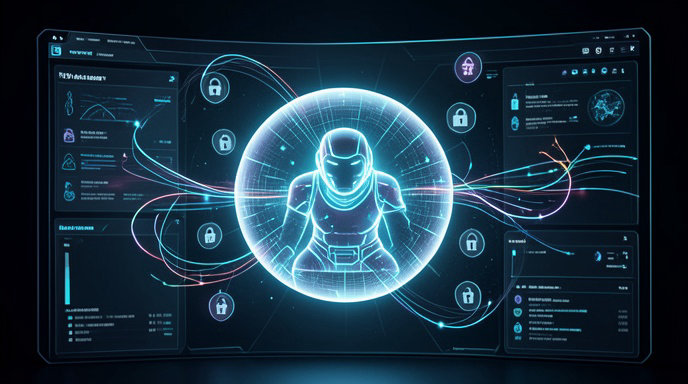
TL;DR
- Hark has launched a privacy-focused AI personal assistant described as an operating system from the future, built to act autonomously across apps and devices.
- The system runs with on-device processing by default, granular user permissions, and no ad-based data monetization, setting it apart on privacy.
- Hark will compete directly with Muse, Dots, and Instinct, with early demos showing deeper task automation and a subscription-based model.
An Operating System From the Future
Hark is positioning its new launch not as another chatbot or voice assistant, but as a full rethink of the personal operating system. Unveiled this week, the Hark assistant is designed to sit across your phone, laptop, and wearables, learning routines, anticipating needs, and taking action without constant prompting.
Instead of opening five different apps to book travel, reschedule meetings, and pay bills, users can delegate entire workflows to Hark with a single command. The company says the assistant can browse, reason across multiple data sources, remember long-term context, and complete multi-step tasks proactively. In live demos, Hark summarized inboxes, negotiated calendar conflicts, ordered groceries based on past habits, and generated daily briefings in seconds.
Hark's founders describe the vision as ambient computing finally realized - an AI that fades into the background but handles the busywork of modern digital life.
Privacy-First By Design
Privacy is Hark's central pitch, and its biggest differentiator. While most AI assistants rely heavily on cloud processing and data collection for training and advertising, Hark says it flips that model.
Key to its approach is on-device processing by default, with sensitive data like messages, location history, and health information staying local whenever possible. When cloud compute is required, the company says data is encrypted end-to-end, processed in isolated sessions, and never sold or used for ad targeting. Users get a transparent activity log showing exactly what Hark accessed, why, and for how long, plus one-tap revocation of any permission.
Hark will operate on a paid subscription model rather than an advertising model, a move the company argues removes the incentive to harvest personal data. Independent security audits and an option for a fully offline mode are also promised for launch.
How It Compares to Muse, Dots and Instinct
The personal AI race is heating up, and Hark is entering a crowded field dominated by three distinct rivals.
Muse, known for its powerful reasoning and deep knowledge work, remains the leader for research, writing, and coding assistance. Hark does not try to out-muscle Muse on raw intelligence, but instead focuses on action - doing things across apps rather than just answering questions.
Dots has won fans with its playful, highly personalized companion style and wearable-first design. Compared to Dots, Hark feels more utilitarian and productivity-driven, with less emphasis on personality and more on invisible task completion and system-level integration.
Instinct, backed by its mobile OS roots, offers the tightest integration with smartphones today and strong automation shortcuts. Hark's answer is platform neutrality - working across iOS, Android, Mac, Windows, and the web - plus stronger privacy guarantees and longer-term memory that persists across devices.
Early reviewers say Hark feels faster and more autonomous than its rivals, though its real-world reliability and third-party app support will be the ultimate test.
Availability, Pricing and What's Next
Hark will roll out first in the U.S. and U.K. as an invite-only beta this fall, with iOS, Android, and desktop apps at launch, followed by a wearable pin and broader integration support early next year.
The company confirmed a monthly subscription with a free limited tier, but has not yet disclosed final pricing. Developers will get access to the Hark Actions SDK, allowing them to build Hark-native tasks for shopping, travel, finance, and smart home control.
If Hark can deliver on its bold promises around autonomy and privacy, it could force Muse, Dots, and Instinct to rethink their own roadmaps. For now, the battle for the AI assistant that truly runs your life has officially begun.

Get All The Latest Updates Delivered Straight To Your Inbox For Free!