
inDrive Targets 2027 Robotaxi Tests in Kazakhstan with Pony.ai and Nvidia
TL;DR
- inDrive plans to begin testing Pony.ai autonomous vehicles in Astana in the first half of 2027, marking its first major move into self-driving mobility.
- The program will leverage Pony.ai's Nvidia DRIVE-powered autonomous stack, with inDrive handling fleet integration, service operations, and ride-hailing demand.
- Kazakhstan was chosen for its supportive regulation and tech-friendly capital, positioning inDrive to challenge Uber and Yandex in the race for robotaxi dominance in Central Asia.
A Bold Bet Beyond Ride-Hailing
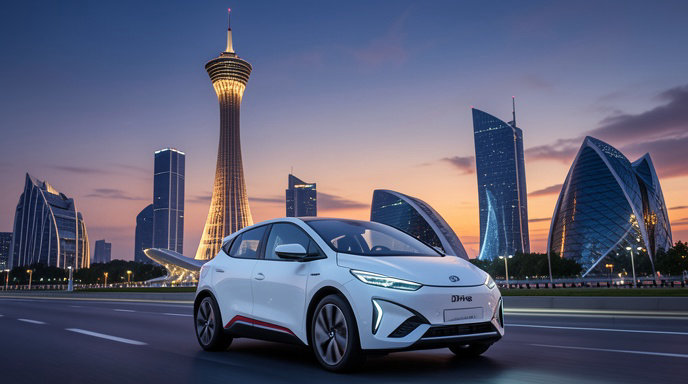
inDrive, the global mobility platform known for its peer-to-peer pricing model, is preparing its boldest expansion yet. The company has confirmed plans to begin testing autonomous robotaxis in Astana, Kazakhstan's capital, in the first half of 2027.
The project signals a strategic shift for inDrive from human-driven ride-hailing into fully autonomous mobility. While rivals pour billions into U.S., Chinese, and Middle Eastern robotaxi pilots, inDrive is betting that Central Asia could become the next unexpected battleground for self-driving dominance.
The announcement positions Astana as a future testbed for driverless urban transport, with initial trials expected to focus on defined routes in the capital before any wider commercial rollout.
Inside the Pony.ai and Nvidia Partnership
At the heart of the plan is a partnership with Pony.ai, the Chinese-U.S. autonomous driving company backed by Toyota and one of the few robotaxi developers already operating paid driverless services in Beijing, Shanghai, Guangzhou, and Shenzhen.
Pony.ai brings its seventh-generation autonomous driving system, built on the Nvidia DRIVE Orin and next-generation Thor platforms. The Nvidia-powered stack provides the high-performance compute needed for real-time perception, mapping, prediction, and planning in complex urban environments.
Under the collaboration structure, Pony.ai will supply the autonomous vehicle technology and virtual driver system, while inDrive will provide the mobility layer — fleet operations, customer acquisition, in-app integration, dispatch, pricing, and on-the-ground support. It is a classic split that mirrors Uber's partnerships with Waymo and WeRide: autonomy specialists handle the driving, platforms handle the riders.
Why Kazakhstan, and Why Astana
Choosing Kazakhstan is no accident. Astana has spent the past five years reinventing itself as a digital capital, with smart-city infrastructure, 5G corridors, newly built wide avenues, and a government actively courting AI and autonomous technology investment.
Kazakhstan offers three strategic advantages for robotaxi testing. First, regulation is more flexible than in the EU or U.S., allowing faster permitting for autonomous pilots. Second, Astana's road layout — modern, grid-like, and less congested than megacities like Almaty or Moscow — is ideal for early-stage validation. Third, inDrive already has deep brand recognition and driver networks across Kazakhstan and Central Asia, giving it instant scale for demand and operations.
The country has also positioned itself as a neutral tech bridge between China, Russia, and the West, making it an attractive launchpad for a company like Pony.ai looking to expand beyond China and the U.S.
Taking on Uber in the Robotaxi Race
The move directly challenges Uber, which has aggressively pursued a capital-light robotaxi strategy through deals with Waymo, WeRide, Pony.ai, Avride, and Nuro. Uber CEO Dara Khosrowshahi has described autonomy as the future of the platform, with Austin, Atlanta, Abu Dhabi, and Dubai serving as early hubs.
inDrive is now pursuing a similar playbook but in markets Uber has largely ignored. With more than 200 million app downloads and strong footholds in Latin America, Africa, the Middle East, and Central Asia, inDrive can offer robotaxi partners access to high-growth regions where car ownership is lower and demand for affordable mobility is rising.
Analysts see the Astana pilot as a low-cost, high-visibility way for inDrive to prove it belongs in the autonomy conversation without competing head-to-head with Waymo in San Francisco or Tesla in Texas.
What to Expect in 2027
Details on fleet size, vehicle models, and safety driver protocols have not yet been disclosed, but sources familiar with the plan suggest the first phase will involve supervised testing with safety operators on board, followed by fully driverless trials in limited zones.
Key hurdles remain, including winter weather validation — Astana is one of the world's coldest capitals, with temperatures dropping below -30C — localization of maps, regulatory approval for driverless operation, and public trust.
If successful, inDrive has hinted the model could be replicated in other markets where it operates, particularly in Latin America and MENA. For now, all eyes are on the first half of 2027, when Astana could join the growing list of cities where the future of transport arrives without a driver.

Get All The Latest Updates Delivered Straight To Your Inbox For Free!