
Menlo Bets Big on Factory After Vinod Khosla Public Spat
TL;DR
- Vinod Khosla sparked a VC firestorm this past week by publicly calling Factory a struggling also-ran in AI coding, prompting a sharp rebuttal from Factory CEO Matan Grady.
- Days later, Menlo Ventures went public with its investment in Factory, publishing a glowing blog post praising its enterprise Droids and rapid Fortune 500 traction.
- The public clash highlights a deepening VC split over AI coding, with Khosla betting on Cognition and Windsurf while Menlo, Sequoia, and others pile into Factory, Cursor, and Codeium at multi-billion-dollar valuations.
The Tweet That Started It All
It started, as so many Silicon Valley fights do, with a post on X.
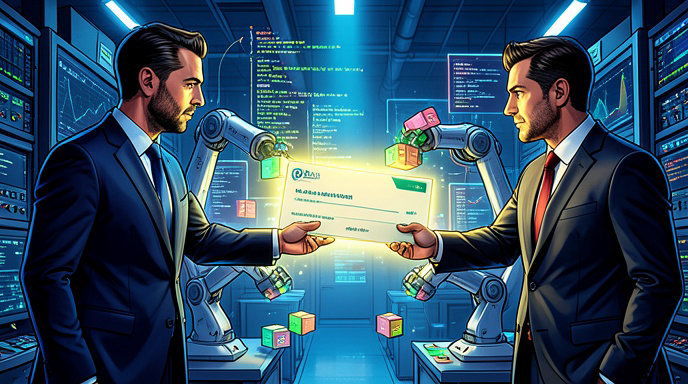
Late last month, Khosla Ventures founder Vinod Khosla was weighing in on the crowded AI coding market when he dismissed Factory as a company that was already falling behind. In replies and follow-up comments, Khosla framed Factory as a struggling also-ran compared to leaders like Cursor, Cognition's Devin, and Windsurf, arguing that only a few AI coding startups had real model and distribution advantages.
The comments spread fast because Khosla is not a neutral observer. Khosla Ventures is a major backer of Cognition and has been vocal that AI will automate 80% of software engineering work. His take was widely read as both a prediction and a plug for his own portfolio.
Factory did not stay quiet. CEO and co-founder Matan Grady fired back publicly, disputing Khosla's characterization and saying Factory's enterprise growth told a very different story. Grady pointed to accelerating adoption among large engineering organizations and argued that benchmarks and Twitter narratives miss what actually matters in production: reliability, permissions, codebase context, and integration into existing workflows.
Inside Factory's Comeback Narrative
Factory, founded in 2023 by Grady and Eno Reyes, is building what it calls Droids — autonomous AI agents that can handle full software development tasks across massive, complex enterprise codebases, from code review and refactoring to testing, documentation, and migration.
Unlike consumer-first coding assistants, Factory has pitched itself from the start as enterprise-first. Its platform connects directly to GitHub, Jira, Slack, Linear and internal systems, learns an organization's coding standards, and operates with audit trails and access controls that CIOs and security teams require.
That positioning is central to Menlo's bull case. In its announcement post this week, Menlo argued that the first wave of AI coding won developers' hearts with autocomplete, but the second, much larger wave will be won in the enterprise, where millions of lines of legacy code live. Factory, Menlo says, is purpose-built for that unsexy but lucrative reality.
Why Menlo Is Backing Factory Now
Menlo Ventures' announcement was not a quiet Form D filing. It was a full-throated endorsement, complete with a glowing blog post from partner Tim Tully laying out why the firm led Factory's latest round.
Three reasons stood out.
First, traction. According to Menlo and the company, Factory is now working with major Fortune 500 customers in finance, automotive, and tech, with rapid growth in annual recurring revenue over the past year and strong expansion within engineering teams after initial pilots.
Second, product differentiation. Menlo argues Factory's Droids go beyond chat-based copilots by operating reliably across entire repositories, maintaining context over long-running tasks, and allowing organizations to build custom, shareable Droids for specific workflows like incident response or monolith-to-microservices migration.
Third, timing. Menlo, which is also known for its big bets on Anthropic and Cursor, believes enterprise AI coding is hitting an inflection point as CIOs move budgets from experimentation to deployment. Backing Factory now, the firm says, is a bet that the next $10 billion in AI coding value will come from autonomy and enterprise deployment, not just individual developer productivity.
Neither Menlo nor Factory disclosed the full terms in the blog post, but the round is reported to value Factory well into unicorn territory, a sharp step up from its prior raises and a clear signal Menlo is willing to pay up for what it sees as a category leader.
A Tale of Two Portfolios
The spat matters because it exposed how sharply top firms are diverging on AI coding.
On one side is Khosla Ventures, which has concentrated around Cognition, maker of Devin, and Windsurf, and has repeatedly argued the market will consolidate around two or three full-stack winners that replace large portions of engineering labor.
On the other side is Menlo Ventures, which is building a broader AI coding and agent portfolio around Anthropic, Cursor, Codeium, and now Factory. Sequoia, Lightspeed, Andreessen Horowitz, and General Catalyst have made similarly overlapping bets, suggesting they expect multiple winners segmented by user: indie hackers and startups on Cursor, large enterprises on Factory and Codeium, and frontier automation on Cognition.
In other words, Khosla is betting on consolidation. Menlo is betting on segmentation.
What This Signals for AI Coding Startups
For founders, the Khosla-Factory-Menlo saga offers three hard lessons about where AI coding goes next.
Enterprise distribution is the new moat. Models are converging fast. What separates Factory, according to Menlo, is not just eval scores but SOC 2 compliance, on-prem context handling, and the ability to land and expand inside regulated companies. Expect every serious coding startup to hire enterprise sales and forward-deployed engineers in the next 12 months.
Public fights are fundraising strategy. Khosla's dismissal and Grady's rebuttal kept Factory in the headlines for a week straight — right before Menlo's announcement dropped. Whether intentional or not, the spat gave Factory an underdog narrative and Menlo a perfect moment to play the supportive, founder-friendly backer.
Valuations will stay irrational until revenue catches up. With Cursor reportedly above $20 billion, Cognition raising at multi-billion valuations, and Factory now joining the unicorn club, investors are clearly pricing in that AI will eat a huge chunk of the $500 billion+ software development market. The risk is that churn, security incidents, or slower-than-expected enterprise rollouts could quickly reset expectations.
For now, though, momentum is on Factory's side. A week ago it was being written off on social media. This week it has one of Silicon Valley's most influential AI investors publishing love letters about its future.
In AI coding, that's how fast the narrative can flip.

Get All The Latest Updates Delivered Straight To Your Inbox For Free!