
Mosqitter Turns Mosquito Traps Into AI Disease Surveillance Network
TL;DR
- Mosqitter is shifting from standalone mosquito traps to a connected AI surveillance network that identifies species, sex, and counts in real time.
- The platform combines patented CO2-free lures, cameras and machine learning to map populations and predict outbreak risks for cities and health agencies.
- The move positions mosquito control as public-health infrastructure, focused on early warning for malaria, dengue, Zika and West Nile rather than just backyard biting.
From Hardware to Health Infrastructure
Mosqitter started with a simple pitch: kill mosquitoes without chemicals, propane, or CO2 tanks. Its thermal lures mimic human body heat and sweat chemistry to draw in females hunting for blood.
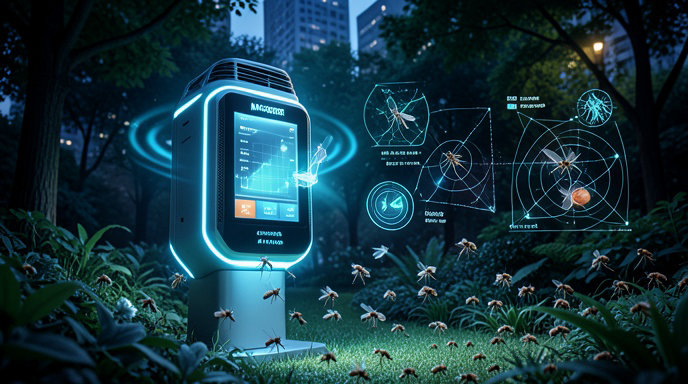
That hardware story is now becoming a data story. The company's latest generation of traps are designed as field sensors - always-on nodes that don't just catch mosquitoes, but count them, photograph them, and classify them.
For municipalities, resorts, farms and campuses battling longer mosquito seasons, the promise is no longer just fewer bites. It's visibility.
How the AI Trap Actually Works
At the core is an optical chamber paired with computer vision. When a mosquito enters, the system captures wingbeat patterns, body size, morphology and flight behavior.
Trained AI models then estimate species, sex, and abundance. Is it Aedes aegypti, the aggressive daytime biter behind dengue, Zika and chikungunya? Or Culex pipiens, the dusk vector for West Nile? Is the population spiking after rain?
Results are pushed to a cloud dashboard with maps, trends and alerts, turning a trap catch into an epidemiological signal. Operators can see hotspots building in near real-time, instead of waiting weeks for lab trap counts and hospital cases.
Why Species ID Changes Everything
Not all mosquitoes are equal. Of 3,500+ species worldwide, only a handful spread human disease - and they respond to different control strategies.
Traditional light traps and manual counting can't keep up. They require entomologists to sort samples under microscopes, a slow and expensive bottleneck that leaves most of the world under-surveilled.
Automated identification solves the scaling problem. By distinguishing males, which don't bite, from blood-seeking females, and invasive species from nuisance ones, Mosqitter says cities can target larviciding, fogging and public messaging with surgical precision instead of blanket spraying.
Building an Early Warning Network
The bigger vision is a distributed surveillance grid. Dozens or hundreds of connected traps create a living map of vector pressure across neighborhoods, coastlines and borders.
When combined with weather, temperature, humidity and standing-water data, the platform can forecast population surges and flag rising disease risk days before an outbreak. Public health officials get lead time to clear breeding sites, deploy crews, and warn residents.
It's the same playbook as weather radar or air-quality sensors: move from reactive response to predictive prevention.
Chemical-Free Control Meets Climate Pressure
The timing matters. Warming climates are expanding mosquito ranges northward and lengthening transmission seasons. Dengue cases have surged globally in recent years, while West Nile and malaria vectors are appearing in new territories.
At the same time, regulators and consumers are pushing back on pesticides and propane-burners. Mosqitter's approach uses no insecticides, no CO2 cylinders, and low power consumption with solar options, making it deployable in national parks, schools, hospitals and eco-resorts where spraying is restricted.
Surveillance, in this model, makes green control smarter - kill where needed, monitor everywhere.
What Comes Next
Mosqitter is now courting smart-city programs, vector-control districts, hospitality groups and international health agencies that need continuous, affordable monitoring.
Challenges remain: AI accuracy in the wild, connectivity in remote areas, and proving that early warnings translate into fewer cases. Competitors in smart-trap and eDNA surveillance are racing to do the same.
But the direction is clear. The mosquito trap is no longer just backyard hardware. In Mosqitter's roadmap, it's a public-health sentinel - listening to the buzz, learning the swarm, and sounding the alarm before disease spreads.

Get All The Latest Updates Delivered Straight To Your Inbox For Free!