
NTangible Wants to Predict Clutch Performance in College Sports
TL;DR
- NTangible is building an analytics platform that aims to quantify clutch performance by combining biometric, behavioral, and game-context data for college athletes.
- The startup is targeting collegiate sports organizations and clubs first, positioning the tool for recruiting evaluations, personalized pressure training, and real-time game-day decisions.
- As college sports embraces data and NIL-era performance pressure, NTangible faces questions around validation, privacy, and how coaches will actually use a clutch score.
What If Clutch Isn't Just Vibes?
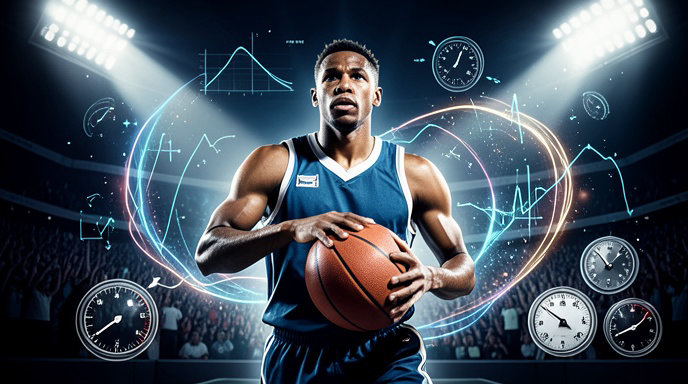
Every sports fan knows the moment. Crowd loud, clock winding down, game on the line — and certain players just seem to get calmer, sharper, better. Coaches call it clutch. Front offices chase it. Fans argue about it endlessly.
NTangible, an early-stage sports tech startup, wants to turn that debate into data.
The company says it is developing an analytics platform designed to measure how athletes perform under pressure, with an initial focus on collegiate sports organizations and clubs. Instead of relying on gut feel or highlight reels, NTangible plans to quantify what it calls the clutch factor: how likely a player is to execute when stress is highest.
The Pressure Problem in College Sports
College athletics is an ideal — and brutal — testing ground for that idea.
Student-athletes are playing higher-stakes games than ever, in front of larger audiences, with transfer portal movement, NIL deals, and social media scrutiny adding new layers of pressure. A freshman point guard might go from high school gyms to 15,000 screaming fans and nationally televised free throws in a matter of months.
Coaches have film, box scores, and athletic testing. What they don't have is a systematic way to answer: who holds up when it matters most?
That's the gap NTangible wants to fill.
How NTangible Plans to Quantify Clutch
According to the company's concept, the platform will pull together three types of signals that are usually siloed.
First is contextual performance data: how a player's efficiency, decision-making, and error rate change in high-leverage situations — close games, late clock, third downs, penalty kicks, match point, postseason play — versus normal conditions.
Second is biometric and load signals from wearables: heart-rate variability, sleep, recovery, and stress responses around practices and games, used as proxies for how an athlete's body handles pressure.
Third is behavioral and cognitive inputs: reaction time, focus drills, routine consistency, and self-reported readiness, designed to capture preparation and composure.
The output, in theory, is not a single good-or-bad label but a set of profiles and scores that show which players improve, hold steady, or dip under pressure, and in what kinds of moments.
From Locker Room to Dashboard
NTangible is designing the product for the people who live inside college programs: head coaches, assistants, strength staff, sports psychologists, and recruiting coordinators, plus competitive club organizations that operate like quasi-varsity programs.
The pitch is simplicity. A coach shouldn't need a data science degree to use it. Think dashboards that flag late-game lineup options, practice plans that simulate pressure for specific players, and recruiting reports that add a composure layer on top of speed, size, and skill.
For clubs with limited staff and budgets, the startup sees an opportunity to offer a lighter-weight version — video-tagged pressure moments, mobile check-ins, and comparative benchmarks without a full performance lab.
Why Recruiting Could Be The Killer Use Case
Recruiting is where subjectivity is most expensive.
Two prospects can have identical stats, similar measurables, and wildly different responses to big moments. Transfer portal decisions raise the stakes even further: programs are investing significant NIL resources and roster spots based on limited tape.
NTangible argues a clutch profile could help programs ask sharper questions. Does a shooter maintain mechanics in the final four minutes? Does a quarterback process faster or force throws when trailing? Does a freshman defender stay disciplined after a mistake?
It wouldn't replace film, character evaluation, or fit. But for programs trying to separate dozens of similar athletes, an objective pressure metric is an enticing tiebreaker.
Training For Pressure, Not Just Performance
The other big promise is training.
If you can measure pressure response, you can train it more deliberately. NTangible envisions coaches creating individualized pressure reps: crowd noise, consequences, fatigue, time constraints, and disrupted routines tailored to how each athlete struggles.
A player who rushes decisions late might get constrained-choice drills. A player whose free-throw routine collapses under stress might get routine-consistency work paired with breathing and reset cues. Over time, the platform would track whether those interventions actually move the needle in real games.
That feedback loop — stressor, response, intervention, retest — is central to sports science, and NTangible wants to make it usable for a typical college staff.
Game-Day Decisions Under The Microscope
The most ambitious — and controversial — use case is game day.
Imagine a basketball coach deciding who takes the final shot, a soccer coach choosing penalty takers, a baseball coach picking a closer, or a football staff deciding whether to trust a young kicker from 48 yards. NTangible wants its data in that conversation.
The company is careful to frame this as decision support, not automation. Coaches will always weigh matchups, momentum, injuries, and trust. But in programs increasingly comfortable with fourth-down models and rotation optimization, a pressure-readiness signal could become one more input in tight calls.
Skeptics, Data Gaps, And Privacy Questions
The vision is compelling. Proving it will be hard.
Clutch remains one of sports analytics' most debated concepts because samples are small by definition — there just aren't that many true high-leverage moments in a season — and context matters enormously. Opponent strength, play calling, teammates, officiating, and randomness can all masquerade as composure or collapse.
NTangible will need to show its scores are stable, predictive, and not just repackaged box-score luck. That means validation studies across teams, seasons, and sports, plus transparency about uncertainty rather than black-box certainty.
There are also athlete-privacy considerations, especially critical in college settings. Biometric data, mental-readiness check-ins, and psychological profiles are sensitive. Programs will need clear consent, data ownership rules, limits on how scores are used in roster cuts or portal decisions, and safeguards against stigmatizing players as unclutch.
What Comes Next
NTangible is entering a crowded but fast-growing sports tech landscape that includes athlete management systems, wearable platforms, video analytics firms, and mental performance apps. Its bet is that none have fully owned pressure as a standalone category.
Expect the next milestones to be pilot partnerships with college teams and clubs, sport-specific models starting with high-possession, high-leverage sports like basketball, soccer, football, baseball, and volleyball, and integrations with wearables and video tools coaches already use.
If it works, the idea of clutch could shift from barstool argument to recruiting board column, practice plan input, and late-game data point. If it doesn't, NTangible will be another reminder that the hardest things to measure in sports — poise, feel, nerve — resist easy quantification.
Either way, college sports programs are clearly hungry for an edge in the moments that decide seasons. NTangible is betting that edge can be measured.

Get All The Latest Updates Delivered Straight To Your Inbox For Free!