
Pope Leo XIV Slams AI Art: Algorithms Lack the Spark of Humanity
TL;DR
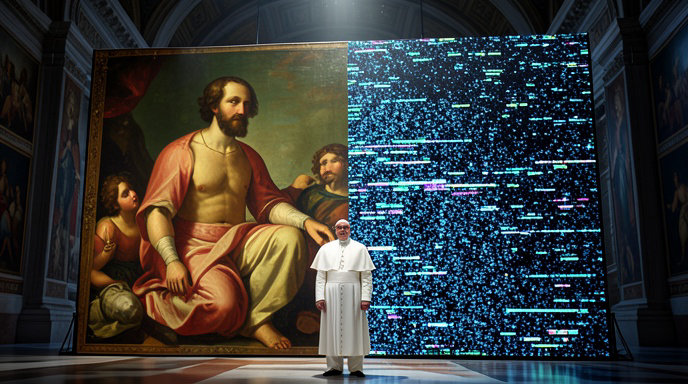
- Pope Leo XIV argued AI-generated images lack true human creativity, describing machine outputs as statistical recombination rather than soul-driven artistic expression.
- The statement builds on the Vatican's expanding AI doctrine, following Antiqua et Nova and Leo's calls for ethical, human-centered AI development.
- Artists largely praised the remarks as validation, while tech leaders pushed back, defending AI as a creative tool rather than a replacement.
What The Pope Actually Said
In remarks delivered during a Vatican audience with artists, educators, and cultural leaders in late September, Pope Leo XIV took his strongest stance yet on artificial intelligence and creativity. According to Vatican Media summaries, the American-born pontiff warned against confusing technical perfection with true art.
The core of his argument was philosophical. Human creativity, he said, comes from lived experience, suffering, joy, moral conscience, and the search for transcendence. AI models, no matter how sophisticated, do not live, believe, grieve, or hope. They calculate probabilities based on vast datasets of prior human work.
In his words, there is an ontological difference between a person who creates and a machine that produces. One acts from interiority and freedom. The other executes patterns. The Pope cautioned that calling both processes by the same name risks impoverishing our understanding of what it means to be human.
He did not call for a ban on AI tools, but urged artists, schools, and policymakers to avoid delegating imagination itself to algorithms.
Why Now: The Vatican's Growing AI Doctrine
This is not an isolated comment. Since his election in May 2025, Pope Leo XIV has made artificial intelligence one of the defining themes of his pontificate, much as his predecessor Pope Francis did.
In his first months as pope, Leo repeatedly tied AI to his chosen name, invoking Leo XIII and the Industrial Revolution, and arguing the world now needs a similar moral response to a new cognitive revolution. He has called for international AI governance, protection of workers displaced by automation, safeguards for children, and transparency in AI systems.
The new remarks on art extend January's Vatican doctrinal note Antiqua et Nova, which warned that AI should augment rather than replace human intelligence, and cautioned against AI's impact on truth, relationships, and human dignity. Vatican officials have since hosted conferences on AI ethics, just war and autonomous weapons, and the future of work.
By addressing creativity directly, Leo is moving the Vatican's position from abstract ethics into culture. The message: AI policy is not just about jobs or misinformation, it is about preserving the human soul in what we make.
Artists Cheer, Tech Leaders Push Back
Reaction from the art world was swift and largely positive. Several prominent Catholic and secular painters, musicians, and writers shared the Pope's remarks online, saying they felt seen after years of watching generative models trained on their work without consent or compensation.
Illustrators and photographers involved in ongoing copyright battles against AI companies in the U.S. and EU described the ontological difference argument as a powerful moral framing to complement their legal claims. If AI output is not truly creative in the human sense, they argue, it should not enjoy the same protections or displace human commissions.
Response from Silicon Valley was more divided. Some AI startup founders and digital artists who use Midjourney, DALL-E, Stable Diffusion, and Sora-style video tools accused the Pope of romanticizing creativity and misunderstanding how human artists also remix influences. Others were more conciliatory, agreeing that AI lacks consciousness but insisting it can still be a legitimate brush, not a replacement painter.
A few tech leaders invited dialogue with the Dicastery for Culture and Education, echoing previous Vatican-tech roundtables that included figures from Microsoft, Cisco, and AI ethics bodies.
Beyond Art: A Larger Fight Over What Makes Us Human
Analysts say the controversy is about far more than pretty pictures. At stake are billion-dollar questions around copyright, labeling of synthetic media, deepfakes, and the role of AI in film, music, publishing, and advertising.
The Pope's intervention reframes AI art from a purely economic or legal debate into an anthropological one. If creativity requires a soul, a body, and moral responsibility, then a flood of frictionless, statistically perfect images could dull human wonder rather than expand it.
Expect the Vatican to keep pressing this point. Officials have signaled upcoming initiatives on AI in education, a proposed charter for truth in media, and continued pressure for the kind of binding international AI treaty Leo has advocated at the UN and G7.
For now, Leo's message to creators was both a warning and an encouragement: use the tools wisely, but do not let the tools use you. True art, he said, will always require something no dataset can provide — a human heart willing to reveal itself.

Get All The Latest Updates Delivered Straight To Your Inbox For Free!