
SpaceX Alumni Raise $100M to Revolutionize Freight With Autonomous Electric Trains
TL;DR
- Parallel Systems has raised $100 million to scale production of its battery-electric, autonomous rail vehicles, bringing total funding to around $150 million.
- Founded by former SpaceX engineers, the startup uses self-driving platoons that can haul up to 80,000 pounds per car up to 500 miles to shift freight from trucks to rail.
- The new capital will fund a Los Angeles-area factory, expanded testing, and commercial pilots with U.S. railroads and logistics partners in 2026-2027.
From Rockets to Railcars
Parallel Systems was founded in 2020 by Matt Soule, Ben Stabler and John Howard, three SpaceX veterans who spent years working on Falcon 9 and Starship avionics, software and propulsion. Their thesis was simple but ambitious: freight rail in the United States is efficient but inflexible, while trucking is flexible but expensive, polluting and constrained by driver shortages.
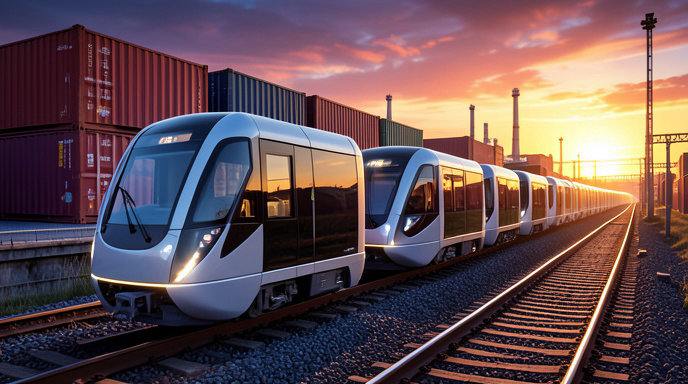
Their answer is a new kind of vehicle — a fully electric, autonomous railcar that can load and unload containers on its own, drive itself, and link up with other cars to form a platoon. Instead of waiting for a 150-car mile-long freight train to fill up, shippers could call up one or two self-driving cars on demand, much like calling an Uber for freight.
The startup first broke cover in January 2022 with a nearly $50 million Series A. Now, with fresh momentum around freight automation and decarbonization, it has secured $100 million in new funding to move from prototype to production.
How The Autonomous Platoons Work
Unlike a traditional locomotive pulling dozens of passive cars, each Parallel Systems vehicle is self-powered and intelligent.
Each second-generation vehicle is battery-electric with a range of up to 500 miles on a charge, and can carry a standard 40-foot shipping container or up to 80,000 pounds of payload. Onboard cameras, radar, LiDAR and redundant braking systems allow it to perceive tracks, crossings and obstacles, stop automatically, and communicate with other vehicles in the fleet.
The cars operate individually in yards and terminals, then autonomously couple together in platoons of up to 50 vehicles for long-haul travel on the open mainline. Splitting and joining happens without manual switching, which has historically been one of the slowest and most labor-intensive parts of railroading.
The company says the system can cut energy use by dramatically reducing aerodynamic drag and weight compared to diesel locomotives, while enabling near-silent, zero-emission operation. Charging happens at modular depot chargers installed in existing intermodal terminals, avoiding the need for overhead catenary wires.
Why $100 Million, Why Now
The new $100 million round marks a major step up for the Los Angeles-based company and is intended to fund manufacturing scale rather than just R&D.
According to the company, the capital will be used to build out a new production facility in Southern California, hire across autonomy, battery systems and railroad operations, and build a fleet of second-generation vehicles for customer pilots. It will also support expanded testing on its private test track in Tehachapi, California, as well as live-network trials with short-line and Class I railroad partners.
Investor interest reflects two converging trends: the push to decarbonize heavy transport, and the race to automate logistics amid persistent truck driver shortages and highway congestion. Rail moves about 40% of U.S. long-distance freight ton-miles but accounts for less than 2% of transportation-related emissions, making it an attractive target for electrification if flexibility can be improved.
Taking On The $700 Billion Trucking Market
Parallel Systems is not trying to replace traditional freight trains. It is going after trucks.
The company estimates that roughly $700 billion worth of U.S. freight moves by truck on routes under 500 miles — distances where rail has traditionally struggled to compete because of slow terminal dwell times and infrequent service. By allowing containers to move directly onto rail near ports and warehouses, bypassing congested highways, Parallel says it can save shippers money while cutting CO2 emissions by up to 90% versus diesel trucking.
The model also opens up underused infrastructure. The U.S. has over 140,000 miles of track, much of it operating well below capacity. Smaller, more frequent autonomous platoons could use those lines without disrupting existing bulk and intermodal trains, and could eventually enable new service to smaller terminals that cannot support a full-size train.
Analysts say the challenge will be certification, integration with century-old railroad signaling and safety rules, and winning over risk-averse railroad operators. Parallel has been working closely with the Federal Railroad Administration and industry bodies on testing standards for autonomous operation, remote supervision, and collision avoidance at grade crossings.
What's Next For Self-Driving Trains
With the new funding in place, Parallel Systems plans to move aggressively toward commercialization over the next 18 months.
Near-term milestones include completing its production line, delivering dozens of second-generation vehicles, launching paid pilot programs moving real customer containers between ports and inland terminals, and demonstrating platoon operations of 10 or more vehicles on an active railroad.
Longer term, the vision is a nationwide network of autonomous electric freight service — cleaner, cheaper and more frequent than trucking, running on the rails America already has. If SpaceX alumni could help make rockets reusable, their bet is they can do the same for freight: turn trains from lumbering giants into nimble, self-driving fleets.

Get All The Latest Updates Delivered Straight To Your Inbox For Free!