
US Bars Microsoft, Adobe, Infosys, Tata and Wipro from Green Card Program Explained
TL;DR
- No official order as of October 8, 2026 bars Microsoft, Adobe, Capgemini, Cognizant, HCL, Infosys, Tata, and Wipro from the U.S. green card program, despite viral claims of a suspension.
- What is real is sharply increased scrutiny: a $100,000 H-1B petition fee, more PERM audits, and DOJ wage-discrimination enforcement that has put large IT sponsors under the microscope.
- For H-1B holders, the rumor highlights a real risk shift toward domestic hiring, slower employment-based green cards, and tighter compliance for tech employers.
The Viral Claim That Shook Tech
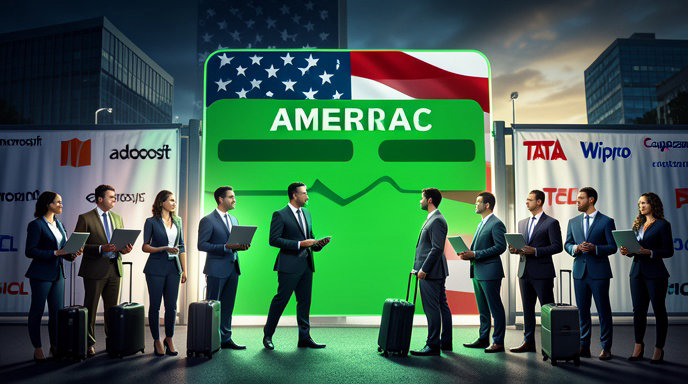
Social media posts and forwarded messages this week claimed the U.S. has suspended eight tech giants - Microsoft, Adobe, Capgemini, Cognizant, HCL Technologies, Infosys, Tata Consultancy Services, and Wipro - from sponsoring green cards for skilled foreign workers.
According to the viral version, these major IT firms were barred from the employment-based immigration system, leaving thousands of H-1B holders stranded and signaling an end to Big Tech's reliance on foreign talent. The posts offered no government order, case number, or effective date, but spread quickly in India and among U.S. immigrant communities.
That lack of sourcing is the first red flag.
Fact Check: Has the U.S. Actually Issued a Ban?
As of October 8, 2026, there is no announcement from U.S. Citizenship and Immigration Services, the Department of Labor, or the State Department confirming such a suspension.
A company can be debarred from the PERM labor certification program - the first step for most EB-2 and EB-3 employment green cards - but debarment is public, specific, and posted by the Labor Department's Office of Foreign Labor Certification. None of the eight named companies appear on the current debarment list.
Similarly, there is no executive order, Federal Register notice, or court order naming Microsoft, Adobe, Infosys, Tata, Wipro, Cognizant, Capgemini, or HCL for a green card sponsorship ban. In short: the blanket ban described online has not happened.
What Is Actually Happening With H-1Bs and Green Cards
While the viral ban is unconfirmed, the anxiety behind it is real. The Trump administration in its second term has moved aggressively to reshape skilled immigration:
A $100,000 fee for new H-1B petitions announced in September 2025 dramatically raised costs for high-volume sponsors. Stricter wage-level enforcement and site-visit compliance checks have increased denials and Requests for Evidence. PERM processing for employment-based green cards is facing longer audits, especially for IT staffing firms using third-party placements. The Department of Justice has continued to pursue citizenship-status and national-origin discrimination cases against tech employers over hiring preferences.
Together, these moves have not barred companies outright, but they have made sponsorship slower, more expensive, and more legally risky.
Why These 8 Companies Are Always in the Spotlight
The eight names in the rumor are not random. They are among the largest users of the H-1B and employment-based green card systems year after year.
Infosys, Tata Consultancy Services, Wipro, Cognizant, HCLTech, and Capgemini regularly rank in the top 10-15 for approved H-1B Labor Condition Applications, largely due to their IT services and outsourcing models. Microsoft and Adobe are among the top direct product-company sponsors for H-1B professionals and EB-2/EB-3 green cards for software engineers, data scientists, and product roles.
Because of that volume, they draw disproportionate attention from regulators, lawmakers, and critics who argue the system depresses U.S. wages or displaces American workers - an allegation the companies have repeatedly denied while emphasizing skills shortages and compliance.
How PERM Debarment Really Works
To understand why a total ban would be extraordinary, it helps to know how employment green cards work.
Most skilled workers go through PERM labor certification, where the employer must prove no qualified U.S. worker is available for the role at the prevailing wage, followed by an I-140 immigrant petition and adjustment of status. The Labor Department can debar an employer or attorney for fraud, willful misrepresentation, or failure to comply with recruitment and wage rules, typically for one to three years.
Historic debarments have involved small staffing firms or individual actors, not simultaneous action against eight of the world's largest tech employers without detailed findings. Such an action would trigger immediate SEC disclosures, lawsuits, and formal federal notices - none of which have occurred.
What This Means for H-1B Holders Right Now
Even without a ban, H-1B professionals sponsored by large IT firms should take the current climate seriously.
If you are awaiting PERM or I-140 sponsorship, delays are growing due to audits and backlogs, particularly for Indian nationals facing years-long EB-2 and EB-3 priority date waits. Job changes, layoffs, or bench time remain dangerous because status is tied to employment and the 60-day grace period after termination. Workers should keep copies of Labor Condition Applications, pay stubs, I-94 records, and priority date notices, and confirm in writing whether their employer will continue sponsorship.
Immigration attorneys advise against making travel or job-switch decisions based on social media rumors and recommend checking USCIS and DOL case status tools directly.
What It Means for the Future of Tech Hiring in America
Whether or not any firm is ever barred, U.S. tech hiring is already shifting.
Large employers are prioritizing hiring U.S. citizens and permanent residents for roles that previously went to H-1B workers to avoid the new fee and paperwork burden. At the same time, Microsoft, Adobe, Infosys, TCS, Wipro and others are expanding hiring hubs in India, Canada, Mexico, and Eastern Europe as a hedge against U.S. visa volatility. Automation and AI are also reducing demand for entry-level IT services roles that once drove mass H-1B filings.
The result is not an overnight end to foreign tech talent, but a slower, more selective pipeline where only high-wage, specialized roles easily clear the green card path.
Bottom Line: Don't Fall for the Forward
The claim that the U.S. has barred Microsoft, Adobe, Infosys, Tata, Wipro and four other IT giants from the green card program is, as of today, misinformation without government backing.
But it went viral because it taps into real policy tightening and real fear among skilled immigrants. For now, tech workers and employers should watch official DOL and USCIS channels, not WhatsApp forwards, for any actual change to sponsorship eligibility.

Get All The Latest Updates Delivered Straight To Your Inbox For Free!