
SpaceX’s Miniature Rooftop Cell Tower Could Eliminate Mobile Dead Zones
TL;DR
- Elon Musk has described a compact SpaceX-designed rooftop communications unit intended to improve cellular coverage, but its final specifications, launch timeline and regulatory status remain unclear.
- The concept would likely complement Starlink’s direct-to-cell satellites and existing carrier networks rather than replace conventional cell towers.
- If deployed economically, rooftop units could help fill coverage gaps in rural communities, buildings and other mobile dead zones.
A New Layer Between Satellites and Cell Towers
SpaceX is pursuing several ways to extend mobile connectivity beyond the reach of traditional terrestrial infrastructure. Alongside its Starlink satellite broadband service, the company is developing direct-to-cell technology that allows compatible phones to connect through Starlink satellites without a specialized satellite handset.
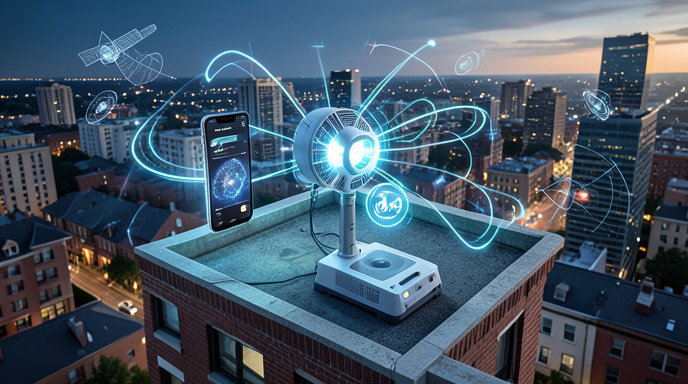
Elon Musk has also discussed a smaller, rooftop-mounted cellular device designed to improve coverage locally. The idea appears to occupy a middle ground between a full-size cell tower and satellite connectivity: a relatively compact unit that could be installed on buildings, remote sites or other elevated locations to strengthen service in areas where conventional infrastructure is difficult or expensive to deploy.
SpaceX has not publicly released a complete technical product specification for the proposed device. It is therefore unclear whether the unit would function primarily as a low-power cellular repeater, a small cell connected to Starlink, a satellite-linked base station or a combination of those technologies.
How the Concept Could Work
A rooftop unit could connect to a nearby carrier network through fiber, fixed wireless or a Starlink satellite link. It would then provide a localized cellular signal to phones in the surrounding area.
In a conventional small-cell deployment, the unit connects to a carrier’s core network through a wired or wireless backhaul connection. The small cell handles radio communication with mobile devices, while the carrier manages authentication, routing, spectrum and service policies.
A Starlink-connected version could be useful where wired backhaul is unavailable. The rooftop device would communicate with satellites overhead and relay traffic to a carrier network through SpaceX’s satellite infrastructure. For users, the experience could resemble ordinary mobile service, provided their carrier supports the technology and the device operates on compatible spectrum.
This arrangement would not necessarily require users to change phones. Direct-to-cell deployments are designed to work with standard LTE phones, although performance depends on satellite visibility, spectrum availability, network congestion and the capabilities of the carrier and handset.
Filling Coverage Gaps
Mobile dead zones exist for several reasons. Mountains, dense forests and large distances can block signals. Buildings can weaken radio coverage, while rural areas may lack enough subscribers to justify the cost of a conventional tower. Some communities also have cellular infrastructure nearby but lack a reliable backhaul connection.
A rooftop small cell could address these gaps with less construction than a traditional tower. Potential locations include:
- Rural homes and community buildings
- Schools, clinics and emergency-service facilities
- Apartment blocks and office buildings
- Remote industrial sites and work camps
- Highways and isolated transport corridors
- Areas affected by storms, wildfires or other disasters
Because the equipment would be installed above surrounding obstacles, a rooftop location could improve line-of-sight coverage while reducing the need for tall towers, large compounds and extensive power systems.
The Link to Starlink Direct to Cell
SpaceX’s most important related project is Starlink Direct to Cell. The company has launched satellites equipped with cellular payloads intended to act like orbiting cell towers. These satellites can connect to ordinary mobile devices over approved terrestrial cellular spectrum.
SpaceX has worked with mobile operators, including T-Mobile in the United States, to test satellite-based messaging and expand service beyond the reach of terrestrial towers. Early deployments have focused on text messaging and limited data applications, with voice and broader data services requiring additional capacity and technical refinement.
A rooftop unit could complement that system in two ways. First, it could provide stronger service in a defined area than a satellite connection alone. Second, it could offer a local access point that routes traffic through Starlink when terrestrial backhaul is unavailable.
The two approaches solve different problems. Direct-to-cell satellites cover large geographic areas but have limited capacity and face challenges caused by distance, weather, spectrum coordination and satellite visibility. Rooftop equipment would cover a smaller area but could potentially deliver a stronger and more consistent signal.
Existing Networks Would Still Matter
The proposed technology is unlikely to operate as an entirely independent mobile network. Cellular service depends on carrier licenses, subscriber authentication, emergency-calling systems, numbering arrangements and access to radio spectrum.
For the rooftop units to work broadly, SpaceX would need agreements with network operators and regulators. Carriers would have to decide how the devices connect to their core networks, how customers are authenticated and how traffic is prioritized.
Network handoffs would also be important. A phone moving between a standard tower, a rooftop small cell and a satellite connection should ideally remain connected without requiring the user to manually switch services. Achieving that experience requires coordination across radio standards, network software and carrier systems.
Spectrum presents another complication. A device may be technically capable of transmitting on a particular band, but it cannot legally use that spectrum without authorization. SpaceX and its partners would need to comply with national licensing rules and avoid interference with existing cellular operators.
The Potential Benefits for Underserved Areas
Traditional towers can be expensive because they require land, permits, power, backhaul and ongoing maintenance. A smaller rooftop unit could reduce some of those costs, particularly if it uses an existing building and receives backhaul through Starlink.
That could make cellular coverage more practical in low-density communities. A clinic, school or municipal building might serve as both the installation site and a local connectivity hub. In an emergency, the same equipment could provide temporary service after a storm damages terrestrial infrastructure.
The system could also help businesses that operate beyond reliable cellular coverage. Farms, mines, energy installations and construction sites often depend on a mixture of satellite communications, private radio systems and intermittent mobile service. A carrier-backed rooftop cell could simplify that connectivity.
However, affordability will determine whether the technology actually reaches underserved users. Equipment, installation, power, satellite capacity and carrier service all carry costs. A technically successful system may still have limited social impact if deployment requires expensive subscriptions or specialized maintenance.
Technical and Commercial Obstacles
The biggest unanswered question is capacity. A small cell serving a handful of users may provide a strong experience, but serving an entire village or busy roadside corridor requires substantially more backhaul and radio capacity.
Starlink’s satellite network also has finite capacity in each coverage area. As more users rely on satellite-linked cellular services, SpaceX will need additional satellites, more efficient payloads and careful traffic management.
Power is another consideration. Rooftop equipment must operate continuously, including during power outages. Remote installations may require batteries, solar panels or backup generators, increasing cost and maintenance requirements.
Installation rights could create further delays. Building owners, local governments and carriers would need to approve equipment placement. Structural assessments, zoning rules and safety requirements may apply, especially in urban environments.
Finally, a rooftop cell tower would not automatically solve indoor coverage problems. Concrete, metal, energy-efficient windows and underground construction can all weaken cellular signals. Some buildings might need multiple units or indoor small cells to provide dependable service throughout the structure.
Regulatory Approval Will Shape the Rollout
Any SpaceX cellular product must navigate telecommunications regulation in each market where it operates. In the United States, the Federal Communications Commission oversees spectrum use, satellite operations, equipment authorization and partnerships between satellite providers and terrestrial carriers.
The regulatory process can affect both satellite direct-to-cell service and ground-based equipment. Authorities may require tests for interference, compliance with emergency calling rules and safeguards for other licensed users.
International deployment would be even more complex. Mobile spectrum is licensed country by country, and a device approved in one market may require different radio configurations or carrier agreements elsewhere.
Regulation will also determine how emergency services access the system. If a rooftop unit provides ordinary cellular service, operators may be expected to support location information, emergency calling and network availability requirements.
What Has Been Confirmed?
SpaceX has publicly demonstrated progress on satellite-to-phone connectivity and has announced partnerships aimed at extending mobile service beyond terrestrial coverage. The company has also repeatedly emphasized the goal of reducing connectivity gaps through a combination of satellites and terrestrial infrastructure.
The rooftop-cell-tower concept is less clearly defined. Public statements have not established a confirmed product name, mass-production schedule, pricing model, coverage radius or list of participating carriers. It is also not clear whether the device is intended for consumer installation, carrier deployment or specialized use by governments and businesses.
Those gaps matter because the phrase “miniature cell tower” can describe several different technologies. A unit could be a carrier-managed small cell with satellite backhaul, a private network appliance, a signal repeater or a new type of Starlink terminal with cellular capabilities. Each option would have different costs, regulations and performance characteristics.
A Promising Complement, Not a Replacement
A SpaceX rooftop cellular device could become a useful additional layer in mobile networks. Conventional towers would continue handling most traffic in populated areas, while rooftop units could strengthen coverage in difficult locations and satellites could provide service where no terrestrial equipment is available.
That layered model may be more practical than trying to use satellites for every mobile connection. Satellites offer reach, but rooftop equipment can provide local capacity. Existing carrier networks offer mature authentication and mobility management, while Starlink can supply backhaul in places where fiber and microwave links are unavailable.
Whether the idea becomes a widely deployed consumer product will depend on testing, carrier partnerships, regulatory approvals and cost. SpaceX has demonstrated that satellite-based mobile connectivity is moving from concept to deployment, but the rooftop system still requires clearer technical and commercial details.
If those challenges can be solved, compact satellite-connected cellular units could give communities and businesses a new way to eliminate coverage gaps—without waiting years for a full-size cell tower to be built.

Get All The Latest Updates Delivered Straight To Your Inbox For Free!