
Uber and Nuro Begin Driverless Lucid Robotaxi Testing Ahead of 2027 Launch
TL;DR
- Uber and Nuro are beginning public-road testing of driverless Lucid Gravity SUVs in the San Francisco Bay Area.
- Nuro is supplying the autonomous-driving system, while Uber will manage the commercial robotaxi network and rider experience.
- The companies are targeting a broader 2027 launch, subject to safety validation, regulatory approval, and operational readiness.
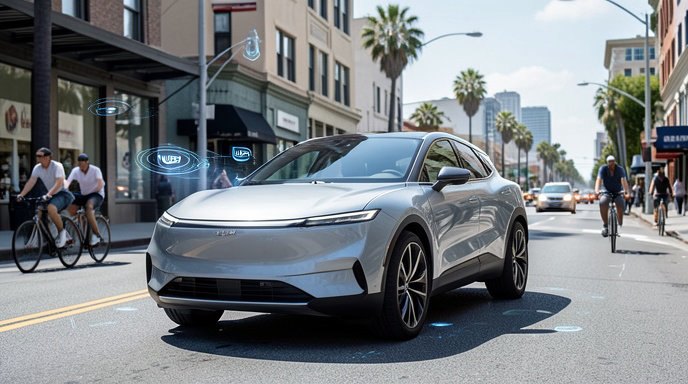
Uber and Nuro are moving their autonomous-vehicle partnership onto public roads, beginning a new phase of testing involving Lucid Gravity electric SUVs in the San Francisco Bay Area.
The trials mark a significant step toward the companies’ plan to deploy a commercial robotaxi service in 2027. The partnership combines Lucid’s electric-vehicle platform, Nuro’s autonomous-driving technology, and Uber’s ride-hailing network and operational infrastructure.
The vehicles are expected to begin testing with safety oversight before the companies work toward fully driverless operations. As with other autonomous-vehicle programs, the transition from controlled testing to passenger service will depend on technical performance, regulatory clearance, and the companies’ ability to demonstrate that the system can operate safely in complex urban environments.
A Three-Way Autonomous-Vehicle Partnership
The project is built around distinct roles for each company.
Nuro is providing the autonomous-driving system, including the hardware and software required to perceive road conditions, predict the behavior of other road users, and control the vehicle. Unlike earlier Nuro delivery vehicles, which were purpose-built for goods movement, the system used in the Lucid Gravity is designed for a full-size passenger vehicle.
Lucid supplies the Gravity, an electric SUV with the space, range, and computing capacity needed for robotaxi operations. The model’s larger cabin is intended to provide a more conventional passenger experience than the small autonomous delivery vehicles that helped establish Nuro’s reputation.
Uber will operate the service through its ride-hailing platform. That includes dispatching vehicles, matching passengers with rides, handling payments, managing customer support, and monitoring the fleet. The arrangement allows Uber to expand its autonomous network without developing a complete self-driving system internally.
Why the Lucid Gravity Matters
The Lucid Gravity gives the program a premium electric-SUV platform rather than a compact vehicle designed exclusively for autonomous service.
Its size could make it suitable for airport trips, luggage-heavy journeys, and groups of passengers. A larger battery-electric vehicle may also provide the range needed for long operating shifts, although real-world range will depend on traffic, weather, passenger loads, charging schedules, and the energy demands of the autonomous hardware.
For Lucid, the partnership offers a potential source of large-scale demand for the Gravity and a way to establish the SUV as a platform for commercial autonomous mobility. Robotaxi fleets typically place vehicles under heavier use than privately owned cars, making durability, charging logistics, maintenance, and interior cleaning especially important.
The program could also give Lucid greater visibility in a market where electric vehicles and autonomous transportation are increasingly converging.
Testing in the San Francisco Bay Area
The San Francisco Bay Area is one of the most demanding environments for autonomous-driving development. Vehicles must contend with dense urban traffic, steep hills, narrow streets, cyclists, pedestrians, frequent construction, unpredictable lane markings, and a wide variety of weather and lighting conditions.
Public-road testing is intended to expose the system to situations that are difficult to reproduce in simulations or closed courses. The companies will likely use the early phase to evaluate how the vehicles handle intersections, unprotected turns, temporary road changes, emergency vehicles, curbside pickups, and interactions with human-driven cars.
Testing vehicles may still include safety drivers or other forms of human supervision, depending on the stage of the program and applicable permits. The presence of a vehicle on public roads does not necessarily mean it is already operating as a passenger-ready, fully driverless taxi.
The companies will need to show that the system can identify and respond to unusual situations consistently, not merely complete routine trips. Safety validation will also involve remote assistance procedures, vehicle fallback behavior, maintenance protocols, and the ability to safely handle hardware or software faults.
Safety and Regulatory Hurdles
Autonomous robotaxi programs face a higher standard than ordinary driver-assistance systems because the vehicle is expected to perform the driving task without a human actively supervising it.
Before a broad commercial rollout, regulators and the companies will need evidence that the system can operate reliably within its intended service area. That evidence may include disengagement data, collision records, incident reports, system-performance measurements, and information about how the vehicles behave during adverse conditions.
California’s regulatory framework is likely to play a central role in the project. Testing and commercial passenger service may require different approvals, and authorization to operate without a human driver is not automatically guaranteed by the start of public-road trials.
The companies will also need to explain how responsibility is divided when something goes wrong. That includes questions involving software decisions, vehicle hardware, remote support, fleet operations, passenger conduct, and interactions with emergency responders.
The 2027 Robotaxi Target
Uber and Nuro are aiming for a broader robotaxi launch in 2027, but that target should be viewed as a deployment objective rather than a guarantee of immediate large-scale availability.
A commercial service would likely begin in a defined operating area with carefully selected routes and operating conditions. The fleet could expand gradually as the companies collect more data and improve the system’s ability to handle edge cases.
Uber has been pursuing a strategy of partnering with autonomous-vehicle developers instead of building a single in-house self-driving platform. That approach gives the company access to multiple technology providers and vehicle types while allowing it to focus on marketplace operations and fleet utilization.
For Nuro, the Uber relationship offers a path beyond limited autonomous-delivery deployments. A successful passenger-vehicle program would demonstrate that its technology can support a complex, high-mileage commercial service involving human riders.
The Economics of Driverless Ride-Hailing
The business case for robotaxis depends on more than removing the cost of a human driver. Operators must account for vehicle financing, charging, cleaning, maintenance, remote assistance, insurance, mapping, software updates, customer support, and fleet repositioning.
Autonomous vehicles may eventually lower the cost per trip and allow vehicles to operate for longer periods. However, specialized sensors and computing systems can increase upfront costs, while high utilization can accelerate wear and require frequent servicing.
The choice of the Lucid Gravity suggests that the initial service may be positioned as a premium offering rather than an inexpensive mass-market taxi. Over time, operational data could help Uber and its partners determine which vehicle sizes, pricing models, and service areas produce the strongest returns.
Passenger Trust Will Be Crucial
Technical capability alone will not determine whether the service succeeds. Riders must be comfortable entering a vehicle with no human driver, and they will expect clear instructions when the vehicle encounters a problem or needs assistance.
Uber will control much of that passenger experience through its app. Riders may receive information about the vehicle’s arrival, the location of the pickup, the autonomous system’s status, and what to do if they need help during a trip.
The companies will also need to address accessibility, child passengers, luggage, lost property, emergency stops, and interactions between riders and remote support teams. Small operational failures can have an outsized effect on public confidence, particularly during the early stages of deployment.
A Test of the Autonomous-Mobility Market
The Uber-Nuro-Lucid program arrives as the autonomous-vehicle industry moves from experimentation toward commercial operations. Several companies are testing or operating driverless services in U.S. cities, but each program faces different technical, regulatory, and economic conditions.
The use of a production electric SUV could help distinguish the partnership from purpose-built robotaxi designs. It may also make the service feel more familiar to passengers, potentially reducing some of the hesitation associated with entering a driverless vehicle.
At the same time, the complexity of a full-size passenger vehicle places greater demands on the autonomous system. The vehicle must safely manage a larger and heavier platform while delivering a comfortable ride and maintaining enough battery capacity for daily fleet operations.
What Comes Next
The immediate focus will be on supervised public-road testing, system refinement, and the collection of safety and performance data. The companies will then need to demonstrate that the vehicle can handle the intended service area with minimal human intervention and robust fallback procedures.
If testing proceeds successfully, Uber and Nuro could begin limited passenger operations before expanding the service more broadly in 2027. The timeline will depend on regulatory decisions, technical milestones, fleet production, charging infrastructure, and the companies’ assessment of whether the system is ready for real-world riders.
The arrival of driverless Lucid Gravity SUVs on Bay Area roads is therefore more than a vehicle test. It is an early examination of whether three separate pieces—autonomous technology, electric-vehicle manufacturing, and a ride-hailing marketplace—can work together to create a scalable robotaxi business.

Get All The Latest Updates Delivered Straight To Your Inbox For Free!