
Uber Tests Rides for Kids as Young as 10 in Three U.S. Cities
TL;DR
- Uber is reportedly testing a supervised ride option for children as young as 10 in three U.S. cities, with parent or guardian approval required.
- The pilot uses added safeguards such as trip tracking, driver screening, ride PINs and restrictions on who may request or accept these trips; participating drivers receive extra compensation.
- The service could help families manage school and activities, but it raises questions about supervision, emergency response, consent, data privacy and the boundaries of Uber’s responsibility for unaccompanied minors.
A new Uber pilot is putting the company at the center of a sensitive question: Can a ride-hailing app safely transport children who are too young to drive but old enough to travel independently?
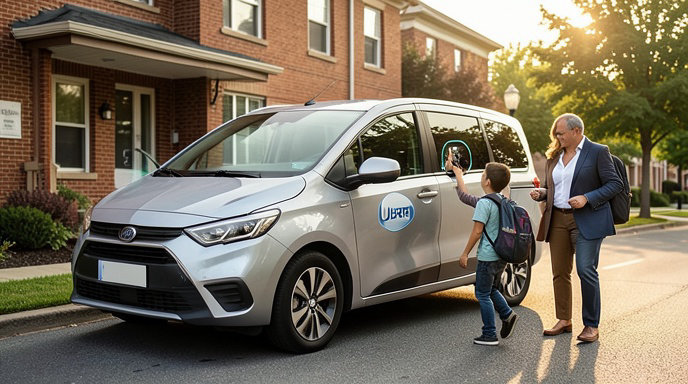
Uber is testing a service for unaccompanied children as young as 10 in three U.S. cities, according to recent reports. The program is designed for routine trips such as school, sports practices, camps and visits with relatives. Parents or guardians would arrange and monitor the rides through their own Uber accounts, while specially eligible drivers would receive additional compensation for taking on the added responsibility.
The test expands on Uber’s existing teen-rider offerings, which generally serve passengers between 13 and 17 with parental consent. Lowering the minimum age to 10 brings the company into a more complicated area involving child supervision, transportation regulation and parental liability.
How the pilot works
The service is expected to operate through a dedicated family or youth-rider setting rather than a standard UberX request. A parent or guardian would create the child’s profile, authorize the trip and provide information needed to identify the passenger.
The adult would typically be able to see the ride’s status, including when the driver arrives, when the child enters the vehicle and when the trip ends. Uber’s existing youth-rider tools also include features such as a trip PIN, real-time location sharing and the ability to contact the driver or Uber support during the ride.
Drivers accepting these trips would need to meet Uber’s eligibility requirements, including background checks and a satisfactory driving history. The company has also indicated that drivers participating in youth-oriented services may receive additional pay because transporting a child requires more attention and can involve longer pickup procedures.
The extra compensation is intended to encourage drivers to opt in rather than accept these trips by default. It may also recognize that drivers could spend more time confirming the child’s identity, waiting for a parent or guardian and resolving problems if the intended pickup or drop-off arrangement changes.
Where Uber is testing the service
The pilot is being conducted in three U.S. cities. Uber is using a limited-market rollout so it can evaluate demand, driver participation, customer support needs and the effectiveness of its safety controls before considering a broader launch.
The company’s city-by-city approach also allows it to account for differences in local transportation rules, school policies, airport and venue procedures, and requirements governing minors. Uber has not treated the program as a nationwide replacement for school buses, childcare transportation or licensed youth transit services.
Parents in participating markets may see eligibility limited by neighborhood, time of day or the type of trip being requested. Uber can also suspend or modify the pilot if it encounters problems with driver availability, missed pickups or incidents involving riders.
A response to a growing family need
The idea addresses a familiar logistical problem. Many parents work schedules that do not align with school dismissal, sports practices or after-school programs. In families with multiple children, coordinating every trip can require help from relatives, neighbors or paid caregivers.
A ride-hailing option could provide more flexibility, especially for families without a second car. It could also be useful when a child needs to travel between two adults’ homes or attend an activity across town.
Uber benefits from the same demand. Families already use the company for their own transportation, and a youth-focused product could create recurring weekday trips rather than occasional consumer rides. Regular school and activity schedules may produce predictable demand during periods when drivers are otherwise waiting for requests.
Still, convenience does not eliminate the need for supervision. A 10-year-old may be able to follow directions and use a phone, but children differ substantially in maturity, communication skills and ability to respond to an emergency.
Safety depends on more than a tracked route
Uber’s safety measures can reduce some risks, but they cannot reproduce the oversight provided by a parent, school employee or professional child-transportation provider.
A location-sharing feature can show where the vehicle is, but it does not guarantee that the child is safe inside it. A ride PIN can help confirm that the driver has picked up the correct passenger, but it cannot prevent intimidation, inappropriate behavior or a medical emergency. A background check can identify certain records, but it is not a prediction of future conduct.
The pickup and drop-off moments may be particularly difficult. A child could be waiting alone outside a school, home or activity center. The designated adult may not be present when the vehicle arrives. A driver may be unable to locate the correct entrance, encounter a locked facility or discover that the child’s schedule has changed.
Uber’s policies generally place responsibility on families to ensure that a child is ready at pickup and that an authorized adult is available at the destination when required. That division of responsibility may be clear in the app but less clear in real-world situations, especially when a trip goes wrong.
The pilot also raises questions about what happens if a child refuses to enter the vehicle, leaves the car before reaching the destination or cannot reach a parent. Drivers are not trained childcare providers, and asking them to make judgment calls involving an unaccompanied minor could create both safety and liability concerns.
Supervision and driver responsibility
Uber’s model depends on a driver serving as a responsible adult for the duration of the trip without formally becoming the child’s caregiver. That distinction may be difficult to maintain.
A driver may need to wait with a child, speak with a school employee or contact a parent. In an emergency, the driver could be expected to decide whether to call 911, seek medical help or deviate from the approved route. The company’s rules and support systems will be important, but no set of in-app prompts can anticipate every situation.
Additional compensation may help attract experienced drivers, yet money alone does not establish whether a driver is comfortable transporting young children. Some drivers may welcome the opportunity, while others may avoid it because of the added responsibility and potential disputes.
The program’s success will therefore depend partly on whether Uber can maintain a dependable pool of drivers who understand the requirements and are willing to follow them consistently.
Privacy concerns follow the child
The service would generate sensitive information about minors, including their names, regular destinations, travel times and relationships with authorized adults. Repeated trips could reveal a child’s school, home address, medical appointments, extracurricular activities and custody schedule.
Parents will want to know how long Uber stores that information, who can access it and whether it is used for advertising, fraud prevention, customer support or other purposes. They may also question what happens when a child turns 13, leaves the service or changes guardians.
Location data presents another concern. Live tracking is a core safety feature, but it creates a detailed record of a child’s movements. If an account is compromised, or if access is granted to the wrong adult, the same feature intended to protect the child could expose them.
The company will also need to explain how it handles recordings, messages, support calls and incident reports involving minors. Clear retention limits, strict account permissions and transparent parental controls will be important if the service expands.
A different standard from ordinary ride-hailing
Transportation for children is already provided by school districts, childcare companies and specialized operators. Those services may use drivers with additional training, vehicle requirements and procedures for authorized handoffs.
Uber’s advantage is its scale and familiar app. Its challenge is that a general-purpose marketplace was not originally designed around the needs of children traveling without an adult.
That difference could draw scrutiny from parents, regulators and child-safety advocates. Questions may include whether the pilot complies with local laws, whether drivers need additional training, how insurance applies when the passenger is a minor and who is responsible if a child is dropped off without an adult present.
The answers may vary by city. Some jurisdictions regulate transportation services for minors more strictly than ordinary ride-hailing, while others leave much of the policy to the companies and families involved.
What Uber will need to prove
For the pilot to become a broader product, Uber will need to demonstrate more than ride volume. It will need evidence that parents can reliably authorize trips, drivers understand their obligations and support teams can respond quickly when plans change.
Important performance measures could include missed pickups, canceled trips, late arrivals, parent complaints, driver incidents and the time required to resolve safety reports. Uber may also need to disclose how frequently drivers refuse or end youth trips and how often a child is left waiting because an authorized adult is unavailable.
The company’s communication will matter as much as its technology. Parents need clear instructions about who may meet a child, what happens during delays and when they should contact emergency services instead of Uber support. Drivers need simple rules for refusing unsafe requests without being penalized.
For families, the service may offer a useful new option. But for Uber, transporting 10-year-olds is not simply another category of ride. It is a test of whether an on-demand platform can provide the accountability, privacy protection and human oversight that children require when they are traveling alone.

Get All The Latest Updates Delivered Straight To Your Inbox For Free!