
Transform Your AI Coding Experience with Clawdmeter's Desktop Dashboard
TL;DR
- Clawdmeter is an open-source desktop dashboard that turns Claude Code usage stats into a compact, always-visible productivity view.
- It taps into a broader surge of AI coding adoption, where agentic tools are increasingly central to software development workflows.
- The appeal is simple: more visibility, less friction, and a lightweight way for developers to track progress without living in a terminal or browser tab.
Clawdmeter Brings Claude Code Metrics to the Desktop
AI coding tools are moving from novelty to infrastructure, and the latest wave of developer tooling is focused not just on generating code, but on helping people understand how they use it. Clawdmeter fits neatly into that trend. The open-source tool is designed for AI coding enthusiasts who want a more tangible view of their Claude Code activity, transforming usage statistics into a compact desktop dashboard.
Instead of burying key information in logs, terminals, or cloud dashboards, Clawdmeter surfaces it in a form that is easy to glance at during the workday. That may sound minor, but for developers who spend hours iterating with AI assistants, visibility can make a real difference. Knowing how often the tool is being used, how workflows are changing, and whether progress is accelerating can help users tune their habits and measure the value of AI-assisted development more concretely.
Why Developer Dashboards Matter Now
The timing is important. AI coding assistants are no longer just sidekicks for autocomplete or quick snippets. Industry leaders have said these tools are taking on much larger portions of the software development process, with some reporting dramatic jumps in the share of code written by AI over very short periods. That shift has pushed developers to think differently about productivity, accountability, and workflow management.
As AI systems become more deeply embedded in the coding process, developers need better ways to monitor what’s happening. A dashboard like Clawdmeter answers that need in a simple way: show the stats, keep them visible, and make the data actionable. For many users, the value of an AI coding tool is not just what it creates, but how clearly it helps them understand their own work patterns.
What Clawdmeter Does
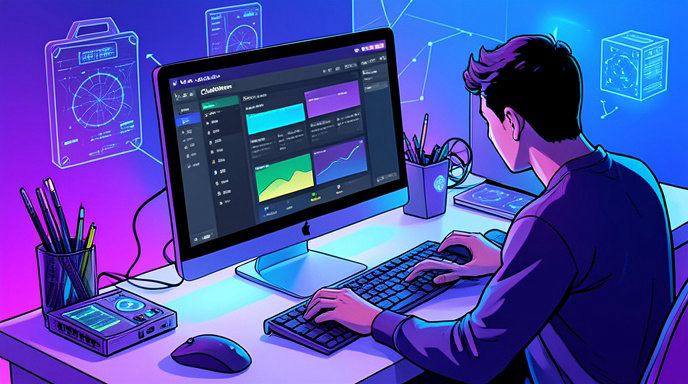
Clawdmeter is built around a straightforward idea: convert Claude Code usage data into a desktop-friendly display that highlights activity in real time or near real time. The tool is aimed at users who want a persistent visual snapshot of their AI-assisted coding session without adding complexity.
That compact format makes it appealing to developers who prefer lightweight utilities over full-scale platforms. Rather than replacing Claude Code, it complements it by adding a layer of observability. In practice, that means users can keep track of their AI coding progress, monitor engagement, and maintain a better sense of momentum during a project.
The Open-Source Advantage
One of Clawdmeter’s biggest strengths is its open-source nature. That matters in the AI coding world, where trust, transparency, and customization are increasingly important. Developers often want tools they can inspect, modify, and adapt to their own workflows. Open source also lowers the barrier to experimentation, which is especially useful in a rapidly changing category like AI developer tools.
There’s also a practical benefit: open-source projects often evolve quickly because their users are also contributors. If Clawdmeter gains traction, it could become a flexible foundation for more advanced workflow dashboards, additional stats, or broader integrations with other coding assistants.
A Reflection of the AI Coding Tool Boom
Clawdmeter arrives at a moment when AI coding tools are reshaping expectations across the software industry. Recent reporting has highlighted how agentic systems are taking on more of the actual coding workload, while companies still insist that humans remain accountable for what gets shipped. That balance is now becoming a central theme in AI-assisted development: the machine can do more, but the developer still owns the result.
Tools like Clawdmeter are part of the same evolution. If the AI is doing more of the coding, then developers want better instrumentation around that process. They want to know what the assistant is doing, how much value it is adding, and how their own productivity is changing over time.
Beyond Code Generation: Measuring the Workflow
The bigger story is that AI development tools are expanding beyond generation and into monitoring, coordination, and workflow management. Cloud platforms are pitching AI systems that can run in parallel, handle multiple tasks, and support more natural interactions. At the same time, the developer community is building smaller, more focused utilities that help make these systems usable in everyday work.
Clawdmeter sits in that second camp. It does not try to be the entire platform. It focuses on one thing: making Claude Code usage visible, digestible, and useful. That focus could be exactly what many developers want as AI coding becomes more routine.
Why This Could Catch On
The appeal of a desktop dashboard is that it fits naturally into a developer’s environment. It’s lightweight, it’s immediate, and it avoids the overhead of switching contexts. For users who rely heavily on Claude Code, a tool like Clawdmeter can become a daily companion rather than a one-time novelty.
That matters because adoption often follows convenience. When a tool helps people see progress without extra effort, it becomes easier to keep using it. And in the fast-moving world of AI coding, tools that reduce friction tend to win attention quickly.
The Bottom Line
Clawdmeter is a small tool with a timely idea: give AI coding users a simple, visible way to understand how they’re working with Claude Code. In a market where AI assistants are taking on more responsibility and developers are looking for better oversight, that kind of dashboard could prove surprisingly valuable.
As AI coding continues to mature, expect more tools like this to emerge — not just to write code, but to help developers measure, manage, and improve the way they use it.

Get All The Latest Updates Delivered Straight To Your Inbox For Free!