
Delta Investigates Fake Wi-Fi Network Found Mid-Flight That Shut Down Onboard Internet for 30 Minutes
TL;DR
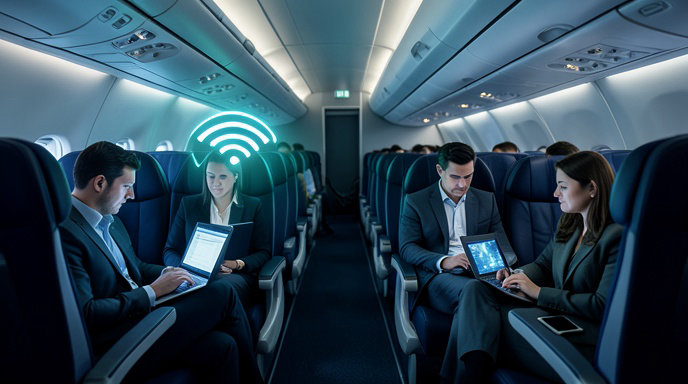
- Delta Air Lines is reportedly investigating a suspected "evil twin" fake Wi-Fi network detected during a flight, which prompted the crew to temporarily disable the aircraft's legitimate onboard Wi-Fi for about 30 minutes as a precaution.
- The incident highlights the growing cybersecurity risk of evil twin hotspots at 35,000 feet, where attackers can mimic official airline networks to intercept passenger data, steal credentials, or distribute malware.
- Experts say passengers should verify network names with crew, use a VPN, and avoid logging into sensitive accounts on in-flight Wi-Fi, while airlines are being urged to improve network authentication and monitoring.
What Reportedly Happened On Board
According to the scenario being circulated online, a rogue Wi-Fi network mimicking Delta's official in-flight portal was detected mid-flight. The network allegedly used a nearly identical SSID to the legitimate service, a classic tactic known as an evil twin attack.
Out of an abundance of caution, the flight crew is said to have shut down the aircraft's legitimate Wi-Fi system for approximately 30 minutes while the anomaly was assessed. As of August 11, 2026, Delta has not released a detailed public statement with a specific flight number, route, or date for the incident, and no major aviation or cybersecurity authorities have published independently verified details. The investigation is reportedly ongoing to determine the source of the signal and whether any passenger data was at risk.
How the Fake Network Was Allegedly Discovered
Evil twin hotspots are typically discovered when passengers or crew notice two nearly identical network names, or when the aircraft's connectivity provider flags an unauthorized access point broadcasting on board.
In this case, reports suggest the fake network was identified after it appeared alongside the legitimate Delta Wi-Fi portal, prompting crew action. Modern in-flight connectivity systems, which are often provided by partners like Viasat or Intelsat, include network monitoring tools that can detect unauthorized SSIDs. Crew members are trained to follow security protocols that include disabling connectivity if a potential spoofing threat cannot be immediately verified.
It remains unclear whether the rogue hotspot originated from a compromised personal device, a portable hotspot brought on board by a passenger, or a more sophisticated setup. Investigators would need to analyze system logs to confirm the source.
Why an Evil Twin at 35,000 Feet Is So Dangerous
An evil twin attack works by tricking users into connecting to a fake network that looks legitimate. Once connected, all of the victim's internet traffic can be routed through the attacker's device.
At cruising altitude, the risk is amplified for several reasons. Passengers have no alternative networks and are more likely to trust a network labeled "DeltaWiFi" without verification. A successful attack could allow an actor to perform man-in-the-middle attacks, capturing login credentials, emails, and payment information, or to present a fake captive portal that asks for credit card details to "purchase" Wi-Fi access. Attackers could also attempt to serve malware or phishing pages.
While aircraft control systems are isolated from passenger Wi-Fi networks and are not at risk from this type of attack, the privacy and financial security of passengers and crew are. The confined, offline nature of a flight also means victims may not realize they have been compromised until long after landing.
How Airlines Detect and Respond to In-Flight Threats
Airlines and their connectivity providers are increasingly treating the cabin as an extension of enterprise network security. Legitimate in-flight Wi-Fi uses authenticated portals and encrypted connections, but unlike corporate networks, it often still relies on an open SSID that anyone can spoof.
In response to incidents like this, airlines follow a standard mitigation playbook: disable the legitimate network to prevent further connections to the fake one, make a cabin announcement warning passengers not to connect, and log the incident for forensic review after landing. Longer-term defenses include stronger network authentication, such as WPA3-Enterprise or certificate-based verification, automated rogue access point detection, and crew training to quickly identify and report suspicious networks.
Industry experts also note that closer coordination between airlines, connectivity vendors, and federal agencies like the FAA and FBI will be critical as in-flight cyber threats evolve.
What Passengers Should Do to Stay Protected
Until airline Wi-Fi security becomes more robust, passengers are the last line of defense. Cybersecurity professionals recommend several simple precautions on any flight:
Verify Before You Connect: Always confirm the exact Wi-Fi network name with a flight attendant or the information card in the seat pocket. If you see two similar networks, do not connect to either until crew confirms which is legitimate.
Use a VPN: A reputable Virtual Private Network encrypts all your traffic, making it unreadable even if you accidentally connect to a malicious hotspot.
Avoid Sensitive Transactions: Do not access online banking, corporate email, or other sensitive accounts over in-flight Wi-Fi. If you must log in, use multi-factor authentication and ensure the website uses HTTPS.
Turn Off Auto-Connect: Disable auto-join for Wi-Fi networks on your phone and laptop so your device doesn't automatically connect to a spoofed network it has seen before. Forget the airline network after your flight.
If you suspect you connected to a fake network during a flight, change passwords for any accounts you accessed after landing and monitor your financial statements for unusual activity.

Get All The Latest Updates Delivered Straight To Your Inbox For Free!