
The Hidden Human Cost of Robotaxis: How AI Is Reshaping Jobs and Mobility
TL;DR
- Robotaxis from Waymo, Tesla, and Baidu are rapidly scaling in major US and Chinese cities in 2026, displacing taxi, rideshare, and delivery drivers while creating precarious new roles for remote monitors and safety operators.
- Despite promises of full autonomy, human oversight remains critical, with remote assistance centers and in-field support teams handling edge cases, raising questions about low wages, stress, and safety accountability.
- Labor unions and regulators are pushing back, demanding job transition programs, stronger safety standards, and transparency as cities grapple with the economic and social fallout of an AI-driven mobility revolution.
The Promise vs. The Pavement
For passengers, the robotaxi experience feels like science fiction made seamless. You summon a car with an app, a white Jaguar I-PACE or Tesla Model Y arrives with no one behind the wheel, and you ride in quiet, algorithmic precision. In 2026, this is no longer a pilot project. Waymo now provides over 250,000 paid rides per week across San Francisco, Los Angeles, Phoenix, Austin, and Atlanta. Tesla launched its long-promised Robotaxi service in Austin in June. In Wuhan and Beijing, Baidu's Apollo Go operates one of the world's largest fully driverless fleets.
But behind the smooth, driverless ride is a far messier human reality. For every job the AI eliminates at the steering wheel, it creates, displaces, or devalues another one elsewhere — often out of sight.
The Drivers Being Left Behind
The most immediate human cost is job displacement. In the US alone, more than 1.5 million people work as taxi, rideshare, and delivery drivers, many of whom rely on gig platforms as their primary income. As robotaxis expand from limited downtown zones to full-city coverage, those workers are seeing fewer ride requests, lower surge pricing, and longer wait times between fares.
The impact is uneven. Unlike factory automation that replaced shifts of workers at once, robotaxi displacement is gradual and geographic — one neighborhood at a time. Drivers in San Francisco's SoMa or downtown Phoenix report income drops of 20-30% since Waymo expanded 24/7 service. Labor groups including the Teamsters and the California Gig Workers Union warn that without intervention, autonomous fleets could hollow out one of the last accessible middle-income jobs that requires no college degree.
The industry's response — that autonomy will create new jobs — is only half true. Fleet cleaning, charging, maintenance, and customer support roles do exist, but they are far fewer in number, often centralized, and pay less than a full-time driver could earn during peak hours.
The Ghost Workers in the Machine
Robotaxis are marketed as fully autonomous, but they are not fully independent. The industry's open secret is the vast network of human overseers keeping the system running.
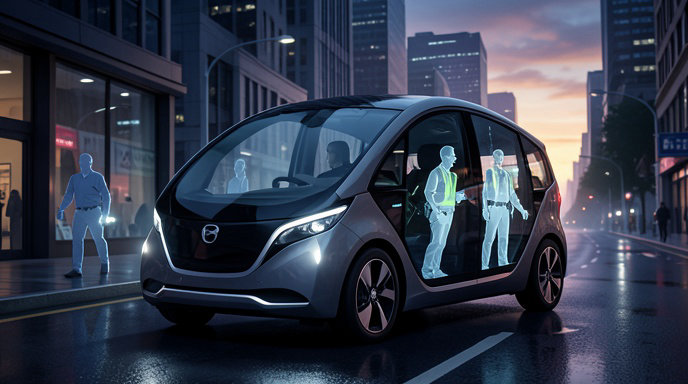
Most companies now rely on remote assistance centers where human operators monitor multiple vehicles at once. When a robotaxi encounters an unmapped construction zone, an erratic pedestrian, or a complex unprotected left turn, it pings a remote operator for guidance. Waymo calls them fleet response specialists; Zoox and Baidu have similar teams. These workers are not driving the car joystick-style, but they are making split-second judgment calls under pressure.
Former remote operators describe the job as high-stress, highly surveilled, and surprisingly low-paid, often $18 to $25 an hour on contract, with strict metrics on response time. Unlike the drivers they replace, they have no interaction with passengers and little leverage to organize. And as AI improves, their jobs are designed to be temporary — the better the AI gets, the fewer humans are needed.
On the ground, there are also field support crews who race to rescue stranded robotaxis that have frozen in intersections or blocked traffic — incidents that still make headlines in San Francisco and Austin. These disruptions highlight a safety paradox: the cars are statistically safer than human drivers over millions of miles, but their failures are highly visible and erode public trust.
Safety, Liability, and Who Is Responsible
When a human driver causes a crash, liability is clear. When a robotaxi does, the lines blur. Regulators at the National Highway Traffic Safety Administration and California's DMV are still building the framework for AV accountability, even as fleets scale.
Safety advocates point to a two-tiered system. Companies self-report most incidents, and critical data on disengagements — when a human has to intervene — is not always made public in real time. Pedestrian and cyclist groups have raised concerns about robotaxis struggling to predict human behavior in dense urban environments, particularly for people with disabilities or non-standard mobility devices.
For workers, safety concerns are personal. Rideshare drivers argue they provide a human presence that can de-escalate conflicts, assist vulnerable passengers, and intervene in emergencies — roles an AI cannot replicate. Reports of passengers vandalizing or harassing empty robotaxis also raise questions about public safety without a driver present.
The Fight for a Just Transition
The backlash is growing louder. In 2025 and 2026, Los Angeles and San Francisco saw protests led by taxi drivers and labor coalitions demanding city councils pause robotaxi expansions until comprehensive labor impact studies are completed. At the federal level, unions are lobbying for the inclusion of displaced drivers in infrastructure and green energy retraining programs tied to autonomous vehicle deployment.
Some cities are experimenting with solutions. Pittsburgh, a long-time hub for AV testing, has partnered with local colleges to offer fleet technician certification programs. California lawmakers have proposed bills requiring AV companies to contribute to a displaced worker fund and to disclose the ratio of remote operators to active vehicles.
The companies themselves are starting to shift their language. Waymo and Tesla now emphasize a hybrid future where autonomy handles routine trips and humans handle complex, premium, or accessibility-focused services. Whether that hybrid model provides sustainable, dignified work remains unproven.
A Crossroads for Mobility
Robotaxis are not coming — they are here. They offer genuine benefits: fewer drunk driving incidents, greater mobility for the elderly and visually impaired, and potentially lower emissions if fleets are fully electric. But the narrative of pure technological progress obscures the human labor that still underpins it and the livelihoods it quietly erodes.
The question facing cities in 2026 is no longer if autonomous vehicles work, but who they work for. Without deliberate policies for worker retraining, wage protections for the new class of remote monitors, and transparent safety oversight, the AI revolution in mobility risks trading one set of human problems for another — less visible, but no less real.

Get All The Latest Updates Delivered Straight To Your Inbox For Free!