
Walmart Finally Accepts Apple Pay and Google Pay After Years of Resistance
TL;DR
- Walmart has officially begun rolling out NFC tap-to-pay support, meaning Apple Pay, Google Pay, and other contactless wallets will finally work at all 4,600+ U.S. stores by late 2026.
- The reversal ends a nearly 10-year holdout driven by Walmart Pay and data control, with the retailer now citing overwhelming customer demand and shifting payment habits as the reason for the change.
- For shoppers, checkout will be faster and more secure with iPhone, Apple Watch, and Android tap-to-pay, signaling a major win for mobile payments becoming the standard in big-box retail.
A Decade-Long Standoff Is Finally Over
For years, Walmart was the biggest name still saying no to Apple Pay. While Target, Costco, CVS, and even Home Depot eventually caved and enabled NFC payments at the register, Walmart held firm. If you tried to hold your iPhone or Android phone up to a Walmart terminal, nothing happened.
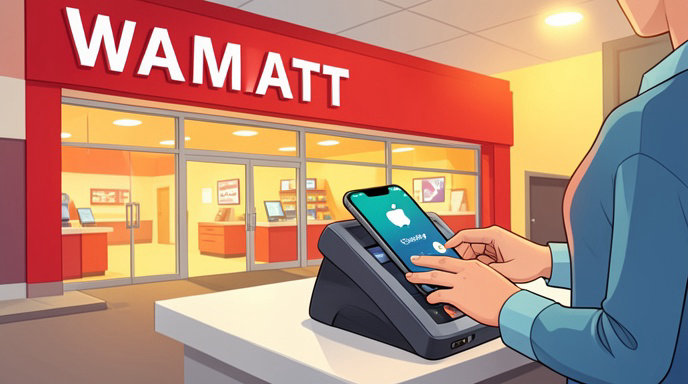
That is now changing. Walmart confirmed this week that it has started enabling contactless payment acceptance in its stores, with a full nationwide rollout expected to be complete in the coming months. The update will allow customers to use Apple Pay, Google Pay, Samsung Wallet, and any other NFC-enabled contactless card or device simply by tapping the payment terminal.
It's a quiet but massive shift for the nation's largest retailer and the end of one of the longest battles in modern retail payments.
Why Walmart Said No For So Long
Walmart's resistance was never about the technology. Its terminals have had NFC hardware for years, but the functionality was deliberately disabled.
The reason was Walmart Pay. Launched in 2016, Walmart's own QR-code-based system inside the Walmart app was designed to keep customers inside its ecosystem. Unlike Apple Pay and Google Pay, which tokenize transactions and hide purchase data from the retailer, Walmart Pay gave Walmart direct access to valuable shopping data, purchase history, and the ability to tie payments directly to its loyalty and savings features.
At the time, Walmart was part of the Merchant Customer Exchange (MCX) and its failed CurrentC platform, a retailer-led attempt to avoid credit card fees and Apple’s cut. Even after MCX collapsed, Walmart stuck with its proprietary system, betting that its scale was big enough to change customer behavior. For a while, it worked — Walmart Pay saw adoption — but it never matched the sheer convenience and ubiquity of Apple Pay and Google Pay, which have become default payment methods for hundreds of millions of users.
What Changed Walmart's Mind
So why now? Walmart points to three converging pressures.
First, customer demand became impossible to ignore. Contactless payments exploded after the pandemic and have only accelerated. Apple Pay is now used by more than 75 million Americans regularly, and Google Pay and Samsung Wallet continue to grow on Android. Walmart acknowledged that shoppers were consistently ranking tap-to-pay as a top requested feature, and complaints about the lack of support were a constant theme on social media and in customer surveys.
Second, the competitive landscape shifted. With virtually every other major grocer and big-box chain accepting NFC payments, Walmart was increasingly the outlier. Shoppers who had grown accustomed to paying with their phone or watch everywhere else found the Walmart checkout experience frustratingly dated.
Finally, the economics and technology have matured. The cost of enabling NFC is now negligible, and the push for faster, more secure checkouts — especially with Walmart's ongoing investment in self-checkout, Scan & Go, and store modernization — made a tap-to-pay option a logical addition rather than a threat. Walmart has stressed that Walmart Pay is not going away; it will remain available in the Walmart app with its integrated savings and receipt features, but it will now coexist with third-party wallets.
What This Means For You at Checkout
For shoppers, the change is simple and immediate. Once your local store is updated — Walmart says the rollout started in select states this month and will expand in waves — you will be able to pay exactly how you do everywhere else.
Just unlock your iPhone or Android device, authenticate with Face ID, Touch ID, or passcode, and hold it near the card reader. Apple Watch users can double-click and tap as well. Contactless credit and debit cards that support tap will also work on the same readers. There is no need to open the Walmart app or scan a QR code if you don't want to.
It also means better security and speed. Apple Pay and Google Pay use tokenization, so your actual card number is never shared with the terminal, and the transaction is typically faster than inserting a chip card or fumbling with the Walmart Pay QR flow. For many, it will shave valuable seconds off long checkout lines.
The Bigger Picture for the Future of Mobile Payments
Walmart's reversal is more than just a convenience update — it's a signal that the mobile payment wars are effectively over.
For years, retailers tried to build their own walled gardens to own the payment experience. Most have failed or been scaled back. Target integrated Apple Pay alongside its own Circle and wallet features, and CVS famously reversed its own ban years ago. Walmart was the last major domino.
Industry analysts see this as the final validation that NFC tap-to-pay is now the standard in U.S. retail, not the alternative. With Walmart on board, Apple Pay and Google Pay acceptance in the U.S. will jump to well over 90% of major retail locations. That ubiquity is expected to further accelerate adoption, pushing more banks, transit systems, and smaller merchants to prioritize contactless.
It also raises the stakes for what's next. With the iPhone's Tap to Pay and new digital ID and loyalty integrations coming to Apple Wallet and Google Wallet, the phone is becoming the entire wallet. Walmart's decision suggests even the most stubborn retailers now recognize they can't fight that future — they have to be part of it.

Get All The Latest Updates Delivered Straight To Your Inbox For Free!