
Benchmark Bets $25M on Furientis to Mass-Produce Low-Cost Missile Interceptors
TL;DR
- Benchmark has led a $25M funding round in Furientis to scale mass production of low-cost missile interceptors, marking the firm's first pure defense investment in its 30-year history.
- Furientis claims it can build interceptors for under $50,000 per unit — a fraction of traditional systems — using commercial automotive manufacturing techniques and software-defined guidance.
- The deal underscores a major Silicon Valley shift, as top-tier venture firms race to back affordable air defense amid drone warfare, depleted U.S. stockpiles, and surging Pentagon demand.
Benchmark Breaks Tradition
For three decades, Benchmark has built its reputation by saying no. No mega-funds, no hype-chasing, no defense. The storied Silicon Valley partnership behind eBay, Uber, Snap, and Discord has famously avoided the defense industry even as rivals like Andreessen Horowitz and Founders Fund went all-in on American Dynamism.
That changed this week. Benchmark has led a $25 million investment in Furientis, a two-year-old startup building affordable missile interceptors designed to be produced by the tens of thousands.
The round, confirmed on October 6, 2026, will fund a new high-volume manufacturing facility and first large-scale deliveries. Benchmark partner Chetan Puttagunta is joining the board, a signal of how seriously the firm is taking the bet.
For Benchmark, known for its small, equal-partnership model and reluctance to do capital-intensive hardware, the move is seismic. Sources close to the firm say the partnership debated the investment for months before concluding that air defense is now both a national imperative and a massive commercial opportunity.
Meet Furientis
Furientis was founded in 2024 by former SpaceX propulsion engineer Max Vogel and ex-Anduril autonomy lead Sarah Kim, with a blunt thesis: America doesn't have an interceptor technology problem, it has an interceptor cost and volume problem.
Traditional U.S. air defense relies on exquisite, expensive systems. A single Patriot PAC-3 MSE interceptor costs around $4 million. Even a short-range Stinger is over $400,000. That math collapses against $2,000 Shahed-type drones, Hamas rockets, or a massed Chinese missile salvo in the Pacific.
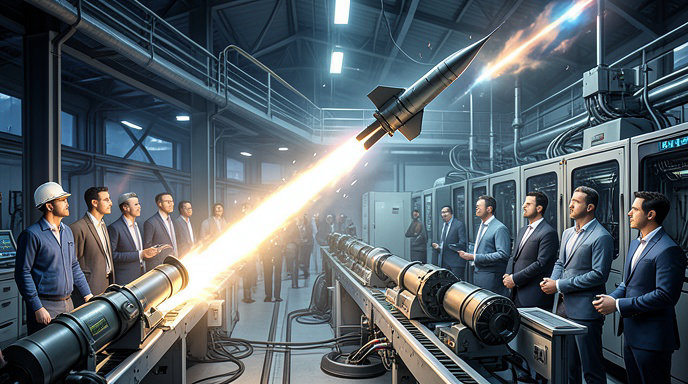
Furientis is building a family of truck-launched, radar-cued interceptors designed from day one for mass production. Its first product, the F-1 Dart, is a 6-foot, 55-pound kinetic interceptor aimed at countering drones, cruise missiles, helicopters, and loitering munitions at ranges up to 15 kilometers.
The company says it has already conducted over 40 live-fire tests at Yuma Proving Ground, with a reported 90%+ hit rate against drone swarms and subsonic cruise missile surrogates.
The Cost Breakthrough
What convinced Benchmark wasn't just performance — it was price and producibility.
Furientis claims its F-1 interceptor will cost less than $50,000 at scale, with a path to under $30,000 at volumes above 50,000 units per year. That's roughly one-eightieth the cost of a Patriot and an order of magnitude cheaper than Israel's Tamir interceptors for Iron Dome.
How? The startup has thrown out the defense prime playbook.
Instead of mil-spec custom parts and hand assembly, Furientis uses commercial automotive-grade sensors, 3D-printed airframes, and off-the-shelf solid rocket motors sourced in the U.S. Guidance is software-defined, using active radar homing fused with electro-optical seekers and AI-based target discrimination running on low-cost Nvidia-class chips.
Manufacturing is modeled on Tesla and SpaceX, not Lockheed Martin. The new funding will scale its 120,000-square-foot factory in El Segundo, California, which the company says will be capable of producing 10,000 interceptors annually by late 2027, with a second site in Texas planned for 2028.
Why Now: Air Defense in Crisis
The timing is no accident. Three years of war in Ukraine, Red Sea attacks on U.S. warships, and Iran's mass missile and drone barrages against Israel in 2024 and 2025 have exposed a brutal reality: the U.S. and its allies are running out of interceptors.
The Pentagon has fired more than $2 billion worth of high-end interceptors at low-end Houthi drones. Army officials have openly warned that stockpiles of Patriots and THAAD would last only weeks in a Pacific conflict. The new Golden Dome missile defense initiative and the Pentagon's Replicator drone-counter program have made low-cost air defense a top procurement priority.
Furientis says it already has contracts with the U.S. Army's Rapid Capabilities and Critical Technologies Office and is in advanced trials with two allied nations. The Benchmark capital is expected to help it bridge from prototype contracts to programs of record.
What It Signals for Venture Capital
Benchmark's entry is the clearest sign yet that defense tech has gone mainstream in Silicon Valley.
Defense startups raised over $35 billion in 2025, up nearly 300% from 2021, according to PitchBook estimates. Anduril's $2.5 billion raise at a $30.5 billion valuation, Helsing's rise in Europe, and Saronic, Castelion, and Epirus mega-rounds have pulled even holdout firms off the sidelines.
But Benchmark's move is different. Unlike a16z, which launched a dedicated American Dynamism practice, Benchmark is making a concentrated, partner-led bet without a defense fund or thesis. It's a validation that elite software investors now see hardware for warfighting as venture-backable: high gross margins at scale, software-like iteration cycles, and a customer with an effectively infinite budget.
Expect more to follow. Sequoia, Benchmark's longtime rival, has also been quietly exploring defense deals. With Furientis, the taboo is officially broken.
What's Next
Furientis faces a brutal road ahead. Scaling rocket motor supply chains, passing full Army qualification, and competing against incumbents like RTX, Lockheed Martin, and well-funded Anduril will test even Benchmark's backing.
But if it can deliver on its promise — tens of thousands of $30,000 interceptors rolling off an assembly line like cars — it could rewrite the economics of air defense.
As Vogel put it in a statement: We don't need more perfect interceptors. We need enough interceptors.

Get All The Latest Updates Delivered Straight To Your Inbox For Free!