
Cerebras CEO Predicts Every Home Will Have a Personal AI Assistant Soon
TL;DR
- Cerebras CEO Andrew Feldman says personal AI assistants are on the verge of mainstream adoption, predicting they will soon be as common in homes as refrigerators and TVs.
- Feldman envisions a hybrid future where assistants run partly on local devices for speed and privacy, and partly in the cloud powered by ultra-fast inference chips like Cerebras' Wafer-Scale Engine.
- The shift could redefine home AI from novelty smart speakers to proactive, personalized companions that manage schedules, health, shopping, and smart homes.
Feldman: AI Assistants Are About to Have Their Appliance Moment
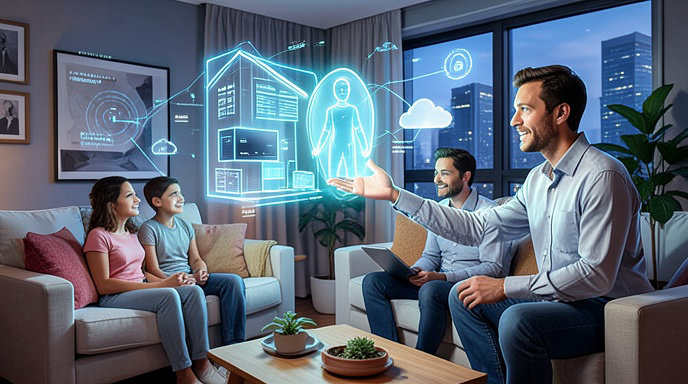
In a recent discussion on the future of artificial intelligence, Cerebras Systems CEO Andrew Feldman made a bold prediction: the personal AI assistant is about to go mainstream. Not as an app on your phone, but as a permanent, trusted presence in every home.
Feldman compared the trajectory of AI assistants to household appliances. Just as electricity moved from luxury to utility, and refrigerators and televisions went from novelties to necessities, he argues personal superintelligence is nearing its own tipping point of ubiquity and affordability.
The comments come as Cerebras, known for its massive Wafer-Scale Engine chips built for AI training and inference, pushes aggressively into the AI inference race against Nvidia, Groq, and hyperscalers.
Why Now? Speed Changes Everything
Central to Feldman's vision is speed. Today's voice assistants feel stilted because of latency — you ask, you wait, you get a robotic answer. Feldman argues that for an assistant to feel truly personal, responses must be instantaneous, conversational, and context-aware.
That requires a fundamental leap in inference performance: the ability to run large language models at hundreds or thousands of tokens per second. Cerebras has positioned its technology as the answer, offering what it claims is the world's fastest AI inference cloud, enabling real-time voice, reasoning, and multi-step agentic behavior.
When AI can listen, reason, and respond in real time without lag, Feldman says, consumers will stop treating it as a gadget and start treating it as a companion.
The Hybrid Model: Part Local, Part Cloud
Perhaps the most revealing part of Feldman's outlook is his take on where these assistants will actually live. He doesn't see a future that is 100% cloud or 100% on-device, but a hybrid.
Sensitive, routine, and latency-critical tasks — wake-word detection, personal preferences, smart home controls — will run locally on PCs, phones, and dedicated home hubs to ensure privacy and instant response even without internet.
More complex reasoning, long-term memory, large knowledge retrieval, and multi-agent orchestration will happen in the cloud, powered by data-center scale accelerators like those Cerebras builds.
This hybrid architecture, Feldman suggests, solves the twin challenges holding home AI back: privacy concerns and performance demands. Your assistant can know you intimately without sending everything you say to the cloud, while still tapping into frontier-level intelligence when needed.
From Smart Speakers to Proactive Partners
Feldman draws a sharp contrast between today's Alexa, Siri, and Google Assistant and what's coming next. Current smart speakers are largely reactive — they set timers, play music, and answer trivia.
The next generation, he says, will be proactive and agentic. Imagine an assistant that doesn't just remind you of a meeting, but reschedules it when your flight is delayed, orders groceries when the fridge is low, summarizes your kids' school emails, monitors your energy usage, and negotiates appointments with other AIs.
That shift from command-and-response to goal-oriented assistance is what will make personal AI as indispensable as a household appliance, rather than just another app.
What It Means for the Future of Home AI
If Feldman is right, the implications are massive for chipmakers, device makers, and consumers.
For hardware, it means every home could soon contain dedicated AI compute — either embedded in appliances, TVs, and routers, or in a central home hub. For cloud providers, it means explosive demand for low-latency inference to support billions of daily conversational interactions.
For consumers, it raises critical questions about privacy, cost, and trust. Will families pay a monthly subscription for a truly intelligent assistant? Who controls the data it learns? And how open will these ecosystems be?
Feldman appears confident the benefits will outweigh the concerns. As models get cheaper, faster, and more efficient, he expects personal AI to follow the same curve as past consumer revolutions: expensive for early adopters, then suddenly everywhere.
The race is now on to build the infrastructure layer that makes that future possible — and Cerebras clearly wants to power it.

Get All The Latest Updates Delivered Straight To Your Inbox For Free!