
Flock CEO Denies Dropping Police Departments Amid Surveillance Abuse Reports
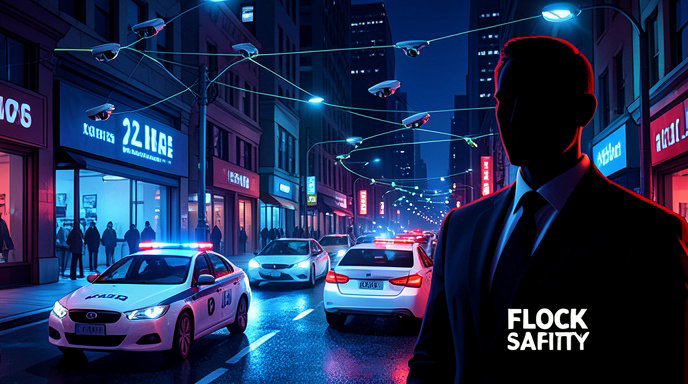
TL;DR
- Flock Safety CEO Garrett Langley says the company has not cut ties with any police departments, despite mounting reports of misuse of its automated license plate reader cameras.
- Recent investigations have flagged unauthorized searches, including for immigration enforcement and personal reasons, raising alarms among privacy advocates and lawmakers.
- The controversy highlights a growing national debate over the balance between public safety tech and civil liberties as Flock rapidly expands across the U.S.
Langley Pushes Back on Backlash
Flock Safety CEO Garrett Langley is pushing back against speculation that the surveillance startup is quietly distancing itself from controversial police clients. In recent public statements, Langley said Flock has not canceled contracts with any police departments, even as scrutiny intensifies over how its license plate recognition cameras are being used.
Langley acknowledged concerns about misuse but argued the problems represent a small fraction of overall usage. He positioned Flock as a crime-solving tool embraced by thousands of communities, not a mass surveillance network. According to Langley, the company remains committed to working with law enforcement while adding guardrails to prevent abuse.
What Sparked the Latest Controversy
Flock, based in Atlanta, has grown into one of the most dominant players in police surveillance tech, with its Falcon cameras now deployed in more than 5,000 communities across the country. The cameras automatically capture license plates, vehicle make, color, and other distinctive features, uploading the data to a searchable network.
That scale has drawn fresh attention in recent months following media investigations and audits that found instances of officers using Flock systems outside of legitimate criminal investigations. Reported cases include searches related to immigration enforcement, protests, and personal matters — uses that critics say violate department policies and, in some cases, state law.
Privacy groups have also warned that Flock's nationwide lookup network could allow police in one state to track vehicles in another with little oversight, effectively creating a de facto national tracking system for cars.
Reports of Misuse and Unauthorized Access
Among the most contentious revelations are reports that some agencies shared Flock access with federal agencies including Immigration and Customs Enforcement, despite local restrictions. Audits in several cities have also uncovered thousands of questionable searches where officers failed to provide a case number or valid reason.
Civil liberties organizations, including the ACLU, have called for stricter limits, mandatory audit logs, and shorter data retention periods, which currently default to 30 days but can vary by jurisdiction. Some city councils have voted to pause or remove Flock cameras entirely, citing lack of transparency and disproportionate impact on communities of color.
Flock says it has responded by rolling out new audit features, requiring documented search reasons, and flagging anomalous usage. Langley has pointed to those tools as evidence the company takes misuse seriously, while insisting outright bans would take away a tool that helps solve stolen vehicle cases, amber alerts, and violent crimes.
A Defining Moment for Police Surveillance Tech
The standoff over Flock comes at a pivotal time for the broader police technology industry. Venture funding for public safety startups remains strong, and Flock itself was valued at $7.5 billion earlier this year, but political pressure is mounting at both the local and federal level.
Several states are considering new legislation to regulate automated license plate readers, including limits on data sharing, mandatory public disclosure of camera locations, and penalties for unauthorized searches. Law enforcement groups, meanwhile, argue the technology is essential as departments face staffing shortages and rising clearance-rate pressure.
For now, Langley shows no sign of backing down from Flock's law enforcement-first strategy. Whether improved safeguards will be enough to calm critics — or whether more cities will follow those that have halted their Flock programs — will likely determine not just Flock's future, but how far AI-powered surveillance is allowed to go in American neighborhoods.

Get All The Latest Updates Delivered Straight To Your Inbox For Free!