
Flock CEO Gunshot Audio Claim Clashes With Website as Privacy Scrutiny Grows
TL;DR
- Flock CEO Garrett Langley says the company's Raven gunshot sensors only detect gunshots, but archived and current website language has touted broader audio capabilities like detecting screams, breaking glass, and other distress sounds.
- The ACLU, privacy advocates, and residents in cities using Flock cameras and audio sensors warn the tech enables mass surveillance, mission creep, and potential misuse for protest monitoring or non-gunshot policing.
- The clash highlights a larger reckoning for AI-powered policing, as lawmakers push for audits, bans, and transparency rules around always-on microphones in public spaces.
The Claim: We Only Detect Gunshots
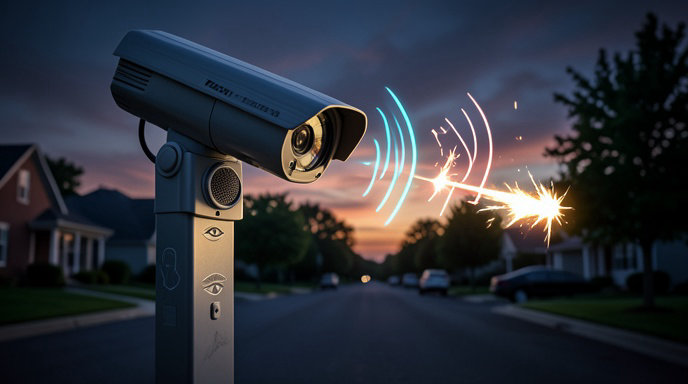
In recent public statements and interviews, Flock Safety CEO Garrett Langley has sought to reassure critics concerned about always-on microphones in American neighborhoods. His message has been consistent: Flock's Raven audio gunshot detection product listens for one thing only — gunshots.
According to Langley, the devices are not recording conversations, not transcribing speech, and not building a library of neighborhood sounds. They are trained to recognize the acoustic signature of gunfire, triangulate its location, and alert police within seconds. Anything else, he has suggested, is simply ignored by design.
It's a narrow, privacy-friendly framing, positioned to distinguish Flock from the troubled history of other gunshot detection systems like ShotSpotter, now SoundThinking, which have faced intense scrutiny over accuracy, false alerts, and expansion of police surveillance.
The Website Tells a Different Story
The problem is Flock's own marketing has told a far broader story.
On its website, product pages, and promotional materials, Flock has described its audio sensors as capable of detecting far more than gunfire. Language has included references to detecting screams, loud noises, breaking glass, and other signs of distress or disorder — suggesting a general-purpose audio anomaly detector, not a single-purpose gunshot sensor.
Archived versions and feature breakdowns for its Raven and Condor lines have touted AI-powered audio analytics that can flag unusual sounds and pair them with video and license plate data from its Falcon cameras. For critics, that is a direct contradiction: you can't claim you only detect gunshots while also selling the ability to detect everything else that sounds alarming.
Privacy researchers say this kind of wording matters. If a sensor is technically capable of picking up human screams, arguments, car crashes, or protests, then policy promises not to use it that way are just policy — they can change without a hardware change.
Why the ACLU and Residents Are Alarmed
The American Civil Liberties Union and local privacy groups have seized on the discrepancy as proof that Flock is downplaying the surveillance potential of its rapidly expanding network.
Flock Safety now operates hundreds of thousands of cameras and thousands of audio sensors across more than 5,000 communities in the U.S., making it by far the largest distributed policing surveillance network built by a private company. Most deployments started with automatic license plate readers, which log every passing car. Audio gunshot sensors are the newest layer, often installed on the same poles.
The ACLU argues this creates three core risks:
First, mission creep. A microphone installed to find gunshots can be updated via software to listen for other things. Without legally binding limits, today's gunshot sensor becomes tomorrow's protest monitor or loitering detector.
Second, lack of consent and transparency. Many city councils have approved Flock contracts with little public debate, no independent accuracy audit, and vague data retention rules. Residents often learn about microphones only after they are installed.
Third, misuse and error. AI audio detection is prone to false positives — fireworks, backfires, construction noise flagged as gunshots. That can send armed officers into neighborhoods on bad intel, with disproportionate impacts on Black and Latino communities already over-policed.
From Gunshot Alerts to AI Policing Platform
The controversy comes as Flock is aggressively repositioning itself from a license plate camera company into a full-stack AI policing platform.
Its newer Condor pan-tilt-zoom cameras combine video, license plate recognition, and audio analytics. Its software integrates 911 calls, drone feeds, and records management systems to predict where crime might happen and direct officer response. The company has raised hundreds of millions at a multi-billion dollar valuation on that vision.
In that context, limiting audio to gunshots only would be an odd business choice. Investors are betting on more data, more detections, more alerts — not less. Critics say Langley's narrow claim is aimed at regulators and city councils, while the broader capabilities are aimed at customers and investors.
Flock, for its part, maintains that its devices filter out human speech and are not designed for eavesdropping, and that broader audio categories like screams are only used to provide context for potential violent incidents, not to profile communities.
What Happens Next
The fallout is already shaping policy. Several cities have paused or rolled back Flock audio sensor deployments pending independent reviews. Civil liberties groups are calling for mandatory third-party audits of what the microphones actually record, how long audio is stored, who can access it, and whether human speech can be reconstructed.
Lawmakers in multiple states have introduced bills that would ban continuous audio recording in public spaces without a warrant, require clear signage for gunshot sensors, and force companies like Flock to publish accuracy rates and false-positive data.
For the industry, the lesson is stark: in the era of AI-powered policing, trust hinges on technical verifiability, not CEO assurances. If your website advertises a super-hearing AI, the public will assume it's listening — even if you say it isn't.

Get All The Latest Updates Delivered Straight To Your Inbox For Free!