
Intero Biosystems Is Replacing Animal Testing With Lab-Grown Mini Human Guts
TL;DR
- Intero Biosystems is commercializing lab-grown human intestinal organoids as a faster, more predictive replacement for animal testing in drug development.
- Regulatory momentum, including FDA moves to reduce animal testing requirements, is creating a major opening for human-relevant organoid platforms.
- Scaling automated production of mini-guts could cut drug failure rates, speed safety testing, and reshape preclinical pharma pipelines.
A Quiet Revolution in a Dish
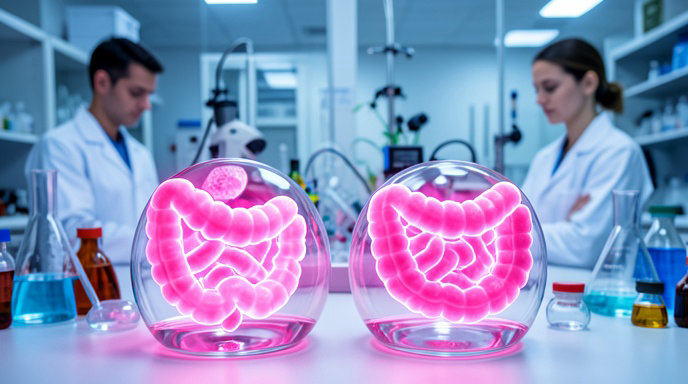
In a sterile lab outside the traditional pharma hubs, tiny clusters of human intestinal tissue pulse, secrete mucus, and respond to drugs just like a real gut would. They are not science fiction. They are Intero Biosystems' core product: lab-grown mini human intestines designed to replace animal testing.
The startup is pitching drugmakers on a simple proposition — why test a human drug in a mouse or dog gut when you can test it in a human gut grown in a dish?
How The Mini-Gut Platform Works
Intero Biosystems builds its platform around intestinal organoids, three-dimensional structures grown from human stem cells that self-organize into crypts, villi, absorptive enterocytes, goblet cells, and other key cell types found in the human intestine.
Unlike traditional Caco-2 cell lines or flat 2D cultures, these organoids replicate barrier function, drug transporter activity, metabolism, and immune interaction far more faithfully. The company cultures them in high-throughput formats compatible with automated screening, allowing pharma partners to test drug absorption, toxicity, inflammation, and microbiome interactions at scale.
Recent iterations focus on vascularized and immune-competent models, adding macrophages and other components to mimic inflammatory bowel disease, leaky gut, and drug-induced gastrointestinal injury — one of the top reasons drugs fail in clinical trials.
Why Regulators Are Driving The Shift
The timing is no accident. Regulators in the U.S. and Europe are actively pushing to reduce reliance on animal models.
The FDA Modernization Act 2.0 removed the blanket requirement for animal testing before human trials, opening the door for qualified alternatives like organoids, organ-on-chip systems, and AI-based toxicology. The FDA and EPA have since launched initiatives to prioritize New Approach Methodologies, or NAMs, for safety assessment.
For drugmakers, the incentive is financial as well as ethical. Animal studies are slow, expensive, and often poorly predictive — around 90 percent of drugs that pass animal testing still fail in humans. GI toxicity in particular often goes undetected until costly Phase 2 or Phase 3 trials. A human-relevant gut model that catches failures weeks earlier could save hundreds of millions per program.
What Scaling Up Could Mean
The biggest challenge for organoids has always been scale: growing thousands of identical, functional mini-guts reproducibly and affordably.
Intero Biosystems says automation is the answer. By combining bioreactor-based expansion, robotics for seeding and media exchange, and AI-driven quality control via imaging, the company aims to produce organoid kits and screening services at pharma-ready volumes.
If it succeeds, the implications for drug development are profound. High-throughput human gut screening could become a standard preclinical checkpoint alongside liver and heart safety panels. Personalized organoids grown from patient biopsies could also guide drug selection for Crohn's disease, ulcerative colitis, and colorectal cancer.
Challenges Remain
Despite the hype, organoids are not yet perfect replicas. They lack a full microbiome, nervous system innervation, and complete blood flow, and batch-to-batch variability remains a concern for regulators accustomed to standardized animal protocols.
Intero will need to prove validation — head-to-head data showing its mini-guts predict human outcomes better than animals across diverse drug classes. Partnerships with large pharma and contract research organizations will be critical to building that dossier.
The Road Ahead for Animal-Free Testing
Intero Biosystems is part of a broader wave of biotechs betting that the future of preclinical research is human, not animal. With investor interest growing in lab-grown tissues and regulatory tailwinds strengthening, lab-grown mini human guts are moving from academic curiosity to industrial tool.
If scaling works, the humble petri dish could do what decades of animal welfare campaigns could not: make animal testing obsolete because a better alternative finally exists.

Get All The Latest Updates Delivered Straight To Your Inbox For Free!