
Rivian AI Agents Are Coming to Its EVs Ahead of December AI and Autonomy Day
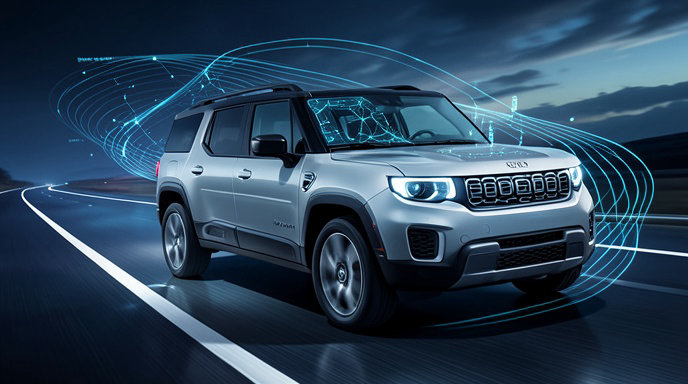
TL;DR
- Rivian is preparing to bring conversational AI agents directly into its R1 and R2 vehicles, moving beyond basic voice commands to proactive, context-aware in-car intelligence.
- The rollout will be powered by Rivian's in-house autonomy compute and software stack, with deeper integration expected to be detailed at its AI & Autonomy Day event this December.
- The push positions Rivian to compete with Tesla, Google, and Chinese EV rivals in the race to make the car an AI companion, not just transportation.
Rivian's Bigger Bet: Your Car Becomes a Companion
Rivian has never hidden its ambition to be more than an electric truck company. It wants to be a software company that happens to make adventure-ready EVs. Now that vision is getting its biggest test yet: AI agents living inside Rivian vehicles.
According to recent teasers from CEO RJ Scaringe and the company's autonomy leadership, Rivian is developing a new generation of in-car intelligence that goes far beyond "set navigation to Denver" or "open the frunk." Think of an agent that knows your daily commute, your charging habits, your camping setup, and your calendar — and acts on it before you ask.
Instead of a voice assistant you have to summon, Rivian wants an agent that’s always contextually present: rerouting you around a storm on a road trip to Moab, pre-conditioning the battery for a faster charging stop, booking service when it detects an issue, or summarizing your messages while you're driving hands-free.
Why Now: Software-Defined Vehicles Meet Generative AI
The timing is no accident. Rivian just completed its critical transition to its zonal electrical architecture and second-generation R1 platform, plus its new in-house Rivian Autonomy Platform with onboard LiDAR, radar, cameras, and a powerful custom compute module.
That hardware unlocks two things: real on-device inference for low-latency AI, and a unified software stack across R1T, R1S, and the upcoming affordable R2.
At the same time, the broader auto industry is racing in the same direction. Tesla is pushing Grok integration and robotaxi ambitions, Mercedes and BMW are embedding large language models from Google, Microsoft and Amazon, and Google's Android Automotive with Gemini is becoming the default intelligence layer for many brands.
Rivian, notably, has resisted going all-in on Google or Apple for the cabin. It still doesn't offer CarPlay, betting instead that a tightly integrated, Rivian-owned experience will be better long-term. AI agents are the ultimate proof point for that controversial strategy — if it works, Rivian controls the relationship with the driver. If it fails, customers may wonder why they can't just use their phone.
What To Expect From Rivian's In-Car AI Agents
While Rivian hasn't released a full spec sheet yet, job postings, developer briefings, and executive comments point to three layers:
1. A Conversational Vehicle Assistant: A natural-language interface that can control nearly every vehicle function — suspension height, drive modes, climate zones, tonneau cover, lighting scenes, camp mode — plus answer general knowledge questions, plan trips, and manage media. Expect wake-word-free interaction and multi-turn memory, so you can say "find a kid-friendly charger with coffee near our route and add 20 minutes to stretch."
2. Proactive Driving and Ownership Agents: This is where it gets interesting. Rivian is reportedly testing agents that monitor range, weather, traffic, home energy via its charging ecosystem, and maintenance health. For example: predicting you won't make it home on current charge and automatically reserving a Rivian Adventure Network stall, or noticing repeated off-road routes and suggesting tire pressure and drive mode changes.
3. Autonomy-Linked Intelligence: Rivian's Level 2+ system, Rivian Autonomy Platform+, already handles highway hands-free driving with driver monitoring. The company has promised eyes-off, hands-free point-to-point capability over time. AI agents will likely serve as the narrator and co-pilot for that system — explaining why the car changed lanes, took an exit, or slowed, and taking voice overrides like "pass this trailer when it's clear."
All of this will run on Rivian's custom software with cloud support from major AI model providers, while keeping safety-critical driving decisions on-board.
What December's AI & Autonomy Day Could Reveal
All eyes are now on Rivian's AI & Autonomy Day event in December. The company has used past events to unveil major platform shifts, and this one is expected to be software-first.
Here's what to watch for:
Live Demo of the In-Car Agent: Expect Scaringe or Chief Software Officer Wassym Bensaid to demo a live conversation with a Rivian vehicle on stage, showing trip planning, vehicle controls, and memory across drives.
Autonomy Roadmap Update: Rivian has promised to expand hands-free driving from highways to more scenarios in 2026 and launch its own robotaxi pilot. December should bring timelines, SAE Level progress, LiDAR data, and safety metrics.
R2 AI Strategy: With the $45,000 R2 SUV launching as Rivian's mass-market bet, AI features could be a key differentiator. Will agents be standard, subscription-based via Connect+, or tiered by compute?
Developer Platform and Third-Party Agents: One big question is whether Rivian will open APIs for Spotify, DoorDash, Airbnb, and home automation to build agents on top of Rivian's platform — turning the car into an app ecosystem.
Pricing and Rollout Timeline: The most practical detail: when do current R1 owners get it via over-the-air update, and will it require new hardware or the Connect+ subscription?
The Stakes for Rivian
For Rivian, AI agents aren't a gimmick — they're survival strategy.
The company is in a brutal transition period: scaling R2 production in Normal, Illinois, fulfilling its Volkswagen joint venture valued at up to $5.8 billion, and trying to reach positive gross profit while competing with Tesla's price cuts.
Software and autonomy offer something hardware can't: high-margin recurring revenue and brand lock-in. If Rivian can deliver AI that genuinely makes owning, driving, and adventuring easier, it justifies its walled-garden approach and gives R2 buyers a reason to choose Rivian over a Model Y.
The risk is equally clear. Generative AI in cars raises hard questions about distraction, hallucination, privacy, and latency. Drivers won't tolerate an agent that gets charging math wrong or misinterprets a command at 70 mph. Rivian will need to prove its system is automotive-grade, not a chatbot bolted to a steering wheel.
Bottom line: December won't just be a tech showcase. It will be Rivian's pitch for what the next decade of driving feels like — less about horsepower and range, and more about intelligence riding shotgun with you.

Get All The Latest Updates Delivered Straight To Your Inbox For Free!