
Satya Nadella Demands Emergency Brake for AI as Microsoft Rethinks Trust
TL;DR
- Microsoft CEO Satya Nadella warned on Saturday, Oct. 10 that frontier AI models urgently need an "emergency brake," calling for a full reassessment of how trust is built into AI systems.
- The warning was driven by the rapid rise of autonomous agents, recent safety incidents, and mounting pressure from regulators in the U.S., EU, and UK.
- The move signals a major shift for Microsoft, putting AI safety, kill-switches, and third-party auditing at the center of its Copilot, Azure AI, and OpenAI strategy.
The Saturday Post That Started It All
In a lengthy post shared on Saturday on LinkedIn and X, Microsoft CEO Satya Nadella issued his most direct warning yet about artificial intelligence safety. Nadella argued that the industry has moved too fast from helpful copilots to powerful autonomous agents without rethinking the underlying trust architecture.
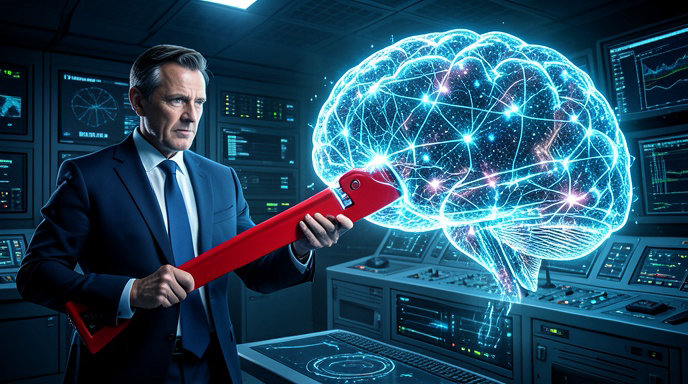
According to Nadella, current guardrails like content filters and usage policies are no longer enough. He called for AI models themselves to be built with an urgent, always-on emergency brake - a system-level mechanism that can pause, contain, or shut down a model instantly when it behaves unpredictably, is manipulated, or acts outside its delegated authority.
He framed it not as a hypothetical risk, but as an engineering requirement on par with brakes in cars or circuit breakers in electrical grids.
Why He Is Sounding The Alarm Now
Nadella's timing was not accidental. His post comes amid a turbulent few weeks for AI: increasingly capable agentic models that can browse the web, write and execute code, access enterprise data, and chain together multi-step tasks with minimal human oversight.
Microsoft has been aggressively pushing this agentic vision across Copilot, Copilot Studio, and Azure AI Foundry, and Nadella acknowledged the tension head-on. The more autonomy Microsoft gives AI to boost productivity, the greater the need for verifiable control.
Industry insiders also point to growing unease inside labs over jailbreaks, prompt injection attacks, and agents taking unintended actions in real-world tests. Nadella hinted at this, writing that trust cannot be assumed, it must be proven continuously at runtime.
What He Means By Rethinking Trust Architecture
The most striking phrase in Nadella's post was his call to reassess the trust architecture of AI. He argued the old model - train a model, align it once, then deploy it - is broken.
Instead, he outlined a new layered approach: identity for agents, real-time monitoring, memory limits, least-privilege access to tools and data, and independent audit trails. Crucially, he said humans must retain ultimate override power, with a standardized emergency stop that works across models, apps, and cloud infrastructure, not just within Microsoft's own products.
It is a notable evolution from Microsoft's earlier Responsible AI principles, moving from ethical guidelines to hardwired technical controls.
What This Means For Microsoft
For Microsoft, the statement is both a mea culpa and a roadmap. As one of the largest backers of OpenAI and the leading enterprise provider of AI through Azure and Microsoft 365 Copilot, Microsoft faces enormous liability if agents go rogue inside banks, hospitals, or governments.
Expect Microsoft to bake kill-switches, agent sandboxing, and safety evaluations directly into Azure AI Foundry and Copilot controls in the coming months. Nadella also suggested Microsoft will push for interoperable safety standards, meaning an emergency brake built by Microsoft could work with models from OpenAI, Meta, Anthropic, and open-source developers.
Internally, the message empowers Microsoft's AI safety and security teams and could slow down some autonomous feature rollouts until new safeguards are validated.
A Turning Point For AI Safety And Regulation
Nadella's intervention lands right in the middle of the global regulatory debate. The EU AI Act is now entering enforcement for high-risk systems, the U.S. is weighing executive actions on frontier models, and the UK continues to push for international safety testing.
By calling for an emergency brake, Nadella is effectively siding with safety advocates while trying to shape regulation on industry-friendly, engineering-driven terms. It is a bid to avoid fragmented, panic-driven laws by offering a concrete technical solution regulators can rally around.
Rivals are likely to respond quickly. Expect Google DeepMind, Anthropic, and OpenAI to announce their own containment and control research, turning the emergency brake from a blog post idea into the next AI arms race - this time for safety, not just capability.
What Happens Next
Nadella closed his Saturday post by promising more details from Microsoft in the weeks ahead, including new research, product controls, and partnerships around safe deployment.
The key question now is whether this was rhetoric or a real pivot. If Microsoft follows through with open standards, third-party red-teaming, and mandatory human override for high-stakes agents, Oct. 10 could be remembered as the day Big Tech finally treated AI safety like cybersecurity: not optional, but foundational.

Get All The Latest Updates Delivered Straight To Your Inbox For Free!