
US Government Takes Bold Step: Ban on Foreign-Made Humanoids, Robot Dogs, and Solar Inverters
TL;DR
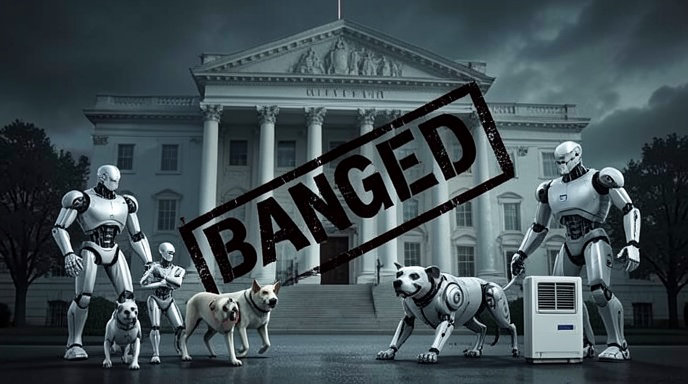
- The U.S. Federal Communications Commission has banned new foreign-made humanoid robots, robot dogs, and connected power inverters from being authorized for sale in the U.S., citing national security and cybersecurity risks.
- The rules take effect immediately for new models, but they do not affect products already approved for sale or devices already owned by consumers and businesses.
- The move is expected to hit Chinese manufacturers hardest and could reshape U.S. robotics, energy, and AI supply chains while boosting domestic production.
The U.S. government has moved to block imports of a new class of foreign-made robotics and power equipment, escalating a broader push to reduce reliance on Chinese technology in strategically important sectors. The Federal Communications Commission said the restrictions target devices that could create cybersecurity vulnerabilities or give foreign actors access to critical infrastructure.
What the ban covers
The FCC’s action applies to newly authorized foreign-made humanoid robots, robot dogs, and certain connected power inverters. The robotics rules are aimed at advanced mobile systems, including humanoids and quadrupeds, while the inverter restrictions focus on devices that convert solar or battery power and include network connectivity such as Wi‑Fi, cellular, or Bluetooth.
The agency said these products could be used to disrupt supply chains, manipulate device behavior, or threaten U.S. critical infrastructure if compromised. Reporting indicates the policy is especially likely to affect Chinese companies, which currently dominate large parts of the global robotics and solar inverter markets.
Why Washington is acting now
According to the FCC and related national security findings, the concern is not just where the products are built, but what connected systems could do once installed inside factories, homes, data centers, or energy networks. Officials warned that advanced robotic systems create “extensive vulnerabilities” because their sensors, software, and network connections can be exploited to alter physical operations or steal data.
The inverter restrictions are tied to similar fears. Network-connected inverters sit at the intersection of clean energy, batteries, and the electric grid, which makes them a tempting target for disruption if adversaries can remotely manipulate them. The timing also reflects the White House’s broader industrial strategy to re-shore production in emerging technology sectors.
Who is most affected
The immediate market impact appears likely to fall on Chinese robotics and energy hardware makers. One report specifically noted that the restrictions could affect Unitree, a Chinese robotics company that has partnered with Nvidia on robots using the chipmaker’s technology.
At the same time, the rule is not a blanket confiscation or shutdown of the current market. Devices already approved for sale in the U.S. are generally not affected, and consumers or businesses that already own approved equipment can continue using it. The federal government is also not barred from buying these products, and agencies such as the Department of Defense and Department of Homeland Security have carveouts and exemption authority in some cases.
How the rule changes the market
The ban is likely to accelerate a split market in which approved foreign products remain on shelves while new models face stronger scrutiny or are pushed out entirely. That could reduce direct competition for U.S.-based makers, but it may also raise costs and slow access to the latest imported systems in robotics and energy hardware.
For solar and grid equipment, the effect could be especially notable because connected inverters are embedded in both renewable installations and data-center power systems. If import barriers make foreign products harder to sell, U.S. buyers may turn to domestic suppliers, though analysts will be watching whether domestic capacity can scale quickly enough to fill the gap.
Innovation trade-offs
The policy could create a short-term boost for U.S. manufacturers by protecting them from direct competition, but it may also complicate innovation by narrowing access to low-cost, advanced foreign hardware. That tension is at the center of the debate: supporters see a necessary step to secure critical infrastructure, while critics are likely to argue that it risks fragmenting the market and raising deployment costs for startups and utilities.
There is also a broader strategic question. Robotics and connected energy gear are increasingly important to AI infrastructure, automation, logistics, and clean energy deployment. Limiting foreign options may encourage domestic investment, but it could also slow adoption if U.S. supply chains cannot keep pace with demand.
What happens next
The FCC has created a pathway for exemptions and conditional approvals, which suggests the policy is not absolute. That means companies may still seek authorization for specific products if they can satisfy national security requirements, especially for government or infrastructure uses.
The larger implication is that this is no longer just a trade dispute; it is a technology-policy move that treats advanced robots and connected power systems as national security assets. If the policy holds, it could mark another step toward a more tightly controlled U.S. market for foreign-made hardware in AI-adjacent industries.

Get All The Latest Updates Delivered Straight To Your Inbox For Free!