
OpenAI's $7 Billion Tender Offer Fuels New San Francisco Housing Boom
TL;DR
- OpenAI's reported $7 billion tender offer, valuing the company at over $300 billion, is set to provide massive liquidity to hundreds of current and former employees, creating a new wave of tech millionaires.
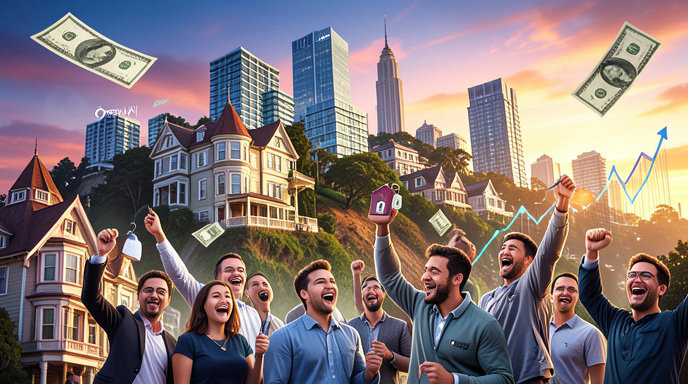
- The influx of cash is already rippling through San Francisco's housing market, triggering all-cash bidding wars, double-digit price jumps, and sharp rent increases in neighborhoods closest to OpenAI's Mission headquarters.
- While the boom is revitalizing San Francisco's economy, it is deepening the city's affordability crisis and raising fears of a new era of displacement for non-tech residents.
The Tender Heard Around the Bay
San Francisco has seen tech booms before, but nothing quite like this. OpenAI has reportedly finalized a massive $7 billion tender offer that allows current and former employees to sell shares to a group of investors led by SoftBank, Thrive Capital, and Dragoneer Investment Group. The deal, which values the ChatGPT maker at around $300 billion, is one of the largest liquidity events of its kind in Silicon Valley history.
Unlike a traditional IPO, a tender offer provides immediate cash to employees without a public listing. With an estimated 1,500 to 2,000 employees eligible to participate, the deal is expected to mint hundreds of new millionaires overnight, with many early employees and researchers sitting on stakes worth tens of millions of dollars. For a city that has been struggling with downtown vacancies and a slow post-pandemic recovery, the sudden flood of capital is acting like rocket fuel.
From Stock Options to Open Houses
The path from cap table to closing table is proving to be remarkably short. Real estate agents and mortgage brokers across the Bay Area report a surge in pre-approvals and all-cash inquiries from OpenAI employees in the weeks since the tender offer was first reported in late July.
The epicenter is close to home. Neighborhoods surrounding OpenAI's headquarters in the Mission District, as well as perennial tech favorites like Noe Valley, Hayes Valley, Pacific Heights, and Cole Valley, are seeing the most intense activity. Compass and Zillow data show a significant drop in days-on-market for single-family homes over $2 million, with many listings now receiving 10 to 20 offers within days.
Luxury condo buildings in SoMa and South Beach, which struggled with inventory gluts just two years ago, are now reporting bidding wars again, often with buyers waiving contingencies and offering well above asking price.
Bidding Wars and Million-Dollar Overbids Are Back
The numbers tell the story of a market reigniting. According to recent data from the California Association of Realtors and local MLS reports, San Francisco's median home price has climbed back above $1.5 million, up nearly 12% year-over-year, with the sharpest spike occurring in the last 60 days.
Agents describe a familiar but frenzied pattern: homes listed at $2.8 million selling for $3.6 million, all-cash offers closing in under two weeks, and frustrated buyers being outbid by newly liquid AI employees who can offer $300,000 to $500,000 over asking without needing financing.
"It's 2021 all over again, but more concentrated," one top San Francisco agent noted. "Before it was crypto and low interest rates driving everyone. Now it's a very specific, very wealthy cohort of AI employees who have just been handed life-changing money and want to put down roots in the city where they work."
The Ripple Effect on Renters
The pressure isn't limited to home sales. San Francisco's rental market, which had softened considerably during the remote-work era, is now experiencing its sharpest rent spike since before the pandemic.
Median rent for a one-bedroom apartment in San Francisco has jumped over 10% since the spring, now hovering around $3,400, with two-bedrooms in prime neighborhoods pushing past $5,000. Landlords in the Mission, Potrero Hill, and the Inner Sunset are reporting multiple applications for high-end listings, with some renters offering to pay six to twelve months upfront to secure a unit.
For many long-term renters, service workers, and employees outside the AI ecosystem, the sudden surge is a painful reversal. The city's affordability crisis, which had briefly eased, is now accelerating again, raising concerns about a second wave of displacement.
A Tale of Two Cities: Revival vs. Affordability Crisis
City officials are facing a complicated reality. On one hand, the OpenAI wealth effect is providing a much-needed boost to San Francisco's tax base and local economy. Restaurants, high-end retailers, and the beleaguered downtown commercial core are seeing renewed spending. The narrative of a "doom loop" is being replaced by talk of an AI-driven revival.
On the other hand, housing advocates warn that the city is unprepared for this kind of concentrated wealth injection. San Francisco's chronic underbuilding over the past decade means supply cannot keep pace with demand, even as thousands of new millionaires enter the market.
The tender offer is also setting a precedent. With Anthropic, Databricks, and Stripe all rumored to be exploring similar large-scale tender offers, OpenAI's deal may be just the first domino in a new wave of private-market liquidity that could reshape the Bay Area housing market for years to come.
Whether this boom leads to sustainable growth or simply deepens the divide between the AI haves and have-nots will define San Francisco's next chapter.

Get All The Latest Updates Delivered Straight To Your Inbox For Free!