
CrowdStrike’s $44 Billion Zscaler Acquisition Signals a New Era for AI-Powered Cybersecurity
TL;DR
- No independently verified announcement confirming that CrowdStrike has proposed acquiring Zscaler for $44 billion can be established here.
- If such a transaction were confirmed, combining endpoint threat detection with zero-trust access could create a powerful platform for governing enterprise AI agents.
- The deal would face major valuation, regulatory, integration and competition hurdles across the cybersecurity market.
The reported transaction remains unverified
A proposed $44 billion acquisition of Zscaler by CrowdStrike would rank among the largest deals in cybersecurity history. However, without a verifiable company announcement, regulatory filing or credible contemporaneous reporting, the transaction should not be treated as confirmed news.
That distinction matters. A deal of this scale would normally generate formal disclosures from both companies, particularly because CrowdStrike and Zscaler are publicly traded businesses. It would also attract scrutiny from investors, analysts and competition authorities in the United States and other major markets.
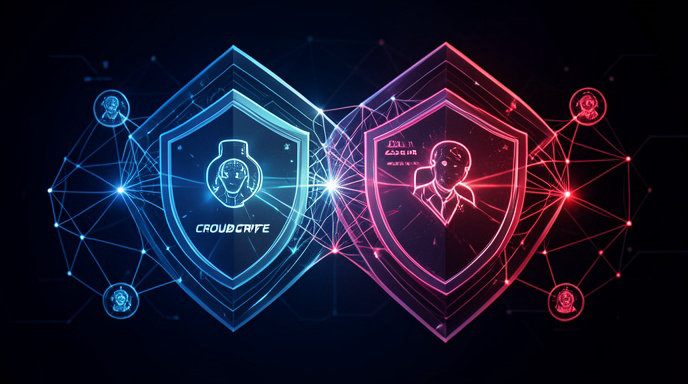
The strategic logic behind the reported combination is nevertheless clear. CrowdStrike is best known for endpoint protection, threat detection and incident response, while Zscaler has built its business around cloud-delivered secure access, zero-trust networking and policy enforcement. Together, those capabilities could form a broader security platform spanning users, devices, applications, workloads and data.
Why AI agents make the combination significant
Generative AI is moving from experimental chatbots toward autonomous or semi-autonomous software agents capable of taking action. Enterprise agents may eventually provision resources, access customer records, send messages, modify code or initiate business transactions with limited human intervention.
That shift creates a security challenge. Traditional identity controls are generally designed around human users, while AI agents can operate at machine speed, call multiple applications and create complex chains of activity. Organizations will need to determine not only who an agent belongs to, but also what it is allowed to do, which data it can access and whether its behavior remains consistent with approved policies.
CrowdStrike’s threat intelligence and endpoint telemetry could help identify malicious or compromised activity involving agents and the systems they use. Zscaler’s zero-trust architecture could provide a policy layer for controlling connections between agents, users, devices, applications and cloud services.
In theory, the combined platform could continuously evaluate an agent’s identity, purpose, behavior and risk level before permitting access. An agent attempting to access an unusual application, download sensitive data or execute an unexpected command could be blocked or required to undergo additional verification.
From endpoint security to an AI control plane
The cybersecurity industry is increasingly moving toward platforms that correlate signals across multiple layers of an organization’s technology environment. Endpoint protection alone cannot explain every cloud or identity event, while network controls may lack the context needed to distinguish legitimate automation from an attack.
A combined CrowdStrike-Zscaler offering could attempt to connect those domains. CrowdStrike could contribute behavioral analytics, adversary intelligence and visibility into devices and workloads. Zscaler could contribute cloud-based traffic inspection, application access controls and zero-trust policy enforcement.
Such a platform might provide organizations with a centralized way to:
- Register and authenticate AI agents
- Assign agents narrowly defined permissions
- Monitor agent activity across applications and networks
- Detect anomalous or compromised behavior
- Revoke access automatically when risk increases
- Maintain audit trails for compliance and investigation
The value would depend on how well the companies integrated their products. Merely placing two large security portfolios under one corporate structure would not automatically create a unified AI-security platform.
A potentially transformative enterprise security platform
For corporate customers, consolidation could simplify purchasing and reduce the number of security products managed by internal teams. Security operations centers could benefit from more closely connected telemetry and fewer gaps between endpoint, identity, network and cloud controls.
The combination could also appeal to organizations struggling with fragmented AI governance. Many businesses are adopting AI tools faster than they can establish policies for them. A platform that links agent identity, access control and threat detection could offer a more practical way to enforce those policies at scale.
The strongest use cases would likely emerge in highly regulated industries. Banks, healthcare providers, government agencies and critical infrastructure operators need to demonstrate who or what accessed sensitive systems, why access was granted and what happened afterward. AI agents operating without clear accountability could create serious compliance and liability risks.
The deal’s biggest obstacles
A $44 billion price tag would raise immediate questions about valuation and financing. CrowdStrike would need to persuade shareholders that the long-term strategic benefits justify the cost, especially if the transaction involved substantial borrowing or equity issuance.
Integration would be another major challenge. CrowdStrike and Zscaler have different product architectures, sales motions and customer relationships. Enterprise security buyers could resist a forced platform strategy if it reduces flexibility or makes them dependent on a single vendor.
Regulatory scrutiny would also be likely. Competition authorities could examine whether the combined company would gain excessive influence over endpoint protection, zero-trust access, cloud security and AI governance. Customers and rivals might argue that bundling the products could disadvantage smaller security providers or limit interoperability.
There is also a risk that a large acquisition distracts both companies from product execution. Cybersecurity customers expect rapid innovation and reliable service. Any disruption to road maps, support operations or integrations could weaken the strategic rationale for the transaction.
The market impact beyond the two companies
Even an uncompleted proposal of this size would underscore the cybersecurity industry’s broader direction. Vendors are competing to become the central security layer for hybrid work, cloud infrastructure, identity systems and artificial intelligence.
A successful combination could encourage rivals to pursue their own acquisitions. Other endpoint, identity, cloud and network-security companies might seek to assemble comparable platforms rather than compete in narrow product categories.
It could also accelerate demand for open security ecosystems. Customers may push vendors to support shared standards, common policy frameworks and application programming interfaces that allow AI-agent controls to work across multiple security products.
The market is unlikely to settle on one universal architecture immediately. Some organizations will prefer integrated suites, while others will continue selecting best-of-breed tools. The deciding factor may be whether platforms can deliver measurable improvements in detection, response and governance without creating unacceptable complexity.
What enterprises should watch next
Before drawing conclusions about the reported acquisition, investors and technology buyers should look for formal confirmation from CrowdStrike or Zscaler, securities filings, financing details and statements from competition authorities.
They should also examine the practical product questions. Would customers receive unified policy management, or merely bundled subscriptions? Could organizations export their data and policies? How would the platform distinguish legitimate AI behavior from an attack? Would customers retain control over models, agents and sensitive telemetry?
The most important measure would be operational effectiveness. Enterprises need security systems that can prevent unauthorized actions, explain why decisions were made and respond quickly when an agent is compromised. Marketing language about autonomous security will matter less than measurable reductions in attack exposure and investigation time.
A possible turning point, but not yet an established fact
The proposed $44 billion acquisition described in the premise would represent a major bet on the convergence of endpoint security, zero-trust networking and AI governance. Its strategic appeal is understandable: CrowdStrike could bring threat intelligence and behavioral detection, while Zscaler could provide the access and policy infrastructure needed to control digital agents.
But the transaction should not be presented as confirmed without authoritative evidence. For now, the broader lesson is more defensible than the deal itself. As AI agents gain the ability to act across enterprise systems, cybersecurity platforms will increasingly need to verify not only people and devices, but also the software entities acting on an organization’s behalf.

Get All The Latest Updates Delivered Straight To Your Inbox For Free!